


Why Rewards Can Help—and Hurt—Deep Work
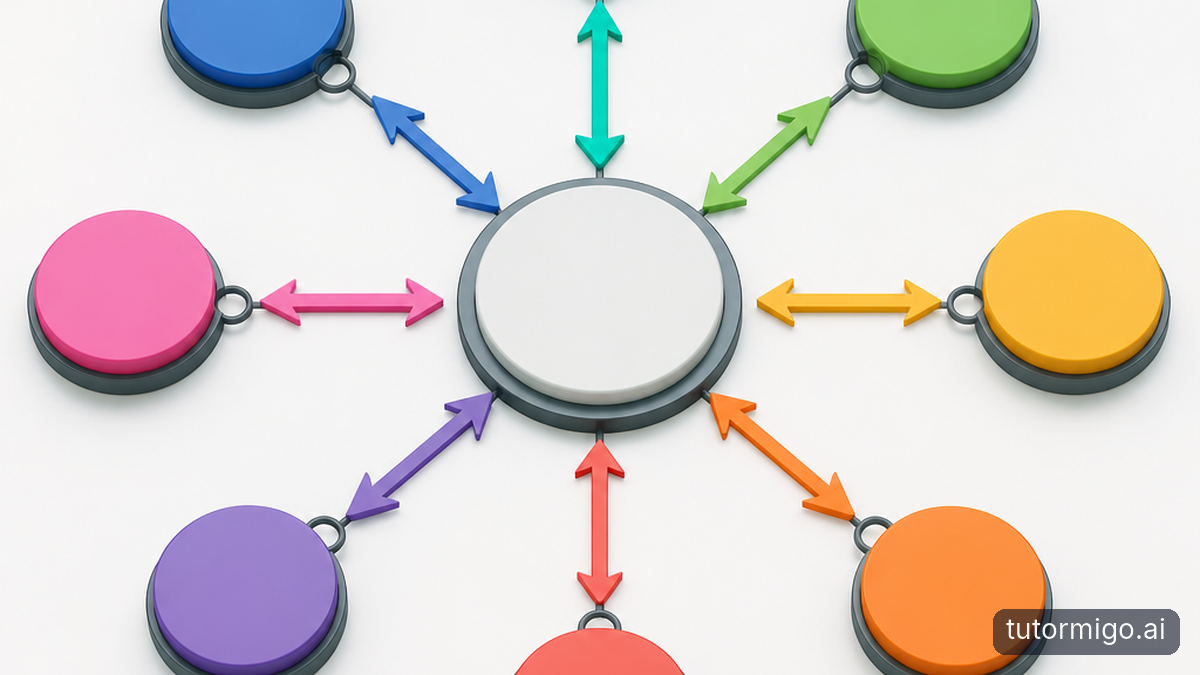
You sit down to study, check your progress bar, earn a badge, and feel a quick lift. Then the task becomes harder. Instead of staying with the difficult chapter, you look for another easy win. This is the tension at the heart of balancing extrinsic motivation and deep work: rewards can help you begin, but they can also train you to chase stimulation rather than build concentration.
Extrinsic motivation comes from outside the task: points, streaks, praise, grades, public rankings, or small treats. Deep work is different. It asks you to stay with a demanding problem long enough to understand it, even when there is no immediate payoff. Neither mode is automatically good or bad. A reward may be exactly what gets a tired student to open a book, while an uninterrupted stretch may be what helps that student connect ideas.
The practical goal is not to remove every reward. It is to use rewards as a doorway, then let competence, curiosity, and visible progress take over. That means designing a study loop in which the external cue starts the session, the work supplies meaningful feedback, and the reward does not interrupt the most valuable thinking.
Understand the Dopamine Loop Behind Study Tools
A dopamine loop is a repeating pattern of cue, action, feedback, and anticipation. In education, the cue might be a notification or a scheduled study block. The action is answering questions or reviewing cards. Feedback arrives as a score, animation, streak, or message. Anticipation then makes you want to repeat the cycle. This can be useful when the loop points toward deliberate practice, but distracting when the feedback becomes the main attraction.
Consider two versions of a vocabulary session. In the first, a learner reviews ten cards, sees a progress animation after every answer, and stops once the visible meter fills. In the second, the learner reviews difficult cards, explains each answer aloud, and checks progress only at the end. Both provide feedback, but the second protects the mental effort that produces durable memory.
Ask three questions when evaluating a digital study experience: Does the reward arrive after meaningful work? Does it show improvement rather than merely activity? Does it encourage another focused session instead of constant checking? A useful loop should make the learning behavior more attractive, not make the interface more compelling than the subject.
Use Extrinsic Motivation to Start, Not Steer
External rewards work best as launch support. If a student keeps postponing a difficult reading assignment, a simple agreement can help: study for twenty minutes before taking a planned break. The reward is tied to showing up and following the process, not to finishing an artificially large amount of work. Once the session begins, the learner should shift attention toward the question, example, or problem in front of them.
Make the target specific and controllable. “Earn five points” is weaker than “complete three practice problems and write one sentence explaining the error.” The second target makes the desired behavior visible. It also avoids rewarding lucky guesses or rushed completion. For an adult learner, the same principle might look like reviewing one difficult concept before checking messages.
Keep rewards modest, predictable, and delayed until a natural stopping point. A short walk, tea, music, or a conversation can mark completion without competing with the task. Avoid turning every minute into a transaction. If someone asks, “What do I get for every answer?” the reward system may have become too prominent. The best outcome is that the learner eventually starts because the work itself feels purposeful.
Use the reward to cross the threshold into concentration; do not place it between every meaningful step.
Protect the Conditions Deep Work Requires
Deep work is less about heroic discipline than about reducing decisions and interruptions. Before you begin, define one concrete outcome: solve a set of equations, outline an argument, debug one function, or compare two historical explanations. Put the phone in another room, silence nonessential alerts, and keep only the materials needed for that outcome visible.
Choose a work interval that is challenging but realistic. A beginner might start with twenty-five minutes, while someone experienced may prefer forty-five or sixty. The exact duration matters less than the rule that the interval is uninterrupted. If a distracting thought appears, write it on a scrap of paper and return to the task. This preserves the idea without rewarding the impulse to switch.
Technology should support the boundary. A timer can signal the start and end, while progress tracking can remain hidden until the interval finishes. If a study tool gives instant correction, use it deliberately: attempt the problem first, record your reasoning, and only then reveal the explanation. That small delay turns feedback into reflection instead of a stream of tiny emotional jolts.
End with a brief shutdown ritual. Note what you completed, identify the next starting point, and clear the workspace. The next session then begins with less friction.
Design Feedback That Builds Intrinsic Motivation
People are more likely to sustain difficult learning when they experience autonomy, competence, and connection. A point total can show activity, but it rarely explains why the activity matters. Better feedback answers a more useful question: What can you do now that you could not do before?
Replace vague praise with information. Instead of “Great job,” say, “Your explanation identifies the cause and the evidence, but the final conclusion needs a clearer link.” Instead of celebrating a long streak alone, track patterns such as fewer hints, stronger explanations, or successful retrieval after a longer delay. These signals make improvement concrete without turning learning into a leaderboard.
Offer choices within a clear structure. A learner might choose whether to practice with examples, explain a concept aloud, or solve a new problem, while keeping the same learning goal. Choice supports ownership; the shared goal prevents choice from becoming avoidance. Reflection also matters. At the end of a session, ask, “Which part became clearer?” and “What still feels unstable?”
Over time, shift the language from “I completed the reward” to “I understand the pattern.” That change is not cosmetic. It moves attention from external approval toward capability, which is the stronger fuel for sustained deep work.
Build a Sustainable Study Loop
A healthy loop is simple enough to repeat and rich enough to improve learning. Start with a cue: the same time, place, or opening routine. Set one outcome and remove obvious distractions. Work through a meaningful challenge without checking the reward system. Review feedback at the end, record one piece of evidence about your progress, and then choose a small recovery activity.
For example, a student preparing for a difficult unit might begin at 7 p.m., spend thirty minutes solving problems without hints, and then spend ten minutes reviewing mistakes. The external reward is a favorite snack after the full block, not a badge after each question. The next day, the student begins with the hardest missed problem. This loop rewards consistency while preserving the productive discomfort that learning requires.
Review the system weekly. If the learner is rushing, reduce the number of points or remove the visible counter. If sessions never start, add a clearer cue or a small starting reward. If motivation collapses when rewards disappear, increase choice, connect tasks to a real goal, and make improvement easier to see.
The aim is not maximum stimulation. It is a dependable rhythm in which external motivation opens the door, focused effort does the learning, and intrinsic satisfaction makes returning feel worthwhile. Readers who want structured support for that rhythm can explore TutorMigo.ai once they are ready to turn these principles into a regular study practice.
Pros and cons
Pros
- Rewards can lower the barrier to starting difficult work.
- Delayed feedback protects concentration and encourages reflection.
- Specific progress signals strengthen competence and intrinsic motivation.
- Simple routines make focused study easier to repeat.
Cons and limitations
- Frequent rewards can encourage shallow completion and app checking.
- Streaks and rankings may shift attention away from understanding.
- Poorly designed feedback can make learners dependent on external approval.
- Deep work still requires protected time and fewer interruptions.
Frequently asked questions
No. They can help you begin a difficult task, especially when motivation is low. They become unhelpful when they interrupt concentration, reward speed over understanding, or replace meaningful feedback.
Choose a duration you can complete without checking distractions. Twenty-five minutes is a practical starting point; you can gradually extend it as sustained attention becomes easier.
Reward controllable behaviors such as starting on time, attempting difficult problems, reviewing errors, and completing an uninterrupted interval. Avoid rewarding guesses, rushing, or constant app checking.
Keep points modest and occasional, then emphasize specific feedback, learner choice, explanations, and evidence of improvement. Gradually shift attention from earning rewards to building capability.
Related reading
Turn Your ACT Goal Into a Practice Plan
If ACT prep feels like a pile of questions, timers, and disappointing score reports, the problem may not be effort. You may simply need a clearer connection between your target score and what you should do this week. Start by choosing a score goal, then use practice results to identify the few skills and pacing habits most likely to move you toward it.
Take one realistic diagnostic practice set before building a schedule. Do not pause the timer, look up answers, or redo questions immediately. Record your section scores, the questions you guessed on, and the questions you left unfinished. A missed question and an unanswered question require different solutions: one may need content review, while the other may point to pacing.
Next, divide your goal into controllable weekly actions. For example, a student aiming to raise a composite score might schedule two timed English sets, one focused Math session, and a Reading or Science passage review. Keep the plan small enough to repeat. A parent can help by asking, “What skill are you practicing today?” rather than simply asking whether the score went up.
Use score reports as information, not as a verdict. Improvement often appears first as fewer careless mistakes, more completed questions, or stronger confidence in one section before it shows in the overall score.
Match Your Timing to Each ACT Section
ACT timing is not one problem repeated four times. English rewards quick decisions about grammar and organization. Math requires enough time to set up problems and check signs or units. Reading demands steady passage movement, while Science asks you to interpret experiments, tables, and competing explanations efficiently. Your pacing plan should reflect those differences.
Begin by learning the official time limit and question count for the version of the ACT you will take, including any approved accommodations. Then calculate a rough checkpoint for each section. The checkpoint is not a command to rush; it is an early warning that you are spending too long on one question. If you are behind, mark the question, make the best decision you can, and continue.
Practice the exact behavior you want on test day. In an English set, move on after a short review when the rule is clear. In Math, skip a problem that has consumed several minutes and return later. In Reading, avoid rereading an entire passage because one detail feels uncertain. In Science, inspect the figure or table before reading every line of the description.
During review, label each missed question as content, interpretation, careless error, or pacing. “I ran out of time” is a starting point, not a diagnosis.
Build Practice Sets That Reveal What You Need
Random questions can make you feel busy without showing you what to fix. A useful practice set has a purpose, a defined length, and a review method. If English punctuation is a weakness, complete a short set focused on that skill before combining it with transitions and sentence structure. If Reading timing is the issue, use a full passage under realistic conditions rather than endlessly drilling isolated questions.
Change one variable at a time. You might begin with ten Math questions without a timer so you can study your setup and reasoning. In the next session, use the same skill set with a moderate time limit. Later, place those questions inside a mixed, timed section. This progression helps you distinguish “I do not know how” from “I know how, but I take too long.”
Review should take at least as much attention as answering. For every missed or guessed question, write the clue you overlooked, the method that works, and a short reason your original choice failed. Then redo the problem later without looking at the explanation. That second attempt shows whether you learned a method or merely recognized an answer.
Adults supporting a student can make review less stressful by asking for one takeaway from each set. A conversation about patterns is more useful than a demand to explain every wrong answer immediately.
Set Section-Specific Score Goals
A single composite target can hide the most practical next step. Suppose your goal is a stronger overall score, but English is already consistent while Math contains many unfinished questions. Spending equal time on every section may feel fair, yet it may not be efficient. Set a primary goal for each section: improve accuracy, complete more questions, or reduce avoidable errors.
Make the goal measurable over a short period. “Get better at Reading” is too vague. “Finish the next two passages with no more than three guessed questions” gives you a behavior to practice. For Math, try “complete the first group of questions with careful setup and review the final five minutes.” For Science, a useful target might be “identify the relevant trend before choosing an answer on each data question.”
Use a range rather than treating one practice score as a promise. If your recent section results vary, set a floor you can reliably reach and a stretch target that requires focused work. Celebrate evidence of control: finishing on time, explaining a missed grammar rule, or recognizing when to skip and return.
Review your goals weekly. If accuracy improves but timing does not, shorten selected practice intervals gradually. If timing improves but careless errors increase, slow down during the first pass and add a deliberate checking routine.
Protect Deep Focus During Timed Review
Timed ACT practice needs concentration, but concentration is easier when the session has boundaries. Before starting, put your phone away, prepare approved materials, and decide which section or skill you will complete. Tell a parent or other household member when the interval ends so interruptions do not become part of the practice environment.
Use a full timer for realistic simulations, but do not turn every study session into a high-pressure test. A strong week might include one timed section, one untimed correction session, and one shorter set targeting a weakness. Untimed work lets you notice your reasoning. Timed work shows whether you can use that reasoning under pressure. Both are necessary.
When you make an error, resist the urge to search for the answer instantly. First explain what you thought the question was asking and where your reasoning changed direction. Then check the solution and add the lesson to a short error log. For example: “I chose the graph with the highest value, but the question asked for the greatest rate of change.” That sentence is more useful than simply recording a letter.
If studying feels difficult, use a small starting promise: complete five questions with full attention. Once you begin, continue if your focus is steady; if not, take a planned break and return at a specific time. This approach supports the ideas in ACT prep when studying gets difficult without making motivation the whole plan.
Know What to Do After Your Next Practice Test
A practice test is valuable only if it changes what you do next. The day after testing, avoid immediately taking another full test to chase a better number. First sort your results by section, question type, pacing, and confidence. Mark questions you missed, questions you guessed correctly, and questions you left blank. Correct guesses deserve review because they may not be reliable knowledge yet.
Choose no more than two priorities for the next week. One might be a content issue, such as comma rules or interpreting functions. The other might be a process issue, such as spending too long on early Math questions. Build practice around those priorities, then check whether the pattern changes in your next timed set.
Students should keep the review specific enough to act on. Parents can help by protecting study time, asking what the student discovered, and avoiding comparisons with classmates. A score goal should create direction, not constant pressure. If results stay flat after several focused cycles, consider whether the goal, schedule, question review, or pacing strategy needs adjustment.
TutorMigo.ai can be a natural next step if you want structured ACT practice sets and progress tracking in one place. Its exam preparation workspace is designed to help you organize practice around the sections and goals you have already identified.
Pros and cons
Pros
- Clear score goals turn broad ACT preparation into manageable weekly actions.
- Section-specific pacing helps you practice the decisions each part of the ACT requires.
- Error logs and focused sets make review more useful than simply taking more tests.
Cons and limitations
- Timed practice can create pressure if it replaces all untimed learning and review.
- A score goal can become discouraging when treated as a judgment instead of a planning tool.
- Practice results are only useful when missed, guessed, and unfinished questions are analyzed.
Related reading
Related reading
Enjoyed this read?
Like, share, or comment below.



Comments
0Sign in required · respectful discussion · replies supported
Loading comments…