


Study Habits That Fit Real Life

When homework turns into an argument, the problem is often not laziness. Your child may be tired, unsure where to begin, or trying to manage a task that feels too large. Parents can help children develop better study habits by making the first step predictable and manageable rather than demanding more effort.
Begin by choosing a regular study window that matches your child’s energy. For one child, that might be 30 minutes after a snack; for another, it may work better after dinner and a short break. Keep the starting time consistent on most days, but leave room for sports, appointments, and low-energy evenings. A simple weekly calendar on the refrigerator can show when studying happens without turning the whole day into a timetable.
Give the routine a clear beginning and end. Your child might put their phone in another room, gather two supplies, complete one assignment, and then take a break. Keep the first routine short enough to succeed. Once it feels normal, add time gradually.
Try this: Ask, “What would make starting easier tonight?” The answer might be clearing the desk, reading the directions together, or choosing the first problem.Make the First Task Easy to Start
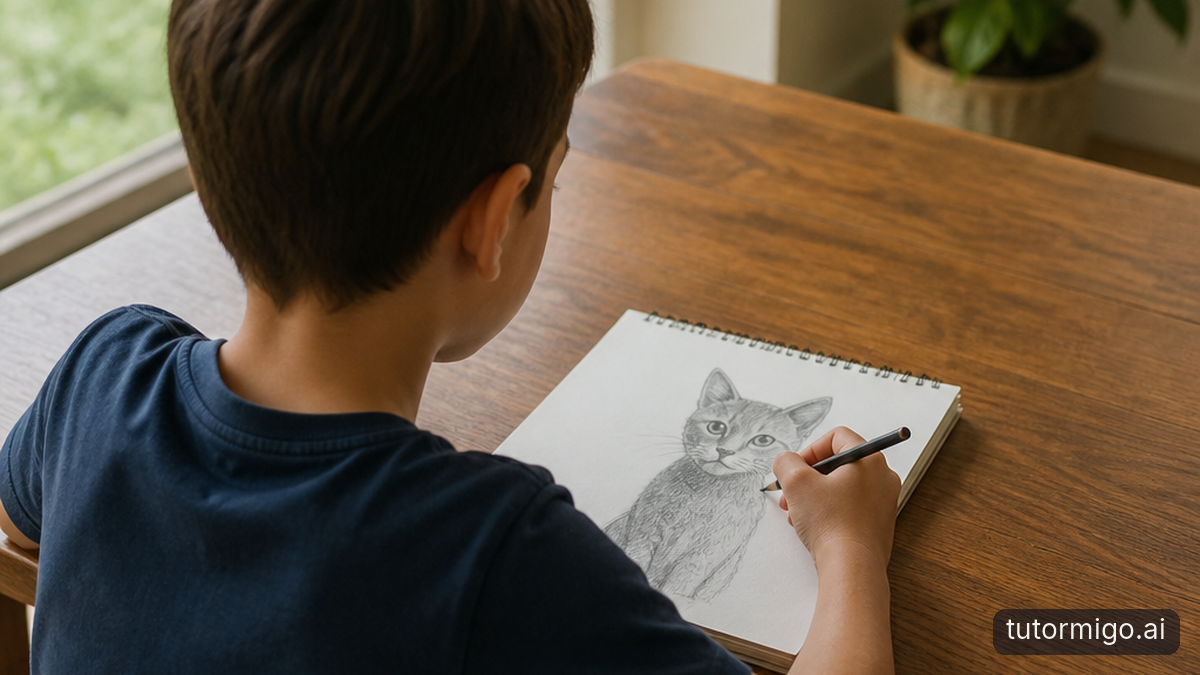
A study session often fails before it begins because “study science” or “finish everything” is too vague. A child who does not know what success looks like may avoid the work, even when they understand the material. Replace broad instructions with one visible action.
For example, instead of saying, “Go study for your test,” help your child write: “Review the three vocabulary words I missed yesterday, then answer five practice questions.” That target is specific, limited, and easy to check. If the assignment is an essay, the first task might be opening the document and writing three possible topic sentences. If it is math, the first task might be copying one example problem and identifying what the question asks.
Use a short planning conversation before work begins. Ask what is due, what may take the longest, and what can be finished in the available time. Then let your child choose the order when possible. Choice builds ownership, while a short list prevents the familiar cycle of wandering between tasks.
For more ideas on replacing unhelpful routines, see this guide to common study mistakes and better habits. The goal is not a perfect plan; it is a plan your child can actually begin.
Teach Focus Without Expecting Perfection
Focus is a skill children practice; it is not a switch they can flip on command. Parents can help children develop concentration by reducing distractions, using short work periods, and showing them how to recover when attention drifts.
Start with the environment. Keep only the materials needed for the current task on the desk, silence unnecessary notifications, and agree on where devices will stay. You do not need to create a silent room. Some children work well with quiet background sound, while others need more separation from conversation and television. Ask your child which conditions help them notice the work.
Try a manageable cycle such as 20 minutes of work followed by a five-minute movement break. During the work period, the child can mark distracting thoughts on a scrap of paper instead of acting on each one. During the break, encourage water, stretching, or walking rather than an activity that is hard to stop.
If your child loses focus, avoid treating it as a character flaw. Say, “Your attention moved. Let’s bring it back to the next question.” Over time, this calm reset teaches persistence more effectively than repeated criticism. For additional focus strategies, explore advice on staying focused while studying.
Use Questions Instead of Taking Over
It is tempting to sit beside your child and supply every answer, especially when they are frustrated. But taking over can make studying feel like something done for them. A stronger approach is to offer just enough support for your child to think through the next step.
Use questions that reveal the process. Ask, “What do you already know?” “Which part of the directions is unclear?” or “Can you show me an example that looks similar?” For a reading assignment, ask your child to predict what a paragraph will explain before discussing the answer. For a math problem, ask what information is given and what the question is asking, rather than immediately showing a formula.
Give help in layers. First, let your child try independently. Next, offer a hint, such as pointing to the relevant page or modeling one small step. Finally, work through a similar example together if the difficulty continues. Then ask your child to explain the original problem back to you. Explaining is useful because it shows whether the idea is understood, not merely copied.
“I won’t do this for you, but I will help you find the next step” communicates both confidence and support.
Notice the strategy, not only the correct answer: “You checked your work when the first approach did not work.”
Build Review Into the Week
Studying only the night before a quiz creates pressure and makes it harder to remember information later. A better habit is brief, repeated review. Parents can help children develop this pattern by making review a normal part of the week rather than an emergency response to an upcoming test.
After a lesson, invite your child to spend five minutes recalling the main ideas without looking at the notes. They might explain the concept aloud, draw a simple diagram, or answer two questions from memory. The next day, revisit the same material for a few minutes, then return to it again later in the week. Short gaps between reviews help your child notice what they truly remember.
Keep review active. Reading a page three times can feel familiar without proving understanding. Instead, cover the answers and ask your child to retrieve them, create a few questions, sort examples from non-examples, or teach the idea to someone else. If they miss something, treat the mistake as a useful signal about what needs another look.
Use a weekly planning check on Sunday or another calm day. Look at upcoming deadlines, choose two or three review targets, and decide when each will happen. For ideas about making routines last, read study habits that actually stick.
Review Progress and Choose the Next Step
Better study habits grow through small adjustments, not one perfect family meeting. Once a week, spend ten minutes reviewing what worked. Ask your child when starting felt easiest, which distractions caused trouble, and whether the workload matched the available time. Listen before offering solutions. Their answers may reveal that the desk is uncomfortable, the task list is too long, or they need clearer directions from school.
Choose one change for the following week. If your child missed several sessions, shorten them rather than adding guilt. If they finished work but remembered little, add a brief recall activity. If they worked independently, acknowledge that progress specifically: “You divided the assignment into three parts and started without a reminder.” Specific praise helps children recognize the behaviors they can repeat.
Keep expectations firm but flexible. A consistent routine still needs to account for illness, family events, and unusually difficult assignments. What matters is returning to the habit after an interruption. A simple restart phrase such as “We are beginning again today” can prevent one missed evening from becoming a lost week.
If you want structured support for practice, TutorMigo.ai offers a Study Tools Hub with an interactive whiteboard, code sandbox, and math step editor. It can be a useful next step when your child needs a focused place to work through ideas independently.
Frequently asked questions
There is no single ideal length. Start with a focused period your child can complete successfully, such as 20 to 30 minutes, then adjust based on age, workload, energy, and the quality of the work.
Stay calm and identify the barrier before adding consequences. Offer two reasonable starting choices, reduce the first task, and agree on a short work period. If refusal continues, speak with the teacher to check for confusion or an unusually heavy workload.
Ask your child to explain the directions, identify what they know, and choose the next step. Give a hint or similar example before giving a solution, then ask them to complete the original task independently.
Keep the routine predictable, review progress weekly, and change only one part at a time. Praise repeatable behaviors such as starting on time, checking work, or returning after a distraction.
Related reading
Enjoyed this read?
Like, share, or comment below.



Comments
0Sign in required · respectful discussion · replies supported
Loading comments…