


Observe first, then use prior knowledge to adjust
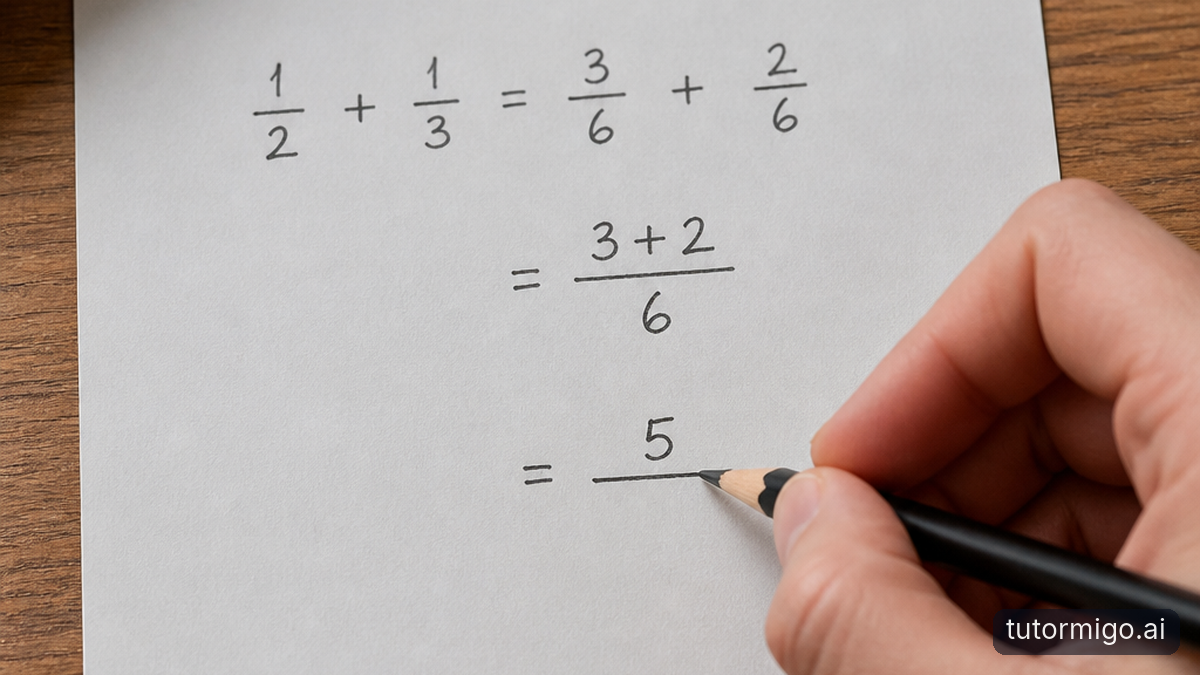
To explain how differences in prior knowledge shape learning, start by watching what happens before deciding what your child needs. Two children may receive the same worksheet but arrive with very different background knowledge, vocabulary, confidence, sleep, or experience with the topic. Your child may understand the main idea but stumble over one unfamiliar word, or may remember a procedure without knowing why it works. The visible mistake is only the starting point.
For one week, notice when your child begins, slows down, asks for help, guesses, gives up, or talks confidently. Ask neutral questions such as “Which part feels easy?” and “Where did it stop making sense?” Avoid turning the moment into a test. If your child solves addition quickly but cannot explain the strategy, that suggests a different need from a child who understands the method but loses track of steps. Write down the task, the conditions, and what helped. Patterns are more useful than a single difficult evening.
Also observe the context. Does attention improve after a snack? Does your child work better when instructions are read aloud, demonstrated, or broken into smaller parts? These observations help you respond to an actual need rather than assigning a fixed label.
Read the signs: confusion, boredom, or overload

Confusion often looks like repeated errors in the same place, long pauses, copying an example without being able to start alone, or using a correct answer for the wrong reason. A child reading a passage might pronounce every word accurately but be unable to explain what happened. In math, they may subtract when the problem asks for addition because the operation has not yet become meaningful. Ask your child to show the first step and explain their thinking; this can reveal the missing link without making them redo everything.
Boredom can look different: rushing, careless errors on familiar work, constant requests for harder problems, or finishing early and becoming disruptive. Try one small challenge, such as asking for two methods or a real-life application, before assuming the child needs more worksheets. Overload may show up as irritability, tears, staring blankly, physical restlessness, or an abrupt drop in accuracy after a sustained period. The answer may be a shorter session, a movement break, or fewer problems—not more encouragement to push through.
Look for persistence as well. If your child can focus on a favorite building project for thirty minutes but not on ten minutes of reading, the issue may involve task difficulty, confidence, or interest rather than a general attention problem. If distress is frequent across settings, share your observations with the teacher and consider asking whether further support is appropriate.
Adapt the explanation and the practice
When a child is confused, change the explanation—not simply the volume of it. Start with what your child already knows and connect the new idea to a concrete situation. To explain fractions, cut a sandwich into equal parts and compare one-half with one-fourth. Then draw the same idea, say it aloud, and finally use the symbols. This sequence gives your child several ways to connect meaning, language, and notation without claiming that one permanent “learning style” fits them.
Match the amount of practice to the error pattern. If your child understands multiplication but reverses digits, use a few carefully chosen examples and ask them to check place value. If they do not understand what multiplication represents, return to equal groups or arrays before increasing speed. Mix easy items with a small number of new ones so practice builds accuracy and confidence. Ask your child to predict an answer before calculating, then explain whether the result makes sense.
Give help in layers. First offer a pause and a question: “What do you know already?” Next point to a relevant example or provide the first step. Only then demonstrate more directly. Afterward, remove the support and let your child try a similar problem independently. The goal is not a perfectly completed worksheet; it is a clearer understanding your child can use again.
Adjust pace, attention, language, and engagement
Pace should follow understanding, not an imagined timetable. If your child needs repetition, revisit a concept briefly across several days instead of scheduling one exhausting lesson. If the work is secure, add depth: ask your child to create a problem, compare two solutions, or teach the idea to a stuffed animal. Keep the next step close enough to feel possible, but not so easy that your child can finish without thinking.
Attention is easier to support when the task has a visible shape. Try a ten-minute reading block followed by a two-minute movement break, or place three math problems on a card instead of presenting a full page. Reduce competing noise, keep only needed materials nearby, and stop while your child can still explain what they learned. A tired child may need rest more than a new strategy.
Language also matters. If school vocabulary is unfamiliar, say the word, define it in everyday language, and use it in a sentence. Invite your child to explain an idea in the language they know best before practicing the academic wording. For engagement, offer meaningful choices: solve with blocks or a drawing, write an answer or explain it aloud, choose which of two problems to attempt first. These choices change the route into learning without boxing your child into a label.
Use encouragement to build useful feedback
Encouragement works best when it names an action your child can repeat. Instead of saying “You are so smart,” try “You checked the units before choosing an operation,” or “You went back to the paragraph when the answer was unclear.” Specific feedback helps your child notice strategies rather than treating success as a fixed trait. It also makes mistakes safer to discuss.
Separate effort from effectiveness. A child can work hard with an unhelpful method, so respond with curiosity: “You kept going; what could we change about the plan?” If frustration rises, acknowledge it without lowering every expectation: “This is difficult right now. Let’s solve one part together, then decide whether to pause.” Avoid comparing siblings or classmates, since comparison can hide the real question—what support helps this child make progress?
Build a simple routine around the pattern you observed. For example: snack, five minutes of review, twelve minutes of new reading, a movement break, and two minutes to explain one takeaway. Keep a small record of the task, support used, and independent result. After several sessions, ask whether the same support is still needed. Share the record with the teacher, especially if confusion persists despite practice, frustration affects sleep or self-esteem, or your child struggles across subjects and settings. Teacher input can distinguish a temporary gap from a need for more formal support.
Make a small plan and review it together
Turn your observations into a one-week plan with four parts: the goal, the likely barrier, the adjustment, and the sign of progress. A plan might say: “For reading, my child will explain the main idea in two sentences. Because unfamiliar vocabulary slows understanding, we will preview three words, read one paragraph at a time, and use a short oral retell. Progress means explaining the paragraph without my prompt.” Keep the goal narrow enough to notice.
Review the plan with your child rather than presenting it as a correction. Ask, “What made this easier?” and “What should we change tomorrow?” If the child completes the work but remains anxious, the plan needs more emotional support. If the child finishes quickly and accurately, increase complexity rather than merely adding quantity. If there is no progress after reasonable adjustments, contact the teacher with specific examples: what the task was, where your child stopped, what you tried, and what happened next.
A home plan should be flexible, respectful, and temporary. Children’s needs change with the subject, day, and stage of learning. Once a strategy works independently, fade it. If you want a structured way to put these observations into practice, TutorMigo.ai offers a parent dashboard for visibility into progress and learning controls, plus study tools such as an interactive whiteboard and math step editor. Use those tools as support for your observation—not as a substitute for conversation with your child or teacher.
Frequently asked questions
Ask your child to explain the first step and show what they already know. A knowledge gap often produces the same error or missing connection repeatedly, while a pacing issue may improve after a short break, a smaller task, or extra processing time. Share the pattern with the teacher if you are unsure.
No fixed label is necessary. Use more than one representation when it helps: connect an explanation to a concrete example, drawing, discussion, or practice task, then check which combination improves understanding. The best approach can change by subject and situation.
Check whether the work is genuinely easy, rushed, or poorly matched to your child’s interest. Ask for a self-check, a second solution, or an explanation of the reasoning. If accuracy improves with a slower routine, build in review; if the work remains secure, ask the teacher about greater depth rather than simply more exercises.
Contact the teacher when a difficulty persists across several sessions, appears in multiple settings or subjects, causes strong distress, or continues despite changes in explanation, pace, and practice. Bring specific observations and examples so the conversation can focus on useful next steps.
Enjoyed this read?
Like, share, or comment below.


Comments
0Sign in required · respectful discussion · replies supported
Loading comments…