


Personalized Learning for Every Child
 Every child needs a personalized learning approach because children do not arrive at a lesson with the same background knowledge, attention span, confidence, or preferred way to practise. If a child is expected to move at one fixed pace, the work may be too easy, too difficult, or simply disconnected from what helps them understand.
Consider two children learning fractions. One may need to fold paper circles and compare pieces before the symbols make sense. Another may already understand the concept and need challenging word problems. Giving both children ten identical exercises can leave the first confused and the second bored. Neither response means the child is lazy or incapable; it means the task is not matched to the learner.
Personalization does not mean lowering expectations or designing an entirely separate curriculum for every student. It means paying attention to where a child is now, then choosing the next useful step. A teacher might change the example, a parent might shorten a practice session, or a student might review one missing skill before continuing. These small adjustments make learning more reachable without making it less ambitious.
For a deeper look at the evidence behind this idea, explore this guide to personalized learning for every student.
Every child needs a personalized learning approach because children do not arrive at a lesson with the same background knowledge, attention span, confidence, or preferred way to practise. If a child is expected to move at one fixed pace, the work may be too easy, too difficult, or simply disconnected from what helps them understand.
Consider two children learning fractions. One may need to fold paper circles and compare pieces before the symbols make sense. Another may already understand the concept and need challenging word problems. Giving both children ten identical exercises can leave the first confused and the second bored. Neither response means the child is lazy or incapable; it means the task is not matched to the learner.
Personalization does not mean lowering expectations or designing an entirely separate curriculum for every student. It means paying attention to where a child is now, then choosing the next useful step. A teacher might change the example, a parent might shorten a practice session, or a student might review one missing skill before continuing. These small adjustments make learning more reachable without making it less ambitious.
For a deeper look at the evidence behind this idea, explore this guide to personalized learning for every student.Start with the child’s current understanding
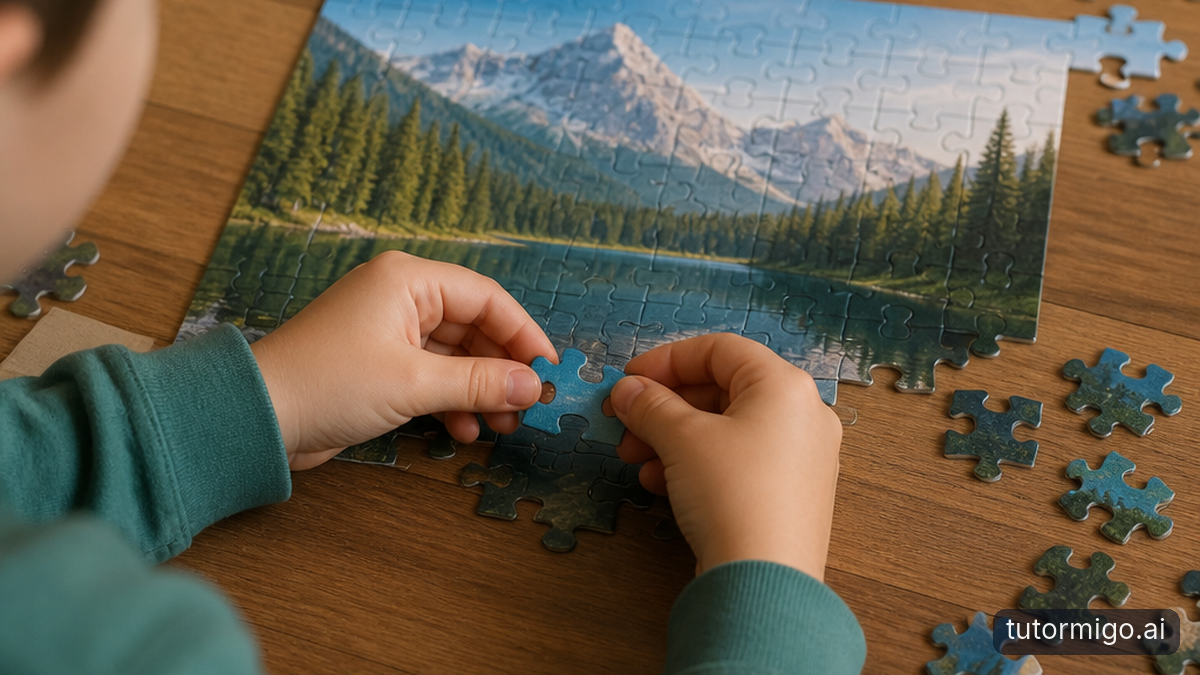
The most useful personalized plan begins with a simple question: what does the child understand already? Starting too far ahead creates frustration, while starting too far behind can feel patronizing. You can find the right starting point through a few low-pressure questions, a short practice task, or by asking the child to explain how they reached an answer.
Suppose a child struggles with a two-step word problem. Before assigning more of the same, ask them to underline the important information and describe what the question is asking. You may discover that the arithmetic is fine but the reading load is getting in the way. Another child may read the problem correctly but not know which operation to choose. The support should differ because the obstacle differs.
Keep an informal record of patterns rather than judging a single result. Note which directions need repeating, which mistakes appear often, and when the child works most confidently. A five-minute conversation after homework can reveal more than a score alone. Ask, “Which part felt easy?” and “Where did you get stuck?” Their answers help you adjust the next activity with evidence instead of guesswork.
Teachers can also compare independent work with guided work. If a child succeeds with a prompt but not alone, the next goal may be gradual independence rather than another explanation.
Adapt the pace without losing momentum
Personalized learning often means changing the amount of time a child spends on a skill. Some children need several short encounters before new information sticks; others need to move on quickly to stay engaged. The goal is not to rush or delay automatically, but to give each learner enough time for understanding to become usable.
Try replacing one long study block with smaller sessions. A child practising spelling might review four words after breakfast, use them in sentences later, and revisit them the next day. A student learning multiplication might solve three problems accurately, explain one strategy aloud, and stop before fatigue turns practice into guessing. Short, focused work makes it easier to notice whether the child is improving.
Pace should also respond to the type of mistake. If errors are random, the child may be tired or working too quickly. If the same error repeats, pause and reteach the underlying idea. If the work is consistently accurate and completed with little effort, add complexity rather than simply adding more questions.
> A useful rule is to adjust one variable at a time: change the duration, difficulty, instructions, or amount of support, then observe what happens.
This approach protects motivation. A child sees that difficulty is information, not a permanent label, and that the plan can change when the evidence changes.
Match practice to how the child learns best
Children often need different routes to the same understanding. One learner may remember an idea after explaining it aloud, while another needs to draw a model, sort examples, or connect the concept to something familiar. These preferences are not rigid labels, and no child should be limited to one “learning style.” Instead, use multiple forms of practice and notice which combination helps the child retrieve and apply the idea later.
For example, when learning the parts of a plant, a child could first look at a diagram, label a real plant, describe each function in their own words, and answer a few questions the next day. When learning a new language, they might hear the word, say it, see it in a sentence, and use it in a short conversation. The point is active contact with the idea, not decorative activities.
You can also let children choose between equivalent tasks. One might demonstrate understanding by writing a paragraph; another might explain the same reasoning verbally before writing. The standard stays clear, but the route gives the child a productive entry point.
Teachers benefit from sharing strategies across subjects, while parents can ask which method feels most helpful and then test it for a week. Keep the approach flexible: if a strategy looks enjoyable but does not improve recall or accuracy, change it.
Use feedback that tells the child what to do next
Personalized support depends on useful feedback. “Good job” may encourage a child, but it does not show what worked or how to improve. “You chose the right evidence; now explain how it supports your answer” is more helpful because it identifies a strength and gives a specific next step.
Aim feedback at the process rather than the child’s identity. Instead of saying, “You are not a math person,” describe the action: “You started calculating before identifying what the problem asked.” This keeps the problem changeable. Likewise, praise a strategy you want repeated: “You checked your answer by estimating first,” or “You reread the directions when the first attempt was unclear.”
Timing matters too. Immediate feedback is useful when a child is learning a new procedure, but a short delay can encourage independent checking once the method is familiar. Ask the child to mark any uncertain answer with a question mark, then review those items together. This turns mistakes into useful data and helps the child notice their own learning process.
For teachers and parents, a weekly review can be simple: one skill that improved, one point that remains difficult, and one action for the next session. A child who can see this progression is more likely to view learning as something they can influence rather than a verdict on their ability.
Build a flexible support system around the child
Personalization works best when the adults around a child share observations without turning learning into constant surveillance. A teacher may notice that a student participates confidently in discussion but avoids independent writing. A parent may see the opposite at home. Combining those observations can reveal when the difficulty appears and which supports are already helping. Create a small, consistent routine for communication. Share the current goal, the strategy being tried, and the sign of progress you are looking for. For instance: “We are working on showing each step in multi-part problems. We will look for a clear plan before calculation.” This is more useful than reporting only that homework was easy or hard. At home, protect the child’s ownership. Offer choices about order, timing, or examples, but keep the learning goal visible. If homework regularly ends in tears, shorten the first session and communicate the pattern rather than treating distress as defiance. Sometimes the best next step is a break, a clearer instruction, or help identifying the starting point. If you want structured support for putting these ideas into practice, TutorMigo.ai can be a natural next step. Its personalized tutoring workspace and parent dashboard are designed to support individualized practice while keeping progress visible to families.Frequently asked questions
No. Most children can work toward shared learning goals while receiving different examples, amounts of practice, explanations, pacing, or forms of support. Personalization changes the route or timing without lowering expectations.
Begin with observation and low-pressure questions. Ask the child to explain their thinking, note where they stop or repeat mistakes, and change one factor at a time. If the difficulty continues, discuss the pattern with the child’s teacher or another qualified professional.
It can if support is never reduced. Effective personalization gradually removes prompts as the child becomes more capable. Give enough help to make the next step possible, then ask the child to try more independently.
Choose one current skill and ask the child what feels easy, confusing, and helpful. Use the answer to adjust one practice session, then review what changed. Small, consistent adjustments are more useful than trying to redesign all learning at once.
Explore TutorMigo
Enjoyed this read?
Like, share, or comment below.


Comments
0Sign in required · respectful discussion · replies supported
Loading comments…