


When act prep becomes an evening standoff
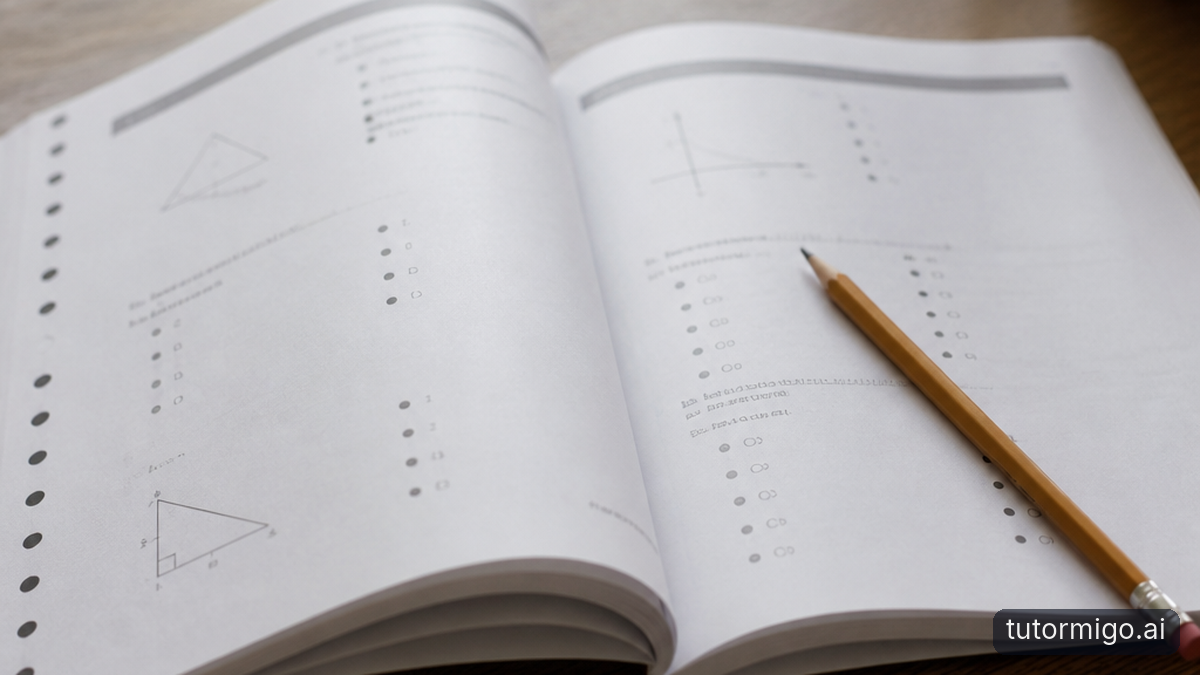
One unfinished ACT practice set has swallowed the evening. You remind your teen, they say “in a minute,” and soon you’re arguing about effort instead of practicing. Breaking that pattern starts with identifying the obstacle, shrinking the next task, and offering support without becoming the person doing the work.
Perhaps your teen started a math set after dinner, missed several questions, and drifted toward their phone. You see avoidance; they see another reminder that their target score feels far away. Each new prompt raises the pressure, but neither of you learns what made the work stop.
Interrupt the exchange before giving another instruction. Try: “We’re getting stuck in the same argument. I’m going to stop reminding you for a moment. Can we figure out what’s making this set hard?” Keep your voice ordinary, not pointedly soothing. If you raised it earlier, acknowledge that without attaching a lecture.
Your goal tonight is not to win agreement that ACT prep matters. It is to help your teen make one workable decision about practice. That might mean restarting with a smaller task or stopping deliberately. Either is more useful than spending another hour debating whether they care about their future.
Before You Push: Is Your Teen Confused, Tired, or Overwhelmed?

Resistance alone does not tell you what support is needed. Ask about the sticking point rather than assigning a motive: “Is there something you don’t understand, are you running out of energy, or does the amount feel too big?” Offer these as possibilities, not a diagnosis your teen must accept.
Confusion often has a location. Your teen might say, “I understand the reading passage, but I can’t tell which evidence supports this answer.” Ask them to show where they lost the thread. If they can identify the obstacle, focus help there instead of restarting the entire assignment.
Fatigue may look different: repeated rereading, unusually careless errors, yawning, or difficulty following familiar directions after a demanding day. Overwhelm may sound like, “There’s no way I can finish all this,” even when your teen understands individual questions. These signs overlap, so check your interpretation: “Would a smaller set help, or do you need rest first?”
A snack, water, or a quiet reset can help you reassess; none is a test of willingness. For more on looking beneath avoidance, this guide to distinguishing homework avoidance from genuine struggle offers a useful starting point. Let your teen’s explanation shape the next step.
Agree on a Small Starting Task That Supports Your Teen’s ACT Score Goal
A score goal can guide practice, but repeating it during an argument usually adds pressure. Translate the goal into a skill your teen can work on tonight. If recent English practice shows trouble with punctuation, a few targeted questions may be more useful than insisting on an entire mixed set.
Offer a bounded choice: “Would you rather try four punctuation questions or review two you missed yesterday?” Your teen chooses the task; together, agree on what counts as finished. For example, completion might mean attempting each question and explaining one corrected mistake—not getting every answer right.
Make the starting task small enough to begin without another negotiation. “Study until you improve” has no visible finish line. “Work on this reading passage for ten minutes, then mark where you got stuck” does. If timing is the stressor, make this a clearly labeled untimed learning session rather than treating it as a score prediction.
Try: “Your goal still matters. Tonight we’re choosing one action that supports it.” Once the task starts, step back. Avoid adding extra questions because the first few went well; honoring the original agreement helps your teen trust that starting will not quietly expand into an unlimited commitment.
What to Say When Your Teen Gets Stuck: Help Without Giving Answers
Before helping, ask permission and define your role: “Would you like me to listen while you explain, help clarify the directions, or give you space?” A teen who wants a sounding board may experience an unsolicited explanation as another takeover. Sitting nearby does not require managing every move.
Use questions that reveal thinking without steering toward a particular answer. For English practice, ask, “What is this question asking you to notice?” For reading, try, “Which sentence supports your choice?” For math, ask, “What information have you been given, and what have you tried?” Leave time for an answer rather than immediately rephrasing.
A conversation might sound like this: “Just tell me which one it is.” “I won’t choose for you, but I can listen to your reasoning.” “These two both seem right.” “What difference between them could you check against the passage?” Your teen still makes the decision and records the answer.
If neither of you understands the explanation, mark the question for later help. You do not need to become an ACT instructor to be supportive. Afterward, notice the process specifically: “You went back to the evidence before changing your answer.” That reinforces independent effort without pretending mistakes do not matter.
Use Short Breaks—and Know When to Pause Timed Practice for the Night
Agree on breaks before frustration peaks. For a short practice session, you might plan ten to fifteen minutes of work followed by a five-minute reset. Let your teen choose a simple break activity—stretching, getting water, or stepping outside—and agree on a return time. Avoid turning the break into another performance review.
Timed practice needs a different boundary. If your teen pauses the timer during a practice set, label the result as interrupted practice rather than using it to judge test-day pacing. You can still review the questions, but the timing no longer represents continuous work under the planned conditions.
Pause rather than push when your teen is crying, becoming increasingly distressed, struggling to stay awake, or making repeated uncharacteristic errors despite a reset. Your own rising anger is also a reason to stop. Say, “We’re not getting useful practice now. Let’s mark our place and decide when to return.”
A pause is not abandoning the score goal. Record one observation—such as losing focus halfway through a reading passage—and choose a realistic restart time together. Protect sleep instead of extending a standoff late into the night. A deliberate stopping point makes tomorrow’s practice easier to approach than an unresolved argument does.
When Recurring ACT Practice Struggles Warrant Contacting the Teacher
One difficult evening does not necessarily require an email. Contact the teacher or ACT prep instructor when the same obstacle persists across several sessions, directions remain unclear, or assigned practice repeatedly takes far longer than expected despite a smaller workload and reasonable breaks. Reach out sooner if distress is intense or an assignment deadline needs clarification.
Bring observations rather than labels. “They refuse to try” leaves little to investigate. “Across three English practice sessions, they attempted the questions but could not explain the punctuation choices after reviewing the answer explanations” identifies a teachable problem. Include what you tried and whether it helped.
Involve your teen in the message whenever possible. Ask, “Would you like to email first, draft it together, or have me contact them with you copied?” For an independent practice resource, a school teacher may not know that particular set; ask about the underlying skill rather than expecting them to troubleshoot every question.
A useful message might say: “We’re seeing repeated difficulty finishing reading practice within the planned time. Could you help identify whether comprehension or pacing needs attention, and suggest a manageable next step?” Ask which work to prioritize. Keep the request focused on learning, not on persuading another adult to enforce compliance.
Tomorrow’s Plan: Less Arguing, Manageable Practice, and More Independent Effort
Tomorrow, talk before the usual conflict begins. Take a few minutes to ask your teen which ACT section needs attention and what got in the way last time. Agree on a start time, one small practice task, a break, and a stopping point. Ask what kind of reminder they want, if any.
Make the agreement concrete: “After dinner, you’ll try four English questions and review one mistake. I’ll check in once at the time we chose. If you get stuck, you can ask me to listen, but you’ll keep the pencil.” Adjust the task together if it is clearly unrealistic.
At the end, ask two questions: “What helped you work independently?” and “What should we change next time?” Measure progress by whether your teen started, used a strategy, and identified a next step—not only by accuracy. Keep score discussions for a planned review instead of attaching them to every evening’s effort.
If your teen wants structured ACT practice sets and progress tracking, TutorMigo.ai’s exam preparation area is one option to explore together. Whatever resources you choose, keep the same boundary: you provide calm support and help arrange appropriate assistance; your teen owns the thinking, the answers, and the next attempt.
Frequently asked questions
Avoid repeating the request all evening. Pause, ask what makes starting difficult, and agree on a time to revisit the plan. If refusal persists, involve the teacher or prep instructor to help identify barriers and priorities.
No. Untimed practice supports learning and reviewing reasoning; timed practice helps assess pacing. Decide the purpose beforehand, and do not treat an interrupted session as a reliable pacing measure.
Ask your teen to explain the question, describe what they tried, and identify where they became stuck. Help them save a specific question for their teacher rather than guessing or supplying an answer.
Related reading
Enjoyed this read?
Like, share, or comment below.



Comments
0Sign in required · respectful discussion · replies supported
Loading comments…