


ACT Prep: Understanding ACT Science Mechanics
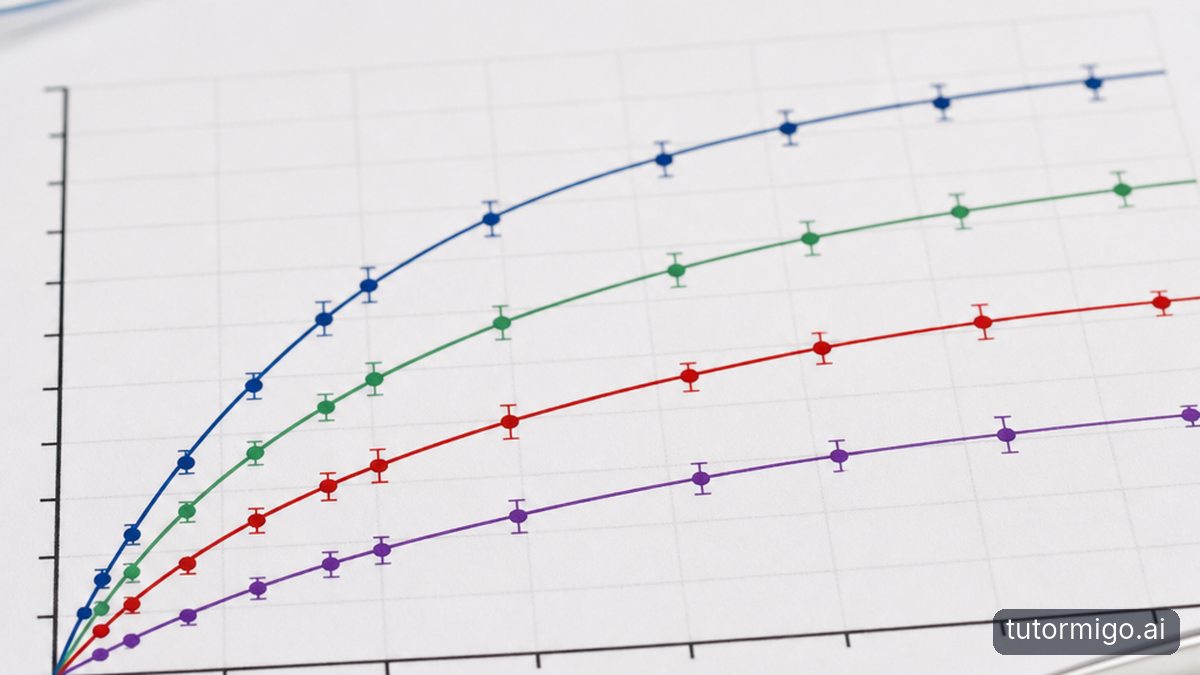
ACT Science often feels like a reading and logic test wearing a lab coat. You encounter unfamiliar experiments, technical vocabulary, and crowded figures, but many questions ask something simpler: Which value is larger? What changes as temperature rises? Which result supports a claim? Effective ACT science prep starts by separating the intimidating subject matter from the actual task.
Imagine a passage about enzyme activity. You could spend a minute trying to remember the entire biology unit. But if the question asks which temperature produced the highest activity, your job is to find the correct curve, check the temperature axis, and identify its peak. The passage supplies the evidence. Your background knowledge helps you stay comfortable, but it cannot replace reading the graph accurately.
That does not mean science knowledge never matters. Some questions require foundational concepts, and experimental reasoning matters throughout. The mistake is treating memorization as your main preparation strategy when your missed answers come from reading the wrong series, overlooking units, or comparing results from different experiments.
Use a repeatable first look: identify what changes, what gets measured, and how the groups differ. Then let the question determine your next move. A direct lookup usually needs a narrow search. A comparison of competing explanations needs closer reading. Reading every introductory sentence with equal attention can leave you short of time for questions you could otherwise answer.
After each practice set, label the cause of every miss: knowledge gap, graph-reading error, reasoning error, or pacing. Include correct guesses in that review. If most problems involve evidence location, more chemistry notes are unlikely to solve them. You need targeted data interpretation practice. For another way to approach visual information, see this guide to visual ACT prep that sticks.
Simulating Test Fatigue with Adaptive Practice

A graph can look manageable when you are fresh and surprisingly confusing near the end of a timed section. That is why you should practice both individual skills and sustained attention. Start with a short set to diagnose errors, then build toward section-length practice. The goal is to preserve an accurate reading routine even when the material stops feeling interesting.
Check the format for your actual administration before setting your timer. On the enhanced ACT, the optional Science section contains 40 questions in 40 minutes. That averages one minute per question, but equal time per question is not the goal. Quick lookups should leave room for harder comparisons. Practice moving past a stubborn item rather than letting it consume the time available for several others.
Make your practice adaptive through your next decision. If you keep confusing two plotted groups, choose another set with multiple curves. If your accuracy stays strong but your final passage collapses, work on pacing and longer practice blocks. An adaptive ACT tutor approach is useful when it responds to your actual errors, rather than simply giving you harder material.
TutorMigo.ai provides structured ACT practice sets and progress tracking through Exam Preparation. Its AI Tutor can also help you discuss a missed question and identify a more efficient reasoning path. Use those capabilities to guide your practice; automatic difficulty calibration and fatigue simulation are not established features of the listed tools.
Keep score goals equally grounded. Under the enhanced ACT, the Composite is based on English, Math, and Reading; Science is reported separately. Section-weighted composite tracking is therefore not a sound basis for promising Science-driven Composite gains. Nor should you treat an AI estimate as a verified prediction within point. To improve your ACT science score, compare several representative timed results, note unfinished questions, and look for repeatable improvement—not a single optimistic forecast.
Source-to-Study: Break Down Complex Charts Faster
The most useful source-to-study habit is turning a difficult chart into a small, repeatable reasoning exercise. Use a practice source you are permitted to study. Before solving its questions, explain the figure in plain language: what the horizontal axis measures, what the vertical axis measures, what each line represents, and whether the units change between figures.
Suppose a graph compares plant growth under three fertilizer treatments over several weeks. Before calculating anything, locate the treatment named in the question. Check whether you need its final height, its change over time, or a comparison with another treatment. Those are different tasks. Students often lose time because they begin inspecting every point before deciding which relationship the question actually asks about.
You can bring a typed description or a small transcription of the relevant table into the AI Tutor Workspace. Ask: “Which details do I need to compare these treatments, and which details can I ignore?” Then request a similar reasoning question using the information you supplied. Complex graph uploads and automatic chart extraction are not established capabilities in the listed features, so do not build your study routine around them.
The AI Tutor is most useful here when it prompts you to explain your evidence, rather than simply supplying an answer. Try: “Ask me to identify the measured outcome before you explain the solution.” After responding, check the explanation against the original source. A mistaken transcription can produce a convincing explanation of the wrong data.
For a more hands-on reset, use the whiteboard in TutorMigo.ai’s Study Tools Hub to sketch only the axes and the relevant trend. Strip away distracting detail without changing the relationship. Then return to the original chart and answer the question under time pressure. This sequence—simplify, explain, return—helps you practice recognizing structure without becoming dependent on simplified figures. Your final test is always whether you can read the original accurately and efficiently.
Your Next ACT Science Practice Session
Make your next session specific enough that you can tell whether it worked. Choose one goal, such as identifying the correct curve before checking answer choices or finishing every passage without rushing the last one. “Get better at science” is too broad to guide a practice decision. A visible behavior gives you something you can repeat.
Begin with a timed ACT Science practice set in TutorMigo.ai’s Exam Preparation area. Record your correct answers, unanswered questions, and any point where you lost your place. For your first review, focus on two mistakes that share a cause. Explain what you looked at, what the question required, and the cue you missed. Then complete another relevant set to check whether the correction holds.
If you are a counselor supporting a student, ask for the pattern behind the score: Are errors clustered at the end? Are units being overlooked? Does the student understand the evidence after the timer stops? Those questions lead to more useful goals than recommending another round of general content review.
Start an ACT Science practice set on TutorMigo.ai, then use your results to plan the next session. For a realistic score goal, pair platform progress tracking with current official timed practice and its scoring guidance. The aim is not a promised prediction—it is faster evidence finding, steadier pacing, and performance you can reproduce.
Frequently asked questions
Some foundational knowledge helps, but many questions primarily require interpreting figures, comparing experiments, and evaluating evidence. Review science content when your mistakes reveal a specific knowledge gap.
Practice identifying the requested comparison before inspecting every detail. Track where time disappears, move past stubborn questions, and build from short targeted sets to full timed sections.
On the enhanced ACT, Science is optional and reported separately from the Composite, which uses English, Math, and Reading. Confirm the format and requirements relevant to your administration and college plans.
No such guarantee is established by the listed features. TutorMigo.ai offers structured ACT practice and progress tracking; use representative official timed practice and current scoring guidance to assess your score range.
Related reading
Enjoyed this read?
Like, share, or comment below.



Comments
0Sign in required · respectful discussion · replies supported
Loading comments…