


Struggling to Start? AI Study Buddies Offer a New Way to Get Unstuck
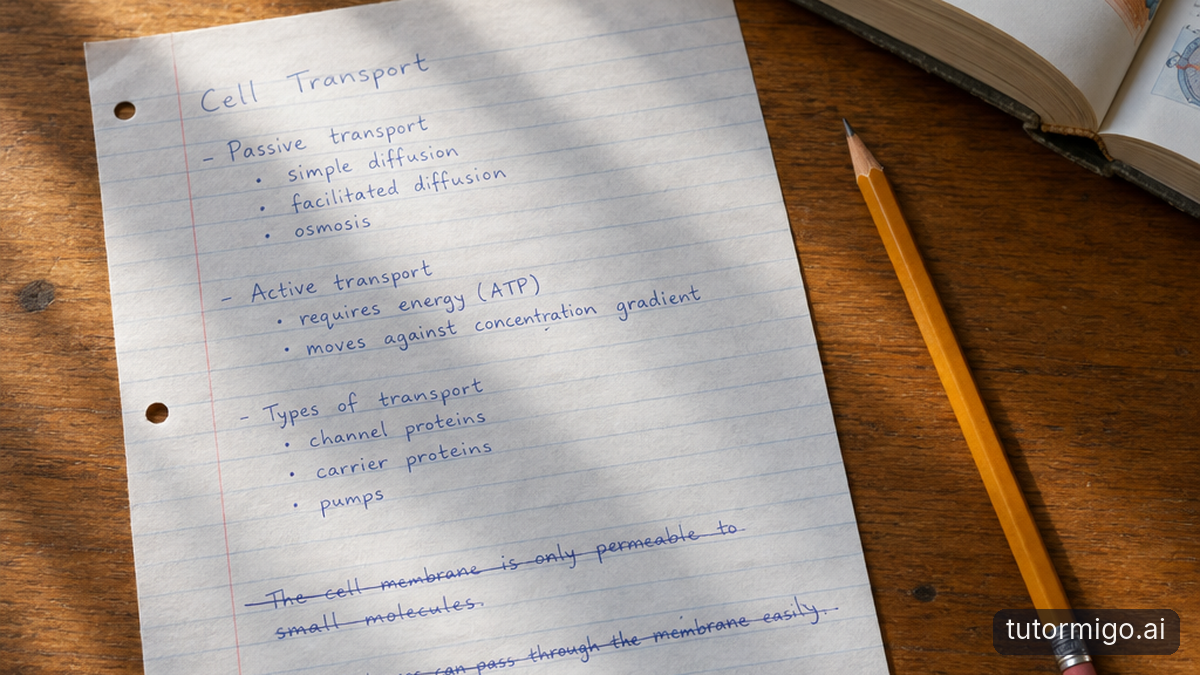
You sit down to study, open your notes, and somehow spend the next ten minutes deciding where to begin. AI study buddies offer a new way to break that pattern: use a conversation to choose one manageable task, practice it, and decide what comes next—without handing over the thinking.
An AI study buddy is a conversational tool you use as a study partner. You might ask it to help narrow a topic, pose questions, or respond to an explanation you have written. Its value is not that it makes studying effortless. It can make the first useful action easier to identify when you feel overwhelmed or unsure.
For example, “Help me study biology” leaves too many decisions open. Try: “I have twenty minutes and keep confusing diffusion with osmosis. Ask what I already understand, then help me choose one practice task.” You have supplied a topic, a difficulty, and a boundary. That gives the conversation somewhere concrete to go.
Start with an imperfect attempt rather than requesting a complete explanation immediately. Write down what you remember, even if it is only two sentences. Then ask the tool to identify one gap. A small, visible gap is usually easier to work on than the vague feeling that you need to learn everything.
Turn Your Study Goals Into Realistic Tasks and Focused Sessions

“Understand the chapter” describes an ambition, not an action. A workable task tells you what you will do and how you will recognize completion. “Explain the difference between diffusion and osmosis without notes, then answer three questions” gives your session a finish line. Ask your study buddy to help translate broad goals into tasks that fit the time and materials you actually have.
A useful prompt is: “I have twenty-five minutes, these two pages of notes, and limited energy. Suggest one essential task and one optional task. Keep the essential task small enough to leave time for checking.” Review the suggestion before accepting it. If it includes rereading an entire chapter or answering twenty questions, ask for a smaller version.
Separate planning from doing. Spend a minute or two choosing the task, then set a timer outside the chat and begin. Otherwise, refining your study plan can become a more comfortable substitute for studying. Keep one resource open alongside your notes rather than switching between several explanations.
Include a stopping rule: finish three questions, explain one process, or review one short set of cards. If the task proves harder than expected, reduce its scope instead of extending the session automatically. A realistic plan leaves room to notice errors, not just rush through material.
Stay Motivated With Check-Ins, Progress Tracking, and Encouraging Feedback
Motivation is easier to maintain when progress is visible, but a long chat history is not the same as evidence of learning. Keep a short record yourself: what you attempted, what you could do independently, and what still needs work. “Explained osmosis without notes; mixed up the direction of water movement once” is more useful than “Studied biology.”
Use check-ins at deliberate points rather than after every sentence. At the midpoint, tell your study buddy: “I completed one question but got stuck on the second. Help me decide whether to try a hint or review the definition.” At the end, ask it to summarize the difficulties you described, then correct anything it misunderstood. Unless your chosen tool explicitly supports reminders, set your own alarm for returning.
Ask for feedback tied to your work: “Name one thing my explanation gets right and one specific change that would improve it. Avoid general praise.” Encouragement is more credible when it points to an observable action, such as checking a confusing term rather than giving up.
On a low-energy day, define a minimum session before you start: one recall attempt and one correction. That keeps the habit manageable without pretending every day will be equally productive. Measure success by what you practiced and understood, not by how enthusiastic the conversation felt.
Study Actively With Practice Questions, Hints, and Teach-Back Prompts
A clear explanation can feel familiar before you can reproduce it yourself. To avoid confusing recognition with understanding, make answering your default activity. Ask your study buddy: “Give me one question at a time. Wait for my attempt before showing an answer, and ask me to explain my reasoning.” Then close or cover your notes before responding.
For the diffusion example, begin with a definition, then move to a situation: “What would happen if a drop of food coloring entered still water?” After answering, explain why. A follow-up question can reveal whether you understand the underlying idea or have only memorized the wording. Check generated questions and answers against your course materials, especially when the wording seems ambiguous.
When you get stuck, request a hint before a solution: “Point me toward the relevant principle without completing the answer.” Try again before asking for more help. If you eventually need the full explanation, close it afterward and reconstruct the reasoning from memory.
Teach-back adds another useful challenge. Explain a concept in plain language, then ask: “Which claim is unclear or unsupported? Ask me a question that tests it.” Save any missed ideas for another session. If you want to combine this with a human partner, these ways to study together with AI support offer a related approach.
Check AI Answers, Protect Your Privacy, and Avoid Overreliance
An AI response can sound confident and still contain mistakes. Treat it as something to examine, not an answer key. When an explanation introduces an unfamiliar claim, compare it with your textbook, course notes, or another reliable reference. If sources disagree, identify the exact point of disagreement rather than asking the AI to reassure you that it is right.
For example, if a generated answer describes osmosis differently from your notes, place the two definitions side by side. Check whether both specify water movement and the conditions involved. You can ask the tool to explain the discrepancy, but its explanation is not independent verification. A requested citation also needs checking: confirm that the source exists and supports the claim.
Share only what the task needs. Remove names, contact details, account information, and other identifying details from pasted material. Avoid uploading private records or someone else’s work without permission. Review the service’s privacy settings and data policies before sharing anything sensitive; conversational language does not make a tool confidential.
Finally, protect your ability to work without assistance. Attempt questions first, follow the rules for your coursework, and finish sessions with a short unaided check. If you can follow an explanation but cannot begin a similar question alone, your next task is more independent practice—not another polished explanation.
Try Your First AI Study Buddy Session: A Simple 20-Minute Routine
Use your first two minutes to choose one narrow topic and gather a trusted reference. Tell your study buddy: “I have twenty minutes. Help me practice this topic with one question at a time. Wait for my answers, offer hints before solutions, and leave time for an independent check.” Set a separate timer so the conversation does not quietly expand.
For the next three minutes, write what you remember without looking anything up. Share that attempt and ask for one priority to work on, checking the suggestion against your reference. Spend the following eight minutes answering a few short questions. Explain your reasoning, request a hint when necessary, and correct mistakes in your own words.
Use the next four minutes to close the chat and test yourself. Explain the concept aloud or answer a fresh question without help. If you cannot finish, record where you stalled. That result tells you more than how smoothly the earlier conversation went.
In the final three minutes, check your answer, record one improvement, and choose a specific task for next time. Stop there rather than building an elaborate system. If you want a dedicated place for these conversations and later review, TutorMigo.ai offers a personal study workspace with session history and spaced-repetition flashcards. The essential next step is still yours: choose one topic and make your first attempt.
Frequently asked questions
Name your topic, available time, and specific difficulty. For example: “I have twenty minutes and confuse diffusion with osmosis. Ask what I know, then give me one practice question at a time.”
It can support check-ins when you return and help you review the progress you describe. Do not assume it will initiate reminders or track your work automatically. Use your own timer and a simple study log.
Close the conversation and explain the idea or attempt a similar question without help. If you cannot begin independently, revisit the missing step and practice again before moving on.
Identify the specific disagreement and check a trusted reference. Ask for clarification if useful, but do not treat the AI repeating its answer as verification.
Enjoyed this read?
Like, share, or comment below.



Comments
0Sign in required · respectful discussion · replies supported
Loading comments…