


Still stuck on homework? When to consider tutoring

You’ve explained the homework three times, but your child still stares at the page. Choosing an ai tutor or human tutor starts with what is getting in the way: understanding, motivation, or confidence. Guided practice can help with repetition; a person may be needed to interpret struggles and rebuild trust.
Before paying for support, ask your child to show you where the work stopped making sense. “Tell me what you tried” usually reveals more than “Do you understand?” A child who can explain the method but keeps losing their place needs something different from one who cannot explain what the question asks.
For example, your child might appear stuck on multiplication when the real obstacle is reading a word problem. More multiplication practice would miss that obstacle. Or they might understand the task perfectly but freeze because yesterday’s homework ended in tears. Neither situation is proof of laziness or low ability.
Your first goal is not to select the most impressive service. It is to identify one small, observable need: understanding the question, choosing a method, checking an answer, or starting without distress. That gives you something specific to discuss with their teacher and something useful to test.
Is your child struggling with understanding, motivation, or confidence?
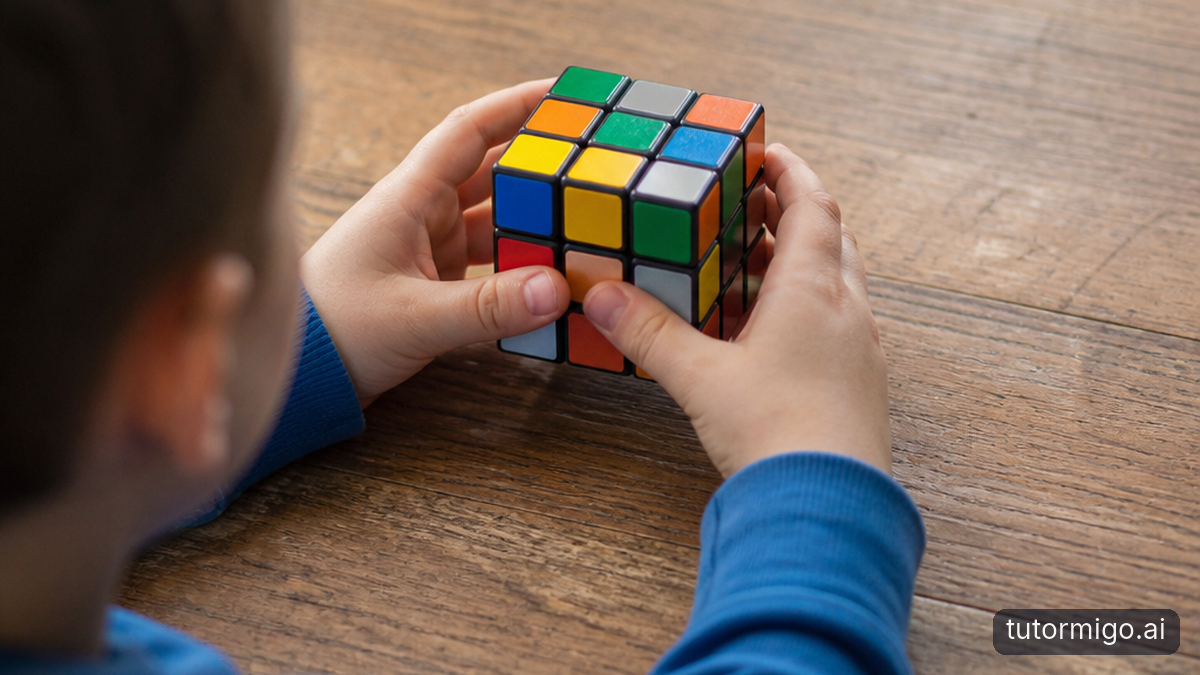
These difficulties often overlap, but a few observations can help you choose a starting point. Watch what happens before, during, and after a short task rather than judging by the finished worksheet alone. Ask your child what feels hardest, and treat their answer as information, not an excuse.
Understanding: Your child tries willingly but cannot explain why a method works, or repeats the same error across different questions. Ask them to work through one familiar example aloud. If their explanation breaks down at the same step each time, they may need a different representation or help with an earlier concept.
Motivation: Your child can complete similar work but struggles to begin or persist. Check the circumstances first: fatigue, unclear instructions, an overwhelming workload, or work that feels too easy can all look like unwillingness. Try a brief session with a clear finish point before assuming more tutoring is the answer.
Confidence: Your child knows more than they show but repeatedly asks whether every step is right, hides mistakes, or says, “I’m just bad at this.” Lower the stakes and notice strategies rather than speed. Persistent distress deserves a conversation with the teacher; tutoring should not become another pressure test.
When AI-guided practice helps: working through mistakes without giving away answers
AI-guided practice can be useful when your child has a reasonably clear learning target and needs more opportunities to try, get feedback, and try again. It can also make asking the same question repeatedly feel less embarrassing. That does not mean every explanation will be correct or suitable.
Suppose your child understands fractions during a lesson but gets stuck when practising independently. Rather than requesting a completed worksheet, they could ask: “Give me one hint about my first step. Don’t solve the question.” After attempting it, they can explain their reasoning and ask which step needs checking.
The important pattern is attempt, hint, explanation, independent retry. If the tool gives away the answer, cover it and ask your child to solve a fresh, similar question without help. A correct answer copied from a screen tells you little; an explanation followed by an unaided attempt tells you much more.
This approach works best when your child can read the guidance, tolerate a little uncertainty, and stop when something seems confusing. If they keep accepting answers without thinking, shorten the session and stay beside them. Convenience is helpful only when it creates practice rather than replacing it.
When a human tutor helps: spotting deeper gaps and rebuilding confidence
A skilled human tutor can notice patterns that are difficult to capture in a typed exchange: a long pause before reading, a sudden change in mood, or a child agreeing without understanding. They can ask follow-up questions, change the activity, and judge when encouragement matters more than another explanation.
Imagine a child who repeatedly struggles with division. A tutor might discover that the difficulty begins with grouping objects, not the written procedure. They could move away from the worksheet, use counters, and rebuild the idea before returning to symbols. Ask prospective tutors how they identify missing foundations rather than simply supervise homework.
Human support can also help when learning has become emotionally loaded. A child who says “I can’t” before trying may benefit from a consistent adult who sets manageable challenges and responds calmly to mistakes. The relationship matters, but warmth should come with clear teaching and opportunities to work independently.
Not every tutor provides this level of judgment. Look for someone who can explain their approach, listen to your child, and describe progress beyond completed assignments. These questions to ask when choosing a tutor can help you assess fit. A tutor should not diagnose a learning difficulty; persistent concerns belong with the school and appropriately qualified professionals.
How much supervision does your child need, and how can tutors work with you and their teacher?
Base supervision on what your child can manage, not simply whether support happens on a screen or across a table. Can they explain the task, recognise confusion, ask for help, and stop appropriately? A child who cannot yet do those things needs closer adult involvement with either option.
Start an unfamiliar tool together. Agree on what it is for, what information must stay private, and when to call you over. You might sit alongside for the first session, then stay nearby during later practice. Reduce supervision only when your child shows sensible habits, not just because the answers look right.
Keep communication with a human tutor equally practical. Share the teacher’s current method and one specific concern, such as “She can explain the example but cannot start the next question.” Ask the tutor to report what your child attempted independently and what still required prompting, rather than sending only a score.
Teachers provide classroom context; tutors provide targeted support; you provide observations about home routines and stress. These roles should reinforce one another. If explanations conflict, ask the teacher which approach to practise. Share a short summary or anonymised example rather than forwarding whole conversations containing personal information.
AI tutor or human tutor: weighing cost, privacy, and answer accuracy
Cost: Compare the total commitment, not just the advertised price. Human tutoring may involve hourly fees, travel, preparation charges, or cancellation rules. Digital support may involve subscriptions, usage limits, or automatic renewal. Ask what you will actually use each week and whether an affordable option still requires substantial supervision from you.
A lower monthly price is not automatically better value. If your child needs an adult beside them throughout, include that time in your decision. Conversely, paying for frequent human sessions may be unnecessary when one targeted session plus manageable independent practice addresses the difficulty.
Privacy: Before creating an account, check age requirements, parental consent, data retention, deletion options, and whether conversations may be used for model training. Avoid uploading names, school identifiers, reports, or sensitive information unless genuinely necessary and appropriately protected. For human tutors, ask about safeguarding, communication boundaries, and recording policies. This parent’s guide to safer AI learning offers further checks.
Accuracy: AI can produce confident mistakes, and humans can make errors too. Check disputed explanations against class materials, worked examples, or the teacher’s guidance. Ask your child to explain why an answer makes sense. If a claim remains unclear, pause rather than practising a possibly incorrect method repeatedly.
Try, review, adjust: a practical plan for choosing and combining support
Choose one goal for a short trial, such as starting homework with less prompting or explaining a particular method independently. Record a simple baseline: what your child can currently do, where help is needed, and how the session feels. Agree on a review date, perhaps after two weeks.
Match the trial to the obstacle. For a clear practice gap, try brief AI-guided sessions with agreed supervision. For persistent confusion or distress, consider a human tutor who will assess the starting point. You can combine them: a person introduces or repairs a concept, guided practice reinforces it, and the next session checks understanding.
At review, use a fresh, similar task without hints. Can your child explain their thinking, recover from a mistake, and begin with less prompting? Ask how the support feels, too. Completed homework and longer screen time are not evidence of learning by themselves.
Keep what helps; change what does not. More dependence, distress, or repeated misconceptions are reasons to adjust supervision or involve the teacher, not simply buy more sessions. If you decide to explore guided practice, TutorMigo.ai offers a personal tutoring workspace and a parent dashboard. Judge any option by the same test: growing understanding, confidence, and independence.
Frequently asked questions
Sometimes it provides enough support for a specific practice need. Persistent confusion, distress, or difficulty working independently may call for human judgment instead.
Use supervised, hint-first practice and ask for a fresh attempt without help. If answer-copying continues, change the format rather than extending sessions.
Look for clearer explanations, fewer prompts, and success on unfamiliar but similar tasks. Also check whether homework feels more manageable for your child.
Related reading
Enjoyed this read?
Like, share, or comment below.



Comments
0Sign in required · respectful discussion · replies supported
Loading comments…