


AI tutor vs traditional tutor: Start with learning needs

Before comparing options, describe the difficulty in a sentence. “My child needs help” is too broad. “My child understands the lesson but cannot start homework independently” gives you something useful to investigate. So does “They keep making the same mistake even after someone explains it.” Different problems call for different kinds of support.
If your child usually works independently but occasionally needs another explanation, conversational support may be enough. They could ask for a simpler explanation of a science concept, then explain it back in their own words. The important result is not a polished answer on the screen. It is whether your child can tackle a similar question without help.
If homework regularly ends in tears, avoidance, or arguments, access to explanations may not solve the main problem. A skilled human tutor can ask questions, notice hesitation, and build a relationship over time. That can matter when a child feels embarrassed about being behind.
Ask your child what happens immediately before they get stuck. Their answer may reveal whether the priority is understanding, confidence, organization, or simply having someone present. If the difficulty persists across settings, ask their teacher what they are noticing before buying support.
Compare the help your child actually receives
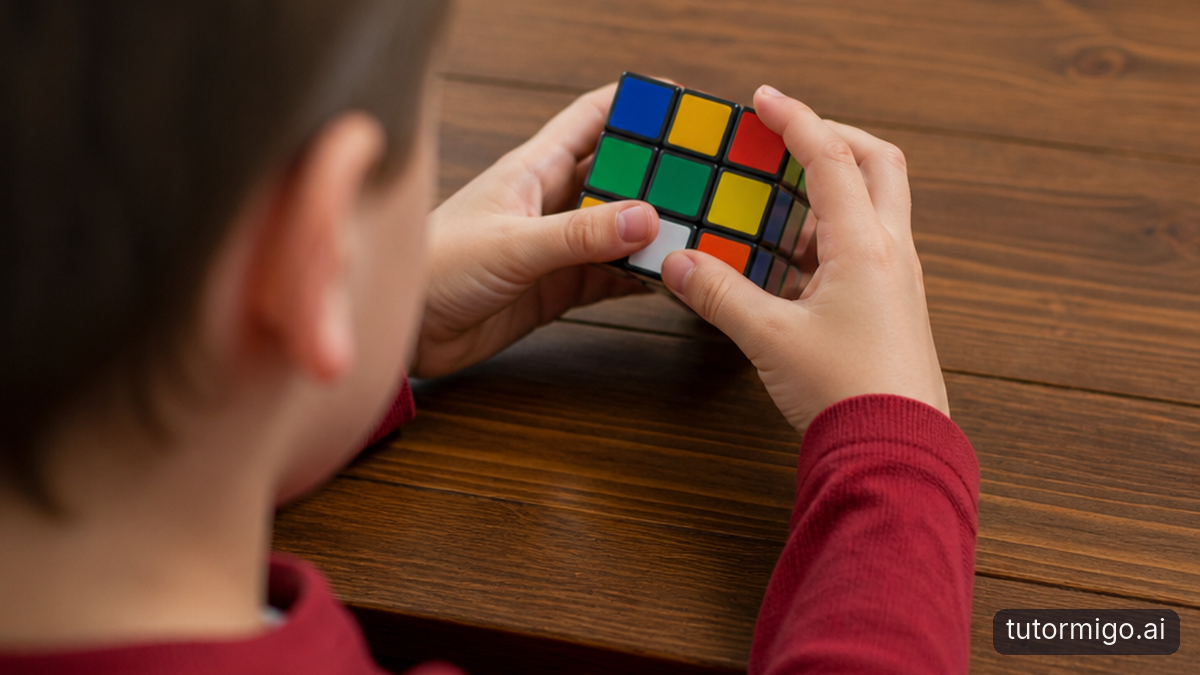
AI tutoring and human tutoring can both involve explanations, questions, and feedback. The difference is how that help is delivered and checked. A chat-based service responds to what your child types. A human tutor can also notice a long pause, a frustrated expression, or a mismatch between a confident answer and uncertain reasoning.
Imagine your child gets a fraction problem wrong. A useful digital conversation would ask them to show their reasoning and offer a manageable hint. An unhelpful conversation would simply supply the solution. A human tutor faces the same distinction: talking through every step for your child is not the same as helping them learn.
Neither format guarantees accuracy or good teaching. AI-generated explanations can be confidently wrong, and a human tutor may misunderstand a question or use a method that clashes with classroom instruction. Check disputed explanations against class materials or ask the teacher, rather than assuming either source must be right.
Use the comparison table as a starting point, not a ranking. Actual quality depends on the service, the individual tutor, and how your child participates. Also, a human tutor can work online: online versus traditional tutoring is a separate question from whether the teaching comes from software or a person.
| Consideration | AI-based tutoring | Traditional human tutor |
|---|---|---|
| How help happens | Conversational explanations based on what your child shares. | Live discussion with opportunities to observe hesitation and reactions. |
| Reviewing previous work | Session history can preserve earlier conversations. | Notes and follow-up practices vary by tutor. |
| Parent involvement | Some services offer progress dashboards and learning controls. | Progress updates and parent communication depend on the arrangement. |
| Confidence and motivation | May feel less intimidating for repeated questions. | Can provide encouragement through an ongoing personal relationship. |
| Accuracy | Explanations can contain errors and need checking. | Quality varies; explanations can also be mistaken. |
| Cost and commitment | Check subscription terms and usage limits. | Check session fees, scheduling, and cancellation policies. |
Know when a human relationship matters most
A traditional tutor is often worth considering when the obstacle is not just missing information. Your child may understand a topic during a lesson but panic when asked to work alone. They may rush to avoid feeling unsuccessful, or say “I don’t know” before attempting anything. In these situations, trust and careful observation can be central to progress.
A good tutor might notice that your child gives up whenever a question looks unfamiliar. Instead of repeating the lesson, they could practice identifying a first step and praise the reasoning behind it. That response depends on noticing a pattern, discussing it sensitively, and adjusting the session.
Some children, however, feel less embarrassed asking a digital tool the same question several times. The lower social pressure can make it easier to admit confusion. Ask your child whether they feel comfortable enough to ask questions, rather than assuming a person or a screen will automatically suit them better.
During a trial lesson, watch for evidence of genuine interaction. Does the tutor ask your child to explain? Do they adjust when an explanation fails? Your child should do meaningful thinking, not merely watch an adult perform. Persistent learning or emotional concerns also deserve a conversation with the school; tutoring is not a substitute for appropriate assessment or support.
Weigh cost, privacy, and the supervision required
Compare the real commitment, not just the advertised price. Human tutoring may involve scheduled appointments, travel, cancellation terms, and preparation between sessions. Digital services may charge subscriptions or impose usage limits. Prices vary widely, so check current terms and calculate what your family would actually use before choosing.
A cheaper option is not better value if you must sit beside your child throughout every session. Equally, paying for a human tutor is not automatically worthwhile if sessions mostly involve watching homework get completed. Include your time and your child’s engagement in the calculation.
Privacy deserves its own check. Before your child uses any service, review age requirements, data handling, account settings, and how conversations are stored. Avoid sharing identifying details, school records, or sensitive personal information unless you understand why they are needed and how they will be handled. For a human tutor, ask about safeguarding arrangements and communication boundaries.
Set a simple rule for either approach: help should make thinking visible. Your child should attempt the task, explain where they got stuck, and try again after feedback. If the support becomes a shortcut to completed answers, change the routine. Younger or less independent children may need closer adult supervision, whatever format you choose.
Run a small trial and look for independent progress
Rather than making a long commitment immediately, test one option against a specific goal. For example: “Over the next two weeks, my child will start homework with less prompting and explain one difficult idea without looking at the explanation.” Keep the goal small enough that you can observe it.
Before the trial, choose a typical task your child currently struggles with. Save their attempt, including any errors. During the trial, keep the amount of adult help reasonably consistent. Otherwise, you may mistake your extra involvement for an improvement caused by the tutoring.
After several sessions, offer a similar but unfamiliar task without support. Can your child choose a starting point? Can they explain why their answer makes sense? Also ask how the experience felt. Feeling comfortable matters, but enjoyment alone does not establish that learning has transferred.
Review the evidence together without turning it into another test of your child’s worth. If they can only succeed while being prompted, ask for fewer hints and more independent attempts. If they avoid the support altogether, investigate why. You might need a different tutor, a clearer routine, or a different format—not simply more sessions. Keep what helps and stop paying for what does not.
Choose your next step without overcommitting
You do not need to declare one approach the winner for every situation. Choose the least complicated support that addresses the problem you identified. If your child mainly needs occasional explanations and can question an answer, supervised digital help may be a reasonable starting point. If they need encouragement, close observation, or sustained accountability, interview a human tutor.
A combination can also work, provided each part has a clear job. A human tutor might address a recurring misunderstanding during a scheduled session, while a chat-based tool helps your child revisit the explanation between meetings. Avoid adding multiple services without knowing what each contributes; extra support can become extra workload.
Agree on a review date before you begin. Ask whether your child understands more, works more independently, and feels more able to attempt difficult tasks. If the answer is no, adjust the plan rather than treating continued spending as proof of commitment.
If you want to try conversational support, TutorMigo.ai offers a personal tutoring workspace and a parent dashboard for viewing progress and setting learning controls. Whatever you choose, start with one clear goal and let your child’s independent learning—not the technology or the price—guide your next decision.
Frequently asked questions
Sometimes it can meet a child's need for occasional explanations. It is less suited to replacing the observation, relationship, and accountability a skilled human tutor can provide. Judge by independent progress.
Compare current prices, usage limits, cancellation terms, and the supervision required. A lower subscription price is not necessarily better value if your child rarely uses it or needs constant help.
Ask your child to attempt the task first, request hints rather than solutions, and explain their reasoning afterward. Then check whether they can complete a similar question independently.
Ask how they identify misunderstandings, involve your child in explanations, coordinate with classroom methods, and report progress. Clarify safeguarding practices, communication boundaries, fees, and cancellation terms.
Explore TutorMigo
Enjoyed this read?
Like, share, or comment below.



Comments
0Sign in required · respectful discussion · replies supported
Loading comments…