

Losing Focus During ACT Prep? Research and Personal Preference
You’re halfway through ACT Reading when the room starts feeling stuffy, sunlight washes across your screen, and a nearby conversation pulls you off the passage. Temperature, lighting, and sound can affect comfort and attention. Small adjustments, tested with comparable timed sets, can help you find a setup that supports your score goals.
You already know the sections and the score you’re working toward. Now ask whether your surroundings are making that work harder. Research supports taking environmental distractions seriously, but it does not identify one universally ideal room. Effects vary with the task, the person, and the conditions being compared.
Separate evidence from preference. Distracting speech can interfere with verbal tasks; that is different from assuming everyone needs complete silence. Excessive heat can undermine performance, but a favorite thermostat setting is not a scientifically established target. Comfort matters without guaranteeing better accuracy.
For a high-school ACT student, the best study environment for kids is therefore a setup to test, not a shopping list. Supporting adults can help by making one practical change and protecting practice time. If concentration remains difficult after those changes, explore ways to handle difficult ACT study sessions rather than blaming either the room or your motivation automatically.
Temperature: Practical Ways to Stay Comfortable in a Hot or Cold Practice Room

A hot room can make a timed set feel more demanding, especially when you are already tired. Research on thermal conditions suggests that excessive heat can impair some attention and cognitive tasks, although results depend on exposure, task demands, and other factors. Cold discomfort can also become a distraction. Neither finding establishes a universal thermostat setting for ACT practice.
Start with adjustments you can actually control. Move away from direct afternoon sun, lower a blind, or use a quiet fan if available. Ventilate when outdoor conditions and safety allow. Avoid a fan position that blows papers around or makes you strain to hear your timer. If possible, practice during a less uncomfortable part of the day.
In a cold room, try removable layers and move away from a direct air-conditioning vent. For example, keep a light sweatshirt within reach before beginning instead of interrupting Math to search for one. Supporting adults can help arrange a reasonable space without repeatedly checking in during the timed set.
If the room cannot be changed, do shorter learning sessions there and reserve another location for occasional full-section practice. Drink water beforehand and use scheduled breaks appropriately. Do not deliberately practice through significant overheating or feeling unwell to build supposed test-day toughness.
Lighting: Reduce Screen Glare and Adjust Your ACT Practice Setup
Good lighting should let you read passages, inspect figures, and use scratch paper without leaning forward or repeatedly changing position. Research supports addressing glare and visual discomfort, but claims about one optimal study lighting setting go too far. Needed light varies with daylight, the surface you are viewing, and your own visual needs.
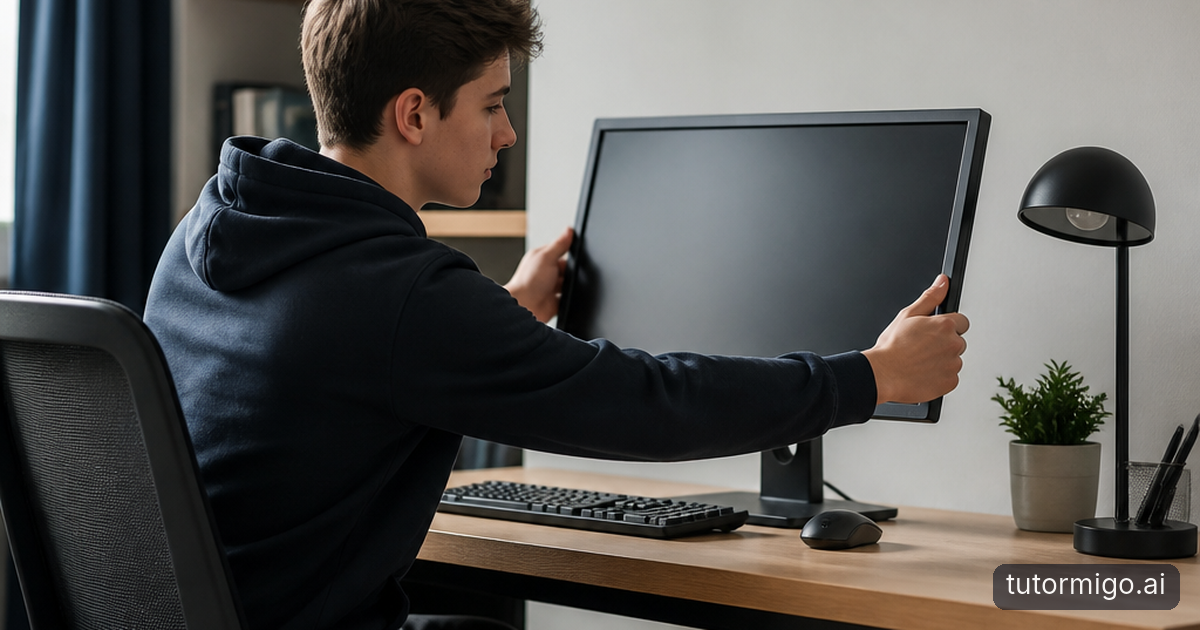
For screen practice, check reflections before starting the timer. A window directly behind you may appear across the display; a bright window behind the monitor can create an uncomfortable contrast. Try placing the screen sideways to the window, adjusting blinds, or changing its angle slightly. Set brightness for comfortable reading in that room rather than automatically choosing maximum brightness.
For paper practice, position a shaded lamp so your hand does not cast a shadow over your work. Keep the surrounding room comfortably lit instead of creating a bright island on an otherwise dark desk. If overhead lighting reflects from glossy materials, moving the desk may help more than adding another lamp.
Make adjustments before a timed attempt, then leave them stable. If you repeatedly squint, lose your place, or develop headaches despite reasonable changes, tell a supporting adult and consider an eye-care assessment. Those symptoms deserve attention beyond experimenting with bulbs or screen settings.
Sound: Manage Distracting Conversations and Decide Whether Music Helps Your Reading
Nearby conversation is a particular challenge during Reading and English because understandable speech competes with the language you are processing. Research on background sound generally finds that speech and music with lyrics can disrupt reading-related tasks, although effects vary. Feeling happier with music does not necessarily mean you understand passages better or finish faster.
Start with the most direct fix: ask for a quiet interval with a clear endpoint. “Could we keep this room conversation-free until my timed set ends?” is easier to honor than a general request to be quiet. Move away from shared walls or use another room if available. Adults can coordinate calls and household conversations around that interval.
If music helps you settle down, use it before starting, then test silence during reading. If you want to compare instrumental music with silence, keep volume modest and use comparable passages. Familiar instrumental tracks may feel less distracting, but they can still pull attention away. Treat your preference as a hypothesis.
There is no single noise level for studying children that predicts an ACT student’s performance. Sound type and unpredictability matter alongside volume. Earplugs or steady background sound may help at home, but do not assume personal audio devices or particular ear protection will be permitted on test day. Check current ACT rules before relying on them.
Test Your Setup With Comparable ACT Practice Sets: Track Accuracy and Pacing Against Your Score Goals
Change one factor at a time. To test glare reduction, keep the room, sound, practice time, and materials as similar as possible while changing screen position. Use fresh sets from a consistent source, matched as closely as possible for section, length, and difficulty. Repeating the same questions introduces a memory advantage that can disguise an ineffective change.
Follow timing appropriate to your registered ACT format and any approved accommodations. Compare Reading with Reading, not a Reading passage with a Math set. If you are taking Science, compare similar passage demands. Short sets are useful for screening adjustments, but confirm promising results during a longer timed section.
Record the setup, questions attempted, questions correct, unanswered items, and time used. Add a brief comfort note and identify any point where pacing slipped. For example, fewer rereads in a quieter room is useful information, but check whether accuracy also held up. Finishing faster by guessing more is not the improvement you want.
Repeat the comparison across several sessions before drawing conclusions. Sleep, stress, and question difficulty can explain a single unusually good result. Use official scoring guidance when assessing progress toward your score goal; a small practice set cannot reliably predict a scaled score. If results disappoint, review a disappointing ACT result constructively before deciding the environment caused it.
Your Setup Checklist and Next Steps for Approximating ACT Test-Day Conditions
Choose the simplest setup that repeatedly supports accurate, steady work. You do not need to recreate every detail of a testing center. The aim is to reduce avoidable distractions while becoming comfortable working without your favorite extras. Keep relaxed learning sessions separate from timed rehearsals that follow the conditions you expect on test day.
Before your next rehearsal, confirm your registered format, current section timing, break schedule, permitted materials, and any approved accommodations using official ACT information. Practice with the same general delivery mode where possible. Do not assume a home playlist, desk fan, snacks during a section, or personal lighting controls will be available or allowed.
Then run a timed section without pausing to adjust the room. If discomfort appears, note when it starts and address it afterward unless you feel unwell. A supporting adult can protect the session from interruptions, then help review your accuracy and pacing without turning every mistake into a discussion about effort.
- Check temperature and prepare removable layers.
- Reduce glare on the screen and scratch paper.
- Agree on a conversation-free practice interval.
- Prepare permitted materials and the correct timing.
- Log accuracy, pacing, and comfort afterward.
Repeat your chosen setup before a longer rehearsal, keeping changes small. If you want structured ACT practice sets and progress tracking for that next stage, TutorMigo.ai offers an exam-preparation workspace. Keep your environment notes alongside your results so you can judge what actually helps.
Frequently asked questions
Music may improve your mood without improving comprehension. Lyrics can compete with reading, so start with silence and compare fresh, similar timed passages before deciding whether instrumental music helps.
There is no universal best temperature. Aim for comfortable conditions that do not distract you, use removable layers, and compare accuracy and pacing rather than chasing a specific thermostat setting.
Occasional practice with ordinary, mild background noise can reveal distractions, but deliberately loud conditions are unnecessary. Prioritize realistic timing and verify current ACT rules before relying on ear protection or audio devices.
Related reading
Enjoyed this read?
Like, share, or comment below.



Comments
0Sign in required · respectful discussion · replies supported
Loading comments…