

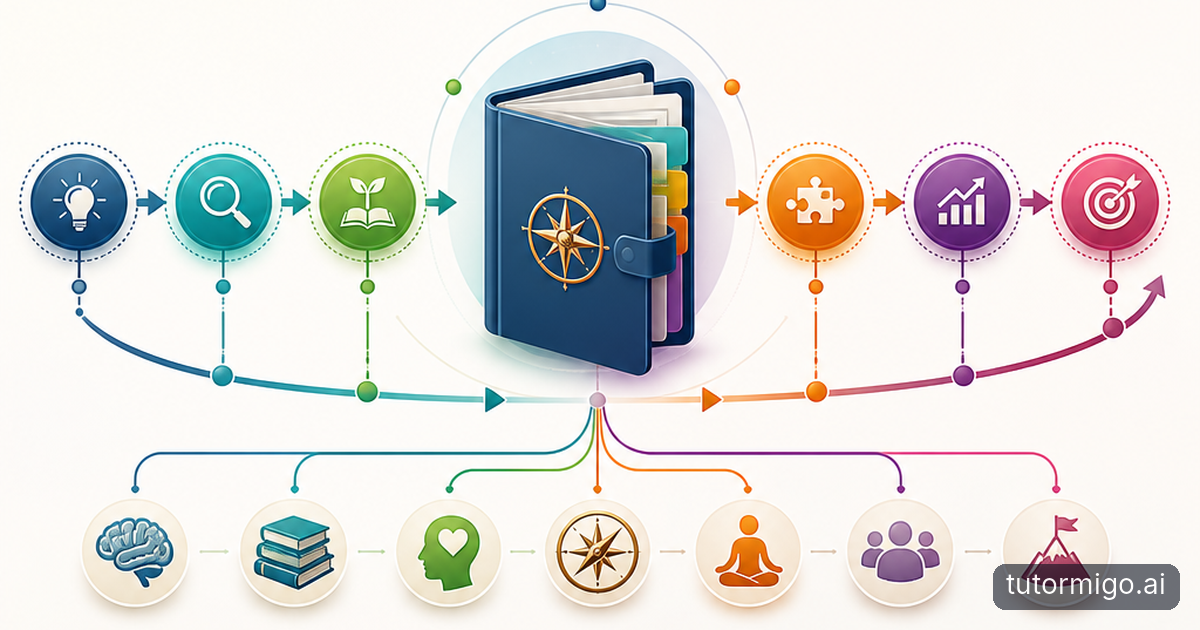
Choose a Question to Guide Your Capstone Projects
You may have strong grades, polished activities, and plenty of interests, yet still struggle to show what makes your intellectual profile distinctive. A capstone or independent research portfolio can solve that problem when it captures a real question, a sustained investigation, and evidence of how your thinking changed.
The strongest projects usually begin with a question narrower than a broad passion. “How does climate change affect cities?” is too expansive. “How have heat-mitigation policies changed public bus stops in three neighborhoods?” gives you a possible place, timeframe, and set of sources. A student interested in music might compare how one regional genre changed after migration rather than attempting to explain the history of music.
Before committing, write a one-page project brief. State the question, why it matters to you, what evidence you can realistically access, and what a finished result might look like. Then test the question against your time and resources. If the project requires interviews, archival material, laboratory access, or specialized software, identify those needs early. A modest question pursued carefully is more persuasive than an ambitious question abandoned halfway through.
Choose a capstone with a clear intellectual spine
A capstone should feel like one connected argument or investigation, not a folder of impressive-looking activities. Think of its intellectual spine as the line that joins your question, method, evidence, interpretation, and final contribution. If a reader removed the photographs, certificates, and design flourishes, that spine should still be visible.
For example, a student examining local food access might begin with public data, map grocery locations, interview community organizers, and compare the findings with municipal planning documents. The final work could be a research report accompanied by a carefully documented map. Each part serves the same inquiry. By contrast, a collection containing a survey, a short story, and an unrelated coding project may show range but not depth.
Write a working claim before you know the conclusion. It might say, “Transportation, rather than store availability alone, appears to shape food access in this area.” Your evidence may complicate or overturn it, which is valuable. Keep a decision log explaining why you changed your sample, rejected a source, revised an interview question, or abandoned an early interpretation. Those choices reveal more intellectual maturity than a flawless-looking final product.
Build a research process readers can verify
Selective admissions readers cannot personally reconstruct every project, so make your process easy to follow. A useful portfolio separates the finished work from the evidence behind it: a research question, annotated bibliography, methodology, raw or summarized findings, revisions, and a reflection on limitations. You do not need to display private information or publish sensitive interview material. You do need to show how conclusions emerged.
Suppose you investigate whether a neighborhood park is equally accessible to residents. Record how you define accessibility, which routes you examine, when you collect observations, and what your method cannot measure. If you interview six people, say six; do not let polished prose imply a representative survey. If a source contradicts your preferred interpretation, include it and explain how you assessed the disagreement.
Use versioned files and consistent naming from the beginning. A simple folder structure might include “question,” “sources,” “field notes,” “analysis,” “drafts,” and “final.” Date major decisions. Ask an experienced reader to check whether the evidence supports the claim without supplying background you forgot to include. Clarity, transparency, and honest limits make a small project feel serious.
Make the portfolio show change over time
A portfolio becomes intellectually compelling when it lets someone see your thinking develop. Do not present only the final report and a triumphant summary. Include a short before-and-after explanation: what you initially believed, what the evidence complicated, and what you now understand more precisely.
A student studying historic housing policy might begin by assuming a single law caused a neighborhood’s displacement. After reviewing city records, oral histories, and demographic data, the student may find that zoning, transportation changes, and private investment interacted over several decades. The important result is not simply a more complicated conclusion. It is the demonstration that the researcher learned to resist an attractive but incomplete explanation.
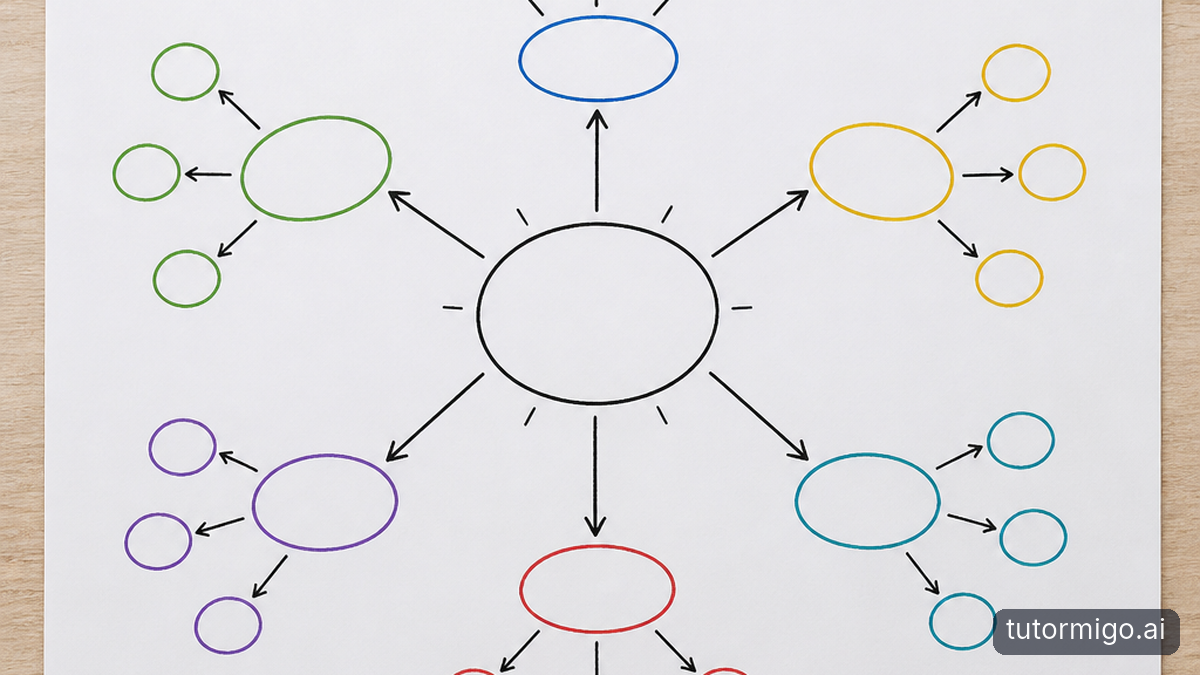
Choose artifacts that prove this evolution. An early concept map can sit beside a later framework. An annotated source can show how you learned to distinguish evidence from commentary. A rejected method can explain what went wrong and what replaced it. Keep the reflection specific: “I changed my interview protocol after realizing my first questions invited yes-or-no answers” is stronger than “I grew as a researcher.” Intellectual depth is visible in precise revisions, not grand claims about curiosity.
Present depth without turning it into a performance
Your portfolio should be accessible to a busy reader who does not share your specialist vocabulary. Open with a concise overview: the question, the setting, the method, and the central finding or unresolved tension. Then provide links or sections for readers who want the full evidence. A clean research report, a visual project, or a small website can work; elaborate design cannot substitute for substance.
Use captions to explain why an artifact matters. Instead of labeling an image “fieldwork,” write that it documents the observation protocol used at three sites. Instead of listing “mentor feedback,” summarize the decision it prompted. Credit collaborators, public datasets, archives, and community participants accurately. If the project involved a group, specify your contribution rather than presenting shared work as entirely individual.
Avoid inflated language such as “groundbreaking” or “definitive.” State the project’s scale honestly. “This study compares four public meeting records from 2022” gives readers a useful frame. Also check privacy, consent, copyright, and institutional rules before sharing interviews, photographs, or unpublished material. A responsible presentation signals judgment, especially when your work concerns real communities or people whose stories are not yours to claim.
Connect the work to your broader direction
The final step is not to force every interest into one personal brand. It is to explain what the project clarified about the questions you want to pursue next. A capstone on coastal planning might lead toward environmental policy, data visualization, public history, architecture, or a new question entirely. The connection should be earned by the work itself.
Write a short synthesis for your portfolio and applications: what you investigated, which skill or habit of mind you developed, what remains unresolved, and what you would do with more time or better access. Keep it concrete. You might say that comparing city records taught you to read policy as an accumulation of choices, or that field observations made you question tutormigo.ai conclusions drawn from datasets alone.
Before submitting anything, ask two readers to respond separately: one should assess the substance, and another should assess whether the project is understandable without insider knowledge. Remove repetition, repair unsupported claims, and verify every citation. Then preserve a private archive of notes, drafts, permissions, and data. Your next step may be a deeper version of the same inquiry, a related project, or a deliberate change in direction. All three can demonstrate serious thought when you can explain why.
Frequently asked questions
No. Publication is not a requirement, and you should not pursue it merely as a credential. A well-documented project with a clear question, credible method, honest limitations, and thoughtful reflection can communicate depth even if it remains a personal or community-based work.
The right timeline depends on the question, method, access, and your other commitments. Set milestones for defining the question, gathering evidence, analyzing findings, revising, and presenting the work. A smaller project completed carefully is generally more useful than an oversized project with thin evidence.
Yes, if the creative work is supported by a clear inquiry and meaningful documentation. A documentary, exhibition, design prototype, or performance can show depth when you explain the research, choices, revisions, sources, and limitations behind the finished piece.
Treat uncertainty as a legitimate result. Explain what you tested, what the evidence suggests, why it is insufficient for a firm conclusion, and what additional evidence could change the analysis. Honest uncertainty is stronger than overstating a result.
Enjoyed this read?
Like, share, or comment below.



Comments
0Sign in required · respectful discussion · replies supported
Loading comments…