


Classroom confidence: why asking feels risky

Before introducing a chatbot, ask what your child thinks will happen if they speak. “I don’t know what to say” is a different problem from “Everyone will laugh.” One child may struggle to turn confusion into a question; another may remember being interrupted or embarrassed. The same practice exercise will not address both situations equally well.
Choose a calm moment rather than questioning your child immediately after a difficult school day. You might say, “When you wanted help today, what made it hard to ask?” If they cannot explain, offer possibilities without deciding for them: finding the words, getting the teacher’s attention, speaking loudly enough, or worrying about classmates. Accept their answer without immediately trying to disprove it.
AI is most useful when the obstacle involves wording or rehearsal. It cannot stop teasing, change an impatient response, or make an inaccessible classroom accessible. If your child says a teacher dismisses questions or classmates repeatedly mock them, speak with the school. For everyday hesitation, start with these ways to help your child ask questions in class. Understanding the barrier first prevents you from treating a problem with the classroom environment as a problem with your child.
Use AI to rehearse one realistic exchange
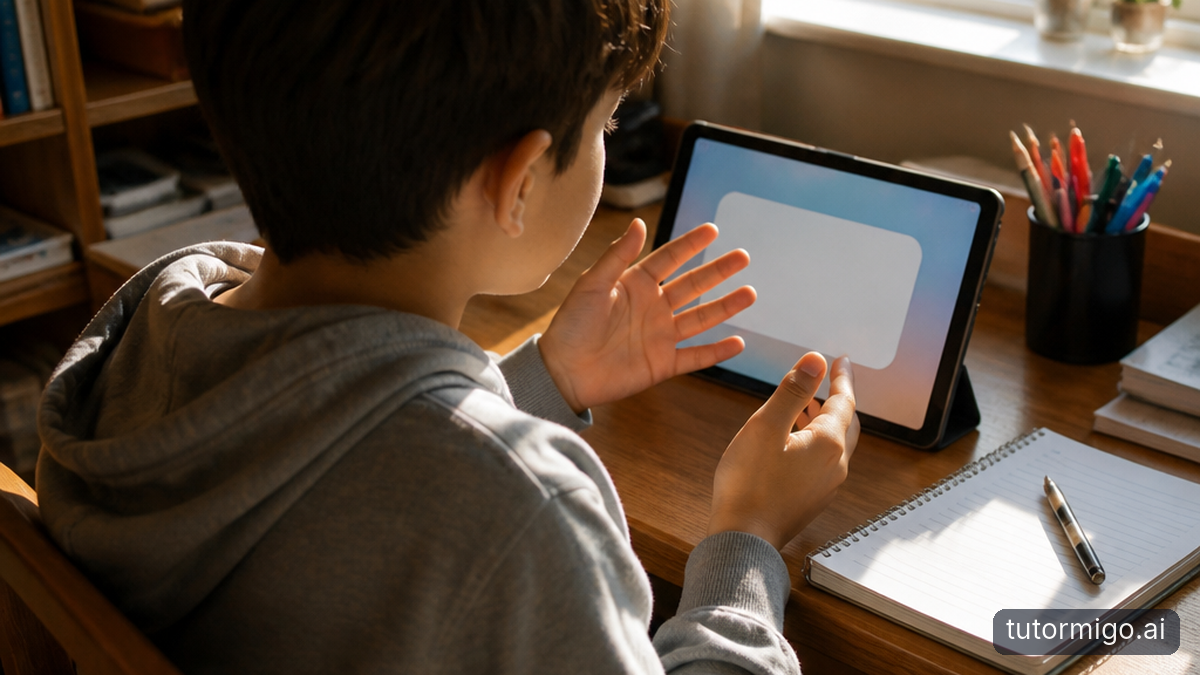
A useful practice session starts with something your child actually wanted to ask. Perhaps the teacher explained an activity, but your child missed what to do after choosing a partner. Instead of requesting a broad confidence lesson, ask an age-appropriate tool to help rehearse that specific moment. Stay alongside your child, especially when they are younger, and follow the service’s age requirements.
You could enter: “Help us practise asking a teacher to explain an instruction. Give one short example, then wait while my child says their own version aloud. Keep the response brief and respectful.” The aim is not to generate a polished speech. It is to find words your child can comfortably use, such as, “What do we do after we choose our partner?”
Then rehearse an ordinary follow-up. The teacher might ask, “Which part did you miss?” Your child can practise answering, “I heard the first step, but not the next one.” Avoid endless variations or repeated scoring. A short exchange is enough to reveal whether the wording helps. If the AI becomes wordy, overly enthusiastic, or unrealistic, stop and practise together without it. The tool should simplify the task, not become another performance your child must get right.
Build a bridge from private practice to class
Feeling comfortable with a chatbot does not automatically mean a child will feel comfortable speaking in front of classmates. The audience, timing, and possibility of an unexpected response are different. Treat private rehearsal as preparation for a small real-world attempt, rather than assuming confidence will transfer on its own. Your child should help choose that attempt.
For example, agree that they will ask the teacher one question during independent work, when fewer people are listening. They might first write the question on a card, then say it while looking at the card. Another child may prefer approaching the teacher before class. These are useful ways to seek help, not failures to raise a hand publicly. A written or private route may remain the right option for some children.
Afterward, ask what happened rather than whether they were brave. “Did you get the explanation you needed?” keeps the focus on communication. If they tried but could not speak, find out which moment became difficult and make the next step smaller. Notice the attempt without turning it into a big family event. The goal is greater access to help, not a requirement that your child become the most outspoken person in the room.
Make the classroom response part of the plan
A child’s willingness to ask depends partly on what happens after they do. Private practice has limited value if questions receive sighs, sarcasm, or comments from classmates. If you are a parent, share the specific difficulty with the teacher without labelling your child as permanently shy. Ask what low-pressure opportunities and alternative ways to request help are available.
A practical message might be: “We have been practising how to ask for an instruction again. Could you give them a quiet opportunity to try this week, without announcing it to the class?” Agree on support your child knows about. An unexpected public invitation to demonstrate their new confidence could make the situation feel more exposing, even when everyone means well.
If you teach the class, make uncertainty ordinary: thank children for identifying an unclear instruction, allow thinking time, and address ridicule directly. Offer ways to ask privately without making them a special privilege. You can find more classroom approaches in this guide to helping students ask for help. Avoid praising a hesitant child so dramatically that the praise becomes another spotlight. A calm, useful answer often supports the immediate goal better than a public celebration of courage.
Keep AI practice private, bounded, and optional
Children should not need to disclose personal information to practise a question. Use invented names or no names at all, and leave out the school, teacher, classmates, and identifying incidents. Before using a service, check its age rules, privacy settings, and information about how conversations are stored or used. Do not assume a child-friendly tone means a tool is designed for children.
Keep an adult involved in choosing and reviewing the exchange. AI can misunderstand a situation, produce inaccurate information, or suggest wording that sounds unnatural for your child. If it proposes “I require further clarification regarding your instructional expectations,” replace that with something the child would actually say: “Could you explain what we need to do?” Your child does not need a machine’s permission to use simpler words.
Watch whether practice becomes avoidance. If your child keeps asking the chatbot questions but becomes less willing to approach people, pause and reconsider the approach. AI should not become their only source of reassurance or an authority on whether a teacher likes them. Offer a non-digital alternative, such as rehearsing with you or a trusted adult. If your child dislikes the tool, there is no reason to insist: the useful ingredient is manageable practice, not AI itself.
What to try next—and when to seek more support
Start with one recent situation and one question your child wishes they had asked. Spend a few minutes finding natural wording, using AI only if it makes that easier. Then agree on a realistic opportunity to ask a person. You might tell the teacher your plan, with your child’s knowledge, and check in afterward without demanding a successful result.
Look for practical changes: your child can name what they do not understand, approaches a trusted adult sooner, or needs less prompting to request help. Do not judge progress only by how often their hand goes up. A child who quietly asks for clarification after an activity may be getting the support they need. There is no need to set a public-speaking target unless that serves a goal they share.
If the fear persists, causes marked distress, or interferes with attendance, participation, or getting essential help, contact the school’s support staff and consider advice from a qualified health professional. AI cannot diagnose or treat an anxiety disorder. The sensible next step is small and supported: help your child practise a usable question, make sure someone will receive it respectfully, and adjust the plan based on what actually happens.
Frequently asked questions
It should not be presented as a proven treatment for this specific fear. It may help with wording and rehearsal, but comfort with a chatbot does not establish confidence in a classroom.
Explore what feels different about speaking to the teacher. Agree on a smaller human interaction, such as asking privately, and check whether classroom responses are contributing to the fear.
Yes. You can role-play a brief exchange, write a question together, or rehearse with a trusted adult. AI is optional, not a necessary ingredient.
Avoid making public participation a test of courage. Work with your child and their teacher to choose a manageable way to ask, including private or written options.
Enjoyed this read?
Like, share, or comment below.



Comments
0Sign in required · respectful discussion · replies supported
Loading comments…