


Active learning: Defend answers, don’t just recognize them
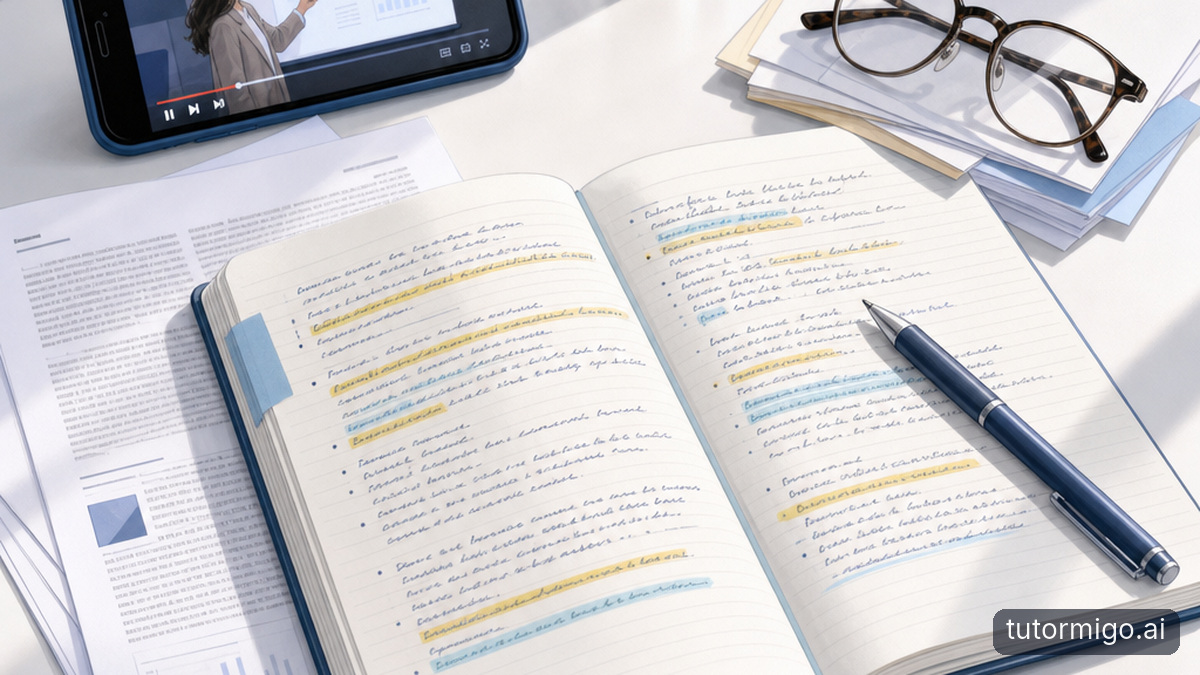
You recognize every highlighted sentence, but when someone asks why your answer makes sense, you freeze. That is the passive learning problem: familiarity can feel like understanding. Debate practice changes the task. Instead of repeating information, you must explain a claim, support it, and respond when someone challenges your reasoning.
Memorization still matters. You need names, definitions, and basic facts before you can reason accurately about a topic. The problem starts when remembering becomes the finish line. Knowing that the Industrial Revolution changed working life does not automatically help you explain who benefited, who suffered, or how the answer changes across places and periods.
A useful test is to close your notes and make a claim that someone could reasonably question. Try: “Industrialization improved ordinary people's lives.” Can you explain which people, over what period, and according to which measures? If your answer collapses into a list of remembered facts, you have found something worth practicing—not proof that you are bad at the subject.
Among the TutorMigo benefits relevant here is access to a personalized tutoring workspace where you can turn a topic into a back-and-forth discussion. The educational value comes from what you do during that exchange: retrieve, explain, reconsider, and try again.
Make debate a learning task, not a contest

A productive debate is not about sounding confident or defeating an opponent. It is about making your reasoning visible. When you state a position, explain your evidence, and answer a challenge, you expose gaps that rereading can leave hidden. You might discover that your evidence is relevant but insufficient, or that your conclusion is broader than your sources support.
With an AI Tutor, you can request a focused text exchange rather than another summary. In the AI Tutor Workspace, choose an available expert persona suited to your subject, then give the discussion a clear purpose. Ask for one objection at a time so you have room to think instead of facing a wall of counterarguments.
For example, write: “I think industrialization improved living standards overall. Challenge my position with one question at a time. Ask me to explain my evidence before offering your own explanation.” Then answer without reopening your notes immediately. That pause matters: it shows what you can actually retrieve and connect.
After responding, check your materials and revise. Perhaps your original claim ignored dangerous working conditions or confused long-term gains with immediate benefits. A stronger answer can acknowledge those limits without abandoning the argument entirely. Changing your position in response to better evidence is progress, not losing.
Use different questions for history, science, and literature
The best debate prompt depends on what counts as a strong explanation in the subject. In history, ask about causes, consequences, and perspectives. For example: “Was economic pressure more important than political ideas in driving this revolution?” Before defending either side, identify the event and time period. Then distinguish evidence about what happened from your interpretation of why it happened.
In science, avoid turning established evidence into a popularity contest. A useful discussion about natural selection might ask how a particular example supports the explanation, what alternative explanation you are considering, and what observations would distinguish them. You are practicing scientific reasoning, not treating every claim as equally credible simply because it can be argued.
Literature gives you another kind of challenge. Consider: “Does this character's final decision show courage or self-deception?” Support your interpretation with a specific passage, then explain how the language connects to your claim. An opposing interpretation should send you back to the text, not just toward a louder opinion.
Across all three subjects, use the same basic discipline: state your claim, give relevant evidence, explain the connection, and acknowledge a limitation. Ask your discussion partner to challenge that connection specifically. This keeps debate anchored in the material and prevents a fluent conversation from drifting into unsupported speculation.
Practice responding, then switch perspectives
Thinking on your feet does not mean answering instantly. It means learning how to respond when a question does not match the wording in your notes. Start with a brief pause, restate the objection fairly, and identify the part you can answer. If you need to check a fact, say so. Guessing confidently is not a critical-thinking skill.
Suppose you argue that a novel's narrator is trustworthy. Your debate partner points to a contradiction between two scenes. A weak response repeats that the narrator seems honest. A stronger response identifies the contradiction, considers whether memory or self-interest could explain it, and adjusts the original claim if necessary.
Next, switch sides. Ask the AI Tutor to defend your original interpretation while you build the strongest evidence-based challenge. This is not an invitation to invent support for an untenable position. It is a way to test whether you understand a reasonable alternative rather than a simplified version that is easy to dismiss.
Finish by naming what changed. You might write: “I still think the narrator is mostly reliable, but I now distinguish factual accuracy from honest intention.” That sentence is more useful than declaring a winner. It records a more precise understanding and gives you something concrete to explain to a teacher, parent, or study partner.
Judge the reasoning, not the polish of the reply
A convincing reply is not necessarily a correct one. AI-generated objections and explanations can contain errors, omit context, or sound more certain than the evidence warrants. Check factual claims against your course materials or reliable sources. If a response mentions a quotation, study, or historical detail you cannot verify, do not build your argument around it.
You can also evaluate your own contribution with three questions. Did I answer the actual objection? Did I use evidence that supports this particular claim? Did I explain the link between them? These checks are more revealing than whether the exchange felt impressive. A polished paragraph can still dodge the central issue.
When comparing learning tools, remember that general-purpose chatbots can also role-play an opponent and challenge arguments. The practical distinction to examine is the study environment around that conversation. The AI Tutor Workspace provides personalized tutoring chat, expert personas, and session history. That history gives you previous exchanges to revisit as you continue practicing; it is not proof that every misconception has been resolved.
A teacher or parent can use a simple conversation afterward: “Which objection was hardest, and how did you change your answer?” A lifelong learner can ask the same question independently. In each case, the goal is visible reasoning—not merely time spent chatting.
Your next step: revisit one claim you cannot yet defend
Choose a topic you already recognize but find difficult to explain. Keep it narrow enough for one focused exchange: one historical cause, one scientific explanation, or one interpretation of a passage. Write your starting position in two sentences before opening the discussion. This gives you a baseline that is genuinely yours.
In the personal tutoring workspace, ask an available expert persona to challenge that position with one question at a time. Answer a few objections, check any disputed facts, and then try the strongest reasonable alternative perspective. You do not need a marathon conversation. Stop when you have identified a specific weakness you can work on.
Close the exchange and explain your revised position without copying the response. Include your strongest evidence and one important limitation. Compare that explanation with your starting version. More precise language, a clearer evidence link, or a better acknowledgment of uncertainty can all indicate useful progress.
Return to the same claim later and try again before reviewing the earlier discussion. If the explanation still holds up under questioning, you are moving beyond recognition toward understanding. The next step is simple: pick one familiar idea today and find out whether you can actually defend it.
Frequently asked questions
No. Accurate facts and definitions support good reasoning. Debate adds another task: using that knowledge to explain a claim, answer objections, and recognize limitations.
Check it against your course materials or reliable sources. Ask what evidence supports it, but do not treat the AI response itself as proof.
Compare your explanations before and after the exchange. Look for more relevant evidence, clearer connections, fairer treatment of alternatives, and fewer unsupported claims.
Explore TutorMigo
Enjoyed this read?
Like, share, or comment below.



Comments
0Sign in required · respectful discussion · replies supported
Loading comments…