


When You Know the Homework but Can’t Explain It Without Giving the Answer

You know what the homework asks, but every explanation seems to end with you supplying the answer. Your child looks relieved; you wonder whether anything stuck. A short routine can help: find the sticking point, explore an explanation together, then let your child try while you listen.
This frustration often starts with a mismatch between knowing and explaining. You can recognise a familiar word instantly, but describing how to work it out takes patience. When your child hesitates, it is tempting to fill the silence. Soon, you are doing most of the thinking and talking.
Change the goal from finishing the page to understanding one small piece. Instead of saying, “Let’s get all this done,” try, “Let’s find one thing we can make clearer.” Keep the teacher’s instructions nearby so your help stays connected to the method and expectations your child already knows.
Your role is to guide attention, not deliver a perfect lesson. You can ask a useful question, invite another explanation, and notice what your child can do independently. TutorMigo.ai can support that conversation, but your child still needs room to think, make mistakes, and explain an idea in their own words.
Find the Exact Step Where Your Child Gets Stuck
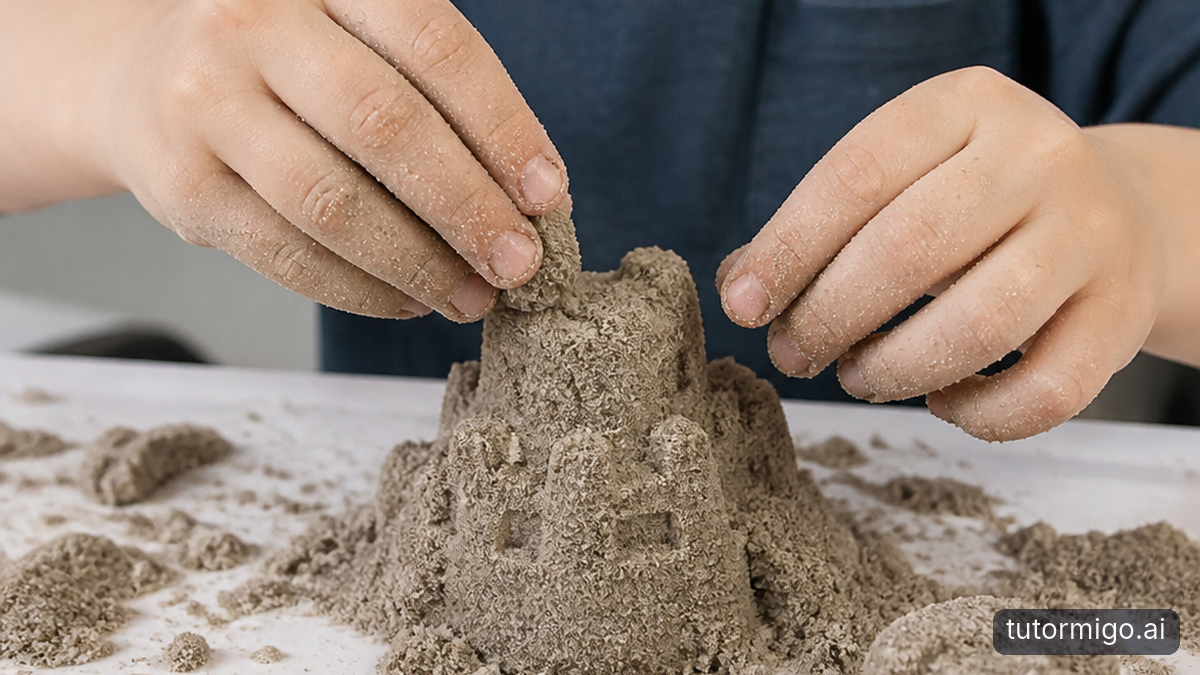
Before explaining anything, ask your child to show you how they would begin. Use a neutral invitation: “Tell me what you think this question wants you to do.” Listen for the first uncertain step rather than waiting for a wrong answer. That is usually the most useful place to focus.
A child facing an addition problem might understand the question but lose track while counting. Another might count accurately yet not realise that addition means combining groups. Those difficulties need different responses. Ask, “Can you show me with these counters?” Their actions may reveal more than asking whether they understand.
For reading, separate working out the word from understanding its meaning. If your child reads “enormous” correctly but cannot describe an enormous animal, vocabulary may be the sticking point. If they understand it when you say it aloud but struggle to read it, more definitions will not address the immediate difficulty.
Choose one observation to carry into the session: “She counts the same counter twice,” or “He can read the word but cannot use it.” For more help noticing these differences, see how parents can recognise learning gaps. Keep observations specific and avoid turning one difficult evening into a label about ability.
Build a Short Co-Learning Routine With TutorMigo.ai’s Tutoring Chat
Set aside about ten minutes and choose one small goal. Sit together with the homework and any useful objects, such as counters or a familiar book. Open TutorMigo.ai’s tutoring chat yourself, then explain the difficulty you noticed. Keep your child involved rather than handing the whole task over to a screen.
A useful request might be: “My child understands counting but loses their place when combining two groups. Explain one simple strategy using objects. Ask one question at a time, and let us try before showing the answer.” This gives the AI Tutor a clearer starting point than “Help with addition.”
Read the response together and check that it fits the homework instructions. AI explanations can be mistaken or unnecessarily complicated. If the wording is confusing, ask for shorter sentences or a more concrete example. You do not need to accept an explanation just because it sounds confident or polished.
Spend a few minutes exploring the idea, then move away from the chat for a fresh attempt. The AI Tutor supports your conversation; it should not replace your child’s thinking. Finish by asking what helped. TutorMigo.ai’s session history can help you revisit an explanation later without repeating the whole discussion.
Practise Together: Simple Addition and Reading Vocabulary
For addition, put four counters in one group and three in another. Ask your child to show what means before asking for the answer. If they combine the groups, invite them to count carefully, moving each counter as they count so none gets counted twice.
You might ask the tutoring chat, “Explain counting on from four using three counters, without giving the total first.” Read the explanation together, then let your child move the counters. If this differs from the teacher’s current method, stay with the classroom approach and ask for an explanation that matches it.
Next, offer a similar problem, such as , without repeating every instruction. Watch whether your child can organise the groups and explain their counting. A correct total matters, but the explanation tells you whether they understood the process or simply remembered the answer from your first example.
For vocabulary, choose one word from the assigned reading, such as “enormous.” Ask the chat for a child-friendly explanation and a familiar example. Then close the explanation and ask, “Would a mouse or an elephant usually be enormous? Why?” Invite your child to describe another enormous thing. Their own example is more revealing than repeating the definition.
How Much Help Is Enough? Use Hints, Then Check Understanding
Give the smallest amount of help that lets your child take the next step. Start with quiet thinking time. Then ask a broad question, such as, “What could you try?” If that is not enough, point towards a resource: “Could the counters help?” Only model a step when smaller hints are not working.
After modelling, hand the task back. You might say, “I moved this counter so I would not count it twice. Now show me what you would do with the next one.” This keeps support focused on a strategy rather than turning the activity into copying an adult’s completed answer.
Check understanding with a small change. Swap the objects, use a different addition problem, or ask for a new sentence containing the vocabulary word. Say, “How did you know?” rather than “Do you understand?” Children may say yes because they want to please you or because the explanation briefly felt familiar.
You have probably helped enough when your child can begin a similar task and explain their approach with little prompting. If frustration rises, stop and return later. Persistent difficulty with the same step is worth sharing with the teacher, along with a concrete example of what your child tried.
Use the Parent Dashboard to Monitor Progress and Adjust Learning Controls
The Parent Dashboard in TutorMigo.ai gives you visibility into your child’s progress, alongside learning controls and co-learning features. Use it as a check-in, not a scoreboard. The useful question is not simply whether your child spent time learning, but whether your support is helping them become more independent.
Review the progress information available in the parent dashboard alongside what you observe at the table. For example, your child might complete an activity but still need you to explain every instruction. That tells you to keep practising the starting step, even if the session appeared successful at first glance.
Review the available learning controls and adjust those that suit your child’s needs and your family’s approach. Keep your home routine clear too: agree when you will sit together, what you will work on, and when you will stop. Do not assume any dashboard setting replaces supervision or a conversation.
Keep a brief note after sessions: “Needed counters today,” or “Explained the word without help.” Over several attempts, these observations can add context to dashboard progress. If the same difficulty continues, bring those examples to the teacher. Look for a pattern across days rather than drawing conclusions from one tired evening.
Try One Brief Session and Let Your Child Explain What They Learned
Tonight, choose one addition problem or one unfamiliar word from your child’s actual homework. Do not plan a complete catch-up session. Set aside about ten minutes, gather what you need, and tell your child the goal: “We are going to make one tricky bit clearer, then you can teach it back to me.”
Begin by listening to their first attempt. Describe the sticking point in TutorMigo.ai’s tutoring chat and explore one explanation together. Ask for a simpler version if needed, then put the response aside. Give your child a similar example and wait long enough for them to decide how to start.
End with a specific invitation: “Show me what you learned, and tell me why it works.” For addition, that might mean arranging counters and describing the counting. For vocabulary, it might mean explaining the word and inventing an example. Resist correcting every phrase if the underlying idea is clear.
Notice one genuine sign of progress: “You kept track of each counter yourself,” or “Your example showed what that word means.” Later, check the Parent Dashboard and decide what deserves another short practice. Your next step is simply to try one brief co-learning session and let your child do the explaining.
Frequently asked questions
Start with about ten minutes and one small goal. Stop sooner if your child becomes overwhelmed; understanding one step matters more than extending the session.
Try a question or a concrete hint first. If you model a step, follow it with a similar task your child can attempt independently.
Ask for a fresh example and an explanation in their own words. Notice how much prompting they need, not just whether the answer is correct.
It provides progress visibility, learning controls, and co-learning features. Combine that information with observations from your shared sessions.
Explore TutorMigo
Enjoyed this read?
Like, share, or comment below.



Comments
0Sign in required · respectful discussion · replies supported
Loading comments…