


Look Beyond the Raised Hand for Student Support

A busy classroom can hide a quiet struggle. One student may finish every worksheet but misunderstand the central idea; another may stop asking questions because the pace feels too fast. If you rely only on visible participation, you can miss both patterns. The first step is to treat support-seeking as a pattern you notice over time, not a single moment that defines a learner.
Start with several ordinary signals. During independent work, look for repeated erasing, long pauses before beginning, copied examples without explanation, or answers that change when the wording changes. Notice who avoids eye contact when instructions are given and who waits for a classmate before starting. These details are not proof that a student is behind. They are prompts to investigate with care.
Your aim is not to label a child or sort students into fixed categories. It is to decide who may benefit from a closer conversation, a different explanation, or another chance to practise. A short note after class—such as “hesitated on multi-step reasoning” rather than “doesn’t understand”—keeps your observation specific and useful. That language also makes it easier to compare what you see with later work and student feedback.
Combine classroom work with practice evidence
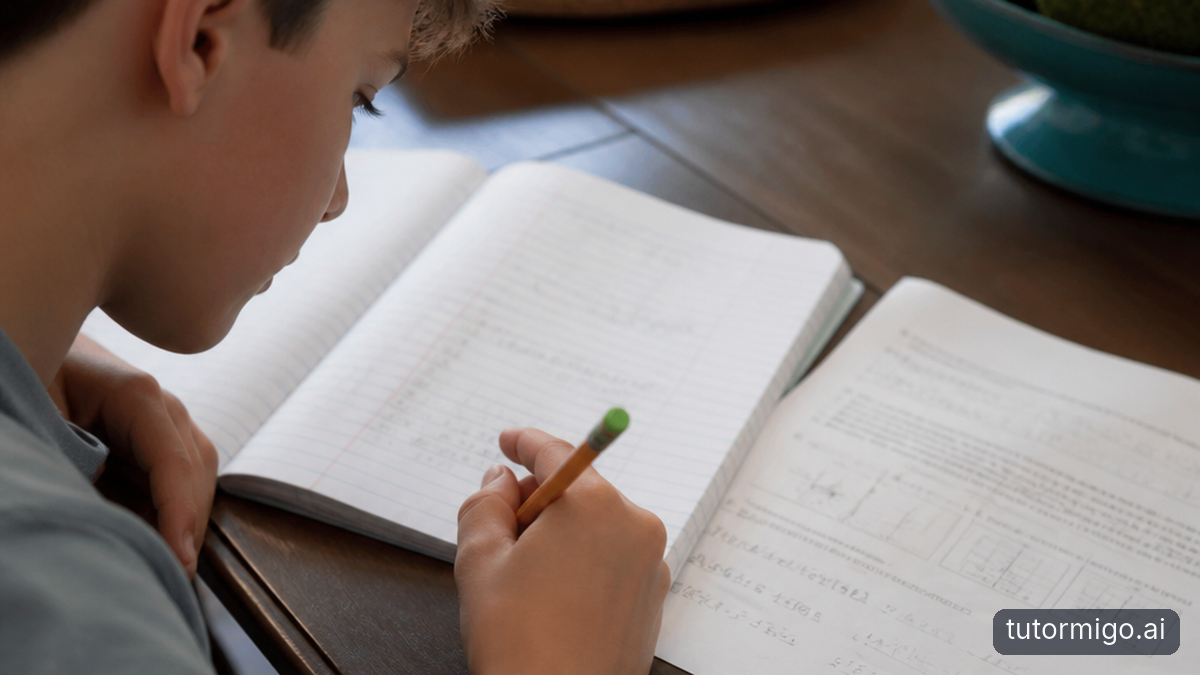
No single assignment tells the whole story. A student’s classroom work shows how they approach a task in context, while practice performance can reveal which skills remain inconsistent. Compare the two rather than treating either one as a final judgment. For example, a learner might score well on a guided worksheet but repeatedly miss the same concept when working independently. That difference suggests a need to explore transfer, not simply assign more work.
Use a small evidence set: a recent piece of classwork, two or three practice attempts, and the student’s own explanation of what felt difficult. Look for repeated errors, not just a low score. If a student gets fractions wrong only when the problem is written as a word problem, the barrier may involve reading the situation or choosing a strategy. If errors appear after a correct first step, the next conversation can focus on checking work and sequencing.
TutorMigo benefits are easiest to judge when practice information adds context to teacher observation. Spaced-repetition flashcards can show whether key terms are being recalled over time, while interactive tools such as a whiteboard or math step editor can give a student another way to work through an idea. These signals can guide a follow-up; they should never decide what a student needs on their own.
Listen to the questions students ask
Student questions are evidence, even when they seem unrelated to the lesson. “Why do we do this step?” may reveal a missing foundation. “Is this good enough?” may point to uncertainty about the task or fear of making a mistake. A student who asks nothing may be confident, confused, rushed, or reluctant to speak publicly. Treat questions as openings for conversation rather than as a ranking of engagement.
Try collecting questions in more than one way. Give students a minute to write what they understand and what remains unclear before discussion. Invite them to explain the first step they would take, even if they are not ready to solve the problem. During a quick conference, ask, “Which part felt clear?” and “Where did your plan change?” These prompts produce more useful information than “Do you understand?” because they ask for a specific account of the learning process.
An AI Tutor like Tutormigo can offer a low-pressure place for a learner to ask a follow-up question after class, especially when the student needs to see an explanation phrased another way. However, the resulting exchange is supporting evidence, not a diagnosis. A student may ask an AI Tutor for help because of curiosity, convenience, or a temporary block. You still need to connect that information with classroom work and a direct, human conversation.
Follow up privately and without assumptions
Once several signals point to a possible barrier, speak with the student privately. Keep the opening neutral: “I noticed you used a different approach on the last two problems, and you paused at the same step. How did the task feel to you?” This is more constructive than announcing that the student is struggling. It gives the learner room to confirm, correct, or add context to what you observed.
Listen for factors that practice data cannot explain. The student may understand the concept but lack sleep, have missed a prerequisite lesson, feel uncomfortable reading aloud, or be managing responsibilities outside school. Ask what has helped before and what kind of support feels useful. Then agree on one manageable next step, such as reviewing a worked example together, completing three targeted practice items, or explaining the method to a partner.
Record the plan in plain language and set a time to revisit it. “Check in after Thursday’s independent practice” is more actionable than “monitor progress.” If the concern continues, involve the appropriate school support process and communicate with families according to your role and local expectations. Tools can help you organize follow-up, but professional judgment and relationships remain central.
Use AI signals as prompts, not conclusions
Digital learning tools can make practice patterns easier to notice, but an indicator is not an assessment of a student’s identity, ability, or wellbeing. A run of incorrect answers might reflect a difficult topic, unclear instructions, a technical problem, or a student experimenting with an unfamiliar method. Even a strong streak may come from memorizing a familiar format without being able to apply the idea elsewhere.
When reviewing AI-generated feedback or practice results, ask three questions: What exactly was measured? Is the pattern repeated across more than one activity? What does the student say about it? Check the underlying work whenever possible. If a tool suggests that a learner needs help with a skill, ask the student to solve one related problem and explain the reasoning. The explanation may confirm the concern, show a different issue, or show that the indicator does not fit.
Do not use an AI Tutor, dashboard signal, or automated summary as a diagnosis or a substitute for teacher observation and professional judgment. Protect student privacy, follow your school’s policies, and avoid presenting a tool’s suggestion as a fixed label. The responsible use of AI is narrower and more helpful: it can surface questions for a teacher to investigate, provide practice opportunities, and support a conversation that still belongs to people.
Build a repeatable support routine
Noticing students early becomes easier when it is part of your normal classroom rhythm. After a lesson, choose a small group of signals to review: one piece of independent work, a recent question or reflection, and a practice pattern. You do not need a complicated scoring system. A simple note with “observed,” “student perspective,” and “next check” can prevent impressions from becoming assumptions.
For example, after teaching a new algebra method, you might see that Maya completes guided examples correctly but leaves independent problems unfinished. Her practice record shows errors after the second step, and she says she loses track when signs change. Your next action could be a brief check-in and a worked example focused on that transition. At the next lesson, ask her to explain a fresh problem without copying the model. That follow-up tells you more than the original score alone.
For teachers comparing an AI Tutor with general-purpose generative chatbots, focus on whether the learning experience supports continuity, purposeful practice, and visible progress rather than simply producing quick answers. TutorMigo.ai may fit as one part of that broader approach through its personalized tutor workspace, session history, flashcards, interactive study tools, and teacher visibility features. Explore those options alongside your existing observation, instruction, and student conversations—not instead of them.
Frequently asked questions
A repeated pattern across classroom work, practice, and the student’s own explanation is more meaningful than one low score or quiet lesson. Use the pattern as a reason to check in, not as a conclusion.
No. An AI Tutor may provide practice feedback or surface patterns, but AI-generated indicators are not a diagnosis. Teacher observation, direct conversation, school procedures, and qualified professionals must guide decisions about support.
Bring one or two specific examples and ask the student what felt clear, confusing, or different across attempts. Discuss the strategy and context, not only the percentage correct, then agree on one next step.
TutorMigo.ai may provide personalized practice, session continuity, flashcard review, interactive study tools, and teacher visibility that complement classroom instruction. Teachers should interpret any resulting information alongside their own professional judgment.
Related reading
Related reading
Related reading
Related reading
Enjoyed this read?
Like, share, or comment below.


Comments
0Sign in required · respectful discussion · replies supported
Loading comments…