


Signs of Math Anxiety in Children

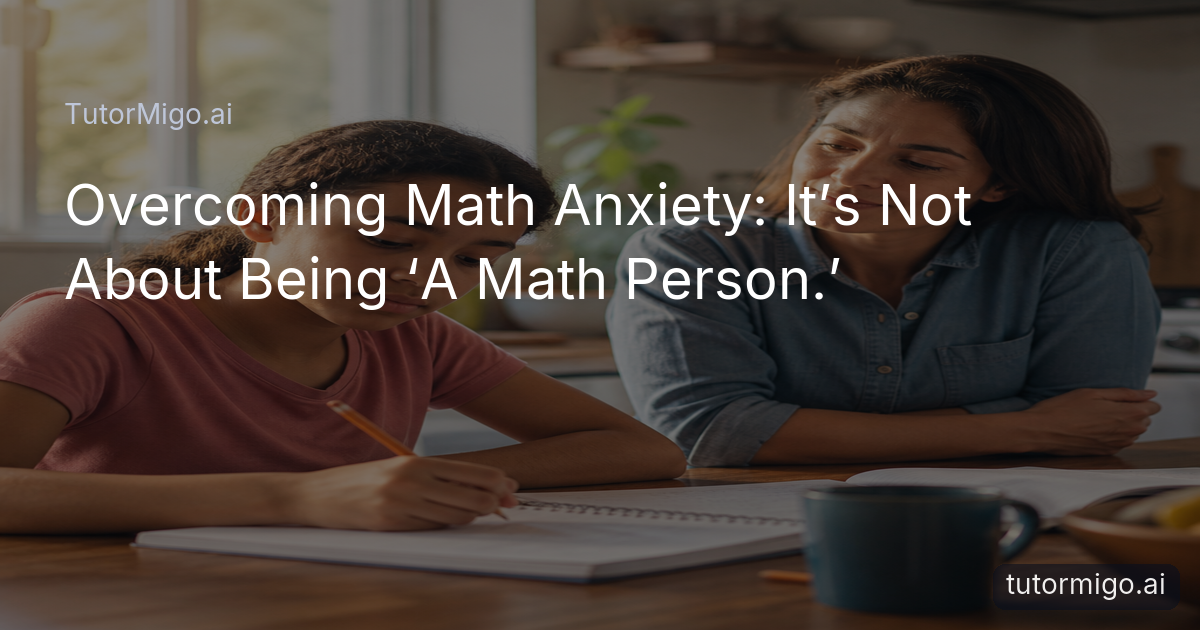
When a child freezes over a simple problem, tears up during homework, or suddenly insists, “I’m just bad at math,” it can be more than ordinary frustration. Math anxiety in children often appears as a stress response that makes thinking harder, even when the child understands the underlying skill.
Watch for patterns rather than one difficult evening. A child may avoid opening a workbook, ask to use the bathroom whenever math begins, rush through problems without reading them, or repeatedly seek reassurance about answers. Physical complaints—such as a stomachache, headache, tense shoulders, or rapid breathing—can also appear before a quiz or homework session. Notice whether these reactions happen specifically around math and whether they are growing more frequent.
How Anxiety Changes a Child’s Math Behavior
An anxious child may look careless when they are actually overwhelmed. For example, they might know that during a relaxed conversation but leave the same problem blank on a worksheet. Worry uses up attention, so the child has less mental space to hold numbers, remember steps, or check an answer.
Other children respond by becoming perfectionistic. They erase a correct answer repeatedly, refuse to move on until an adult confirms every step, or become upset by a small mistake. Some hide their work, copy a classmate, or say they finished when they have not started. These behaviors are signals to investigate, not evidence of laziness. A calm conversation can reveal whether the hardest part is the topic, time pressure, fear of embarrassment, or a previous experience that damaged confidence.
Try this: Ask, “Which part feels hardest right now?” instead of “Why don’t you know this?” The first question invites useful information; the second can sound like blame.
What Parents Can Do in the Moment
Start by lowering the emotional temperature. Put the pencil down, take a short movement break, and acknowledge the feeling: “This looks stressful, but we can handle one small step at a time.” Avoid rushing to supply the answer. Cover most of a problem and ask the child to identify only the operation, known number, or first step.
Make practice predictable and brief. Ten calm minutes with two or three carefully chosen problems may be more productive than an hour-long struggle. Praise specific actions—reading the question slowly, drawing a model, checking a calculation, or trying again—rather than general traits such as being smart. You can also explore how slower, question-based pacing can ease math anxiety and use visual or hands-on examples before moving to timed work.
When to Seek Extra Support
Talk with the teacher if anxiety lasts for several weeks, causes frequent physical complaints, leads to school refusal, or prevents the child from showing what they know. Share concrete observations: “On three evenings this week, she cried before starting fractions and said her stomach hurt.” This gives the teacher something more useful than a general concern.
Ask whether the child needs untimed practice, a quieter testing space, smaller assignments, or a review of prerequisite skills. At home, keep math conversations neutral and avoid stories about being “bad at math.” If worry affects sleep, friendships, appetite, or school attendance, consider speaking with a qualified mental health professional as well. For practical ideas about rebuilding confidence, see this guide to helping students regain trust in their math ability.
The next step is not to eliminate every mistake. It is to help the child experience math as a place where mistakes can be examined safely. TutorMigo.ai may be a useful next step if your child needs calm, guided practice with interactive math tools.
Frequently asked questions
No. Math anxiety is a stress response, not a measure of ability. Worry can interfere with attention and memory, causing a child to perform below what they can do in a relaxed setting.
Look for a repeated pattern of avoidance, distress, physical complaints, or reassurance-seeking specifically before or during math. One hard homework session is not enough to identify anxiety.
Usually, not at first. If a child is already anxious, timed work can increase pressure. Build accuracy and confidence with untimed, short practice before introducing gentle time limits.
Seek extra support when anxiety persists, disrupts school attendance or sleep, causes frequent physical symptoms, or significantly limits daily life. Start with the teacher and consider a qualified mental health professional when needed.
Why Math Anxiety Can Develop
Math anxiety may grow from repeated frustration, pressure to work quickly, or the belief that some people are simply “not math people.” A child who has struggled with a few lessons may begin expecting failure before starting the next one. Comparisons with classmates, teasing, or hearing adults describe themselves as bad at math can reinforce that expectation. Learning differences, gaps in foundational skills, and stressful classroom experiences may also contribute. Understanding these influences helps adults respond with patience instead of treating avoidance as laziness or a lack of effort.
Creating a Math-Friendly Environment
Children benefit when math is presented as something they can explore, not a test of intelligence. Games, puzzles, cooking, measuring, and budgeting can connect numbers to everyday experiences without grades or time limits. Praise persistence, thoughtful questions, and the strategies a child tries rather than focusing only on correct answers. Normalizing mistakes as part of learning can gradually make mathematical challenges feel safer.
Related reading
Enjoyed this read?
Like, share, or comment below.


Comments
0Sign in required · respectful discussion · replies supported
Loading comments…