


Curious children need room, not a perfect screen-free home

Your child may watch the same video three times, resist putting down a game, and still ask a remarkable question at bedtime. You may wonder whether constant screen exposure is crowding out curiosity. The answer is not to create a perfectly screen-free home. To raise a curious child, you need to notice how screens are being used, protect small pockets of unhurried attention, and stay interested in what your child is discovering.
Screens can offer rich material: a close-up of a volcano, a game that invites problem-solving, or a documentary that leads to questions about animals. They can also keep attention moving quickly, especially when a child is used to automatic recommendations, rapid cuts, and instant rewards. The issue is less “screens or no screens” than whether your child has chances to pause, choose, explain, and follow an idea beyond the screen.
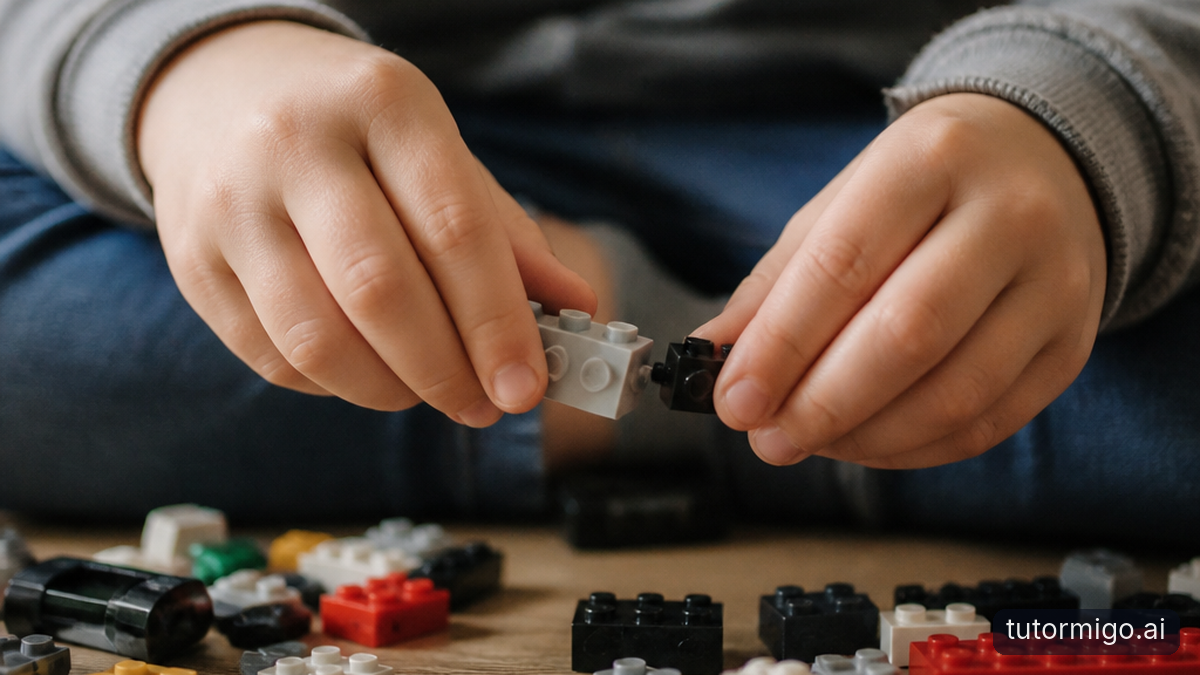
Try treating screen use as one part of a larger curiosity cycle. A child watches a video about bridges, notices the supports, asks why they do not collapse, and then tests different designs with blocks. Your job is not to turn every moment into a lesson. It is to leave enough space for that next question to appear.
Notice what screens do to attention
Screen effects vary by child, content, timing, and context. A calm, purposeful activity may hold attention for twenty minutes while a rapid game or short-video feed may make slower activities feel frustrating afterward. Look for patterns rather than assuming every screen moment has the same effect. Does your child struggle to shift away from a game but settle after drawing? Do they remember details from a nature program yet avoid talking about it? These observations tell you more than a simple total of minutes.
Imagine your child is absorbed in a building game. When you announce dinner, they shout, “Wait, I have to finish!” Instead of labeling the behavior as laziness or addiction, move closer and ask, “What are you trying to solve?” You might learn that they are working out how to keep a virtual roof from collapsing. Give a five-minute warning, ask them to save or describe the design, and return to the idea later with blocks or paper.
Attention grows through practice with many kinds of focus: listening to a story, searching for a bird outside, cooking, sorting laundry, or finishing a puzzle. Protect transitions, sleep, meals, and conversations from constant interruptions. After a screen session, offer a low-pressure bridge such as stretching, having a snack, or telling you one surprising thing they noticed.
Know when to step in—and when to wait
Step in when content is frightening, confusing, unsafe, or clearly beyond your child’s ability to process. Step in too when a screen is displacing sleep, meals, movement, relationships, or responsibilities. Your intervention can be calm and specific: “That video is making your body feel jumpy, so we are stopping and taking a break,” or “You need help understanding what this challenge is asking before you continue.” A boundary is easier to accept when it protects something concrete.
At other times, wait. If your child is quietly replaying a scene, trying several strategies in a game, or searching for an answer with genuine interest, immediate questioning can interrupt useful concentration. Watch for a natural pause. Then ask, “What are you testing?” or “What do you think will happen next?” Let them struggle briefly before supplying the answer. Productive uncertainty often creates the strongest desire to investigate.
You can use a simple rule: intervene for safety, wellbeing, or stalled understanding; pause when the child is engaged in purposeful exploration. A six-year-old arranging a digital zoo and a teenager debugging a game may need different limits, but both benefit from adults who distinguish deep involvement from endless scrolling. The goal is guided independence, not constant supervision.
Ask questions that turn watching into wondering
Questions can transform passive viewing into active thinking, but they work best when they sound like genuine interest rather than a quiz. Start with observation: “What did you notice?” Then invite a prediction: “What do you think will happen if the character changes the plan?” Follow with connection: “Does that remind you of anything we have seen or done?” These prompts work with a cartoon, a sports clip, a game, or a tutorial.
Suppose your child watches a video about ants carrying food. Instead of asking for three facts, say, “They are tiny, but they move that crumb together. How might they know where to go?” You could place a few crumbs outside and observe from a distance, making sure not to disturb the insects. If your child is playing a racing game, ask, “Which choice helped you turn faster?” The conversation may lead to friction, speed, or design without feeling like a lesson.
Leave room for “I don’t know.” Model curiosity by saying, “I’m not sure either. How could we find out?” Check a library book, observe the real thing, test a safe idea, or compare two explanations. Avoid correcting every mistaken guess immediately. Ask what evidence would change their mind. This teaches children that questions are invitations to investigate, not tests they must answer perfectly.
Build routines and boundaries that protect exploration
Effective screen boundaries are predictable, visible, and connected to family priorities. You might keep devices away during meals, stop entertainment screens thirty minutes before bed, and decide in advance which shows or games fit the day. Give warnings before transitions and name the next activity: “You have ten minutes left, then we’ll walk the dog and look for signs of spring.” A clear rhythm reduces the feeling that a screen is being snatched away without warning.
Make curiosity part of ordinary routines. Keep a small “wonder shelf” with a magnifying glass, paper, pencils, measuring cups, string, and safe objects to examine. During cooking, ask why bread changes in the oven. While waiting for a bus, count different sounds or predict which vehicle will arrive first. On a walk, invite your child to choose one thing to investigate instead of giving them a list of facts.
Adults also set the emotional climate. If you reach for your phone during every pause, children learn that pauses should be filled. Try one shared device-free pocket each day, even if it lasts only fifteen minutes. Protect it from performance pressure: the point is not to produce a craft or complete an experiment. It is to notice what catches your family’s attention and follow it a little farther.
Try a simple curiosity plan this week
Choose one screen moment to observe without judgment. On Monday, watch or listen with your child for a few minutes and ask what they are trying to understand. On Tuesday, write down one question that comes up. On Wednesday, spend ten minutes investigating it offline: sketch an object, test a design, compare leaves, cook something, or look for an answer in a book. Keep the activity small enough that it can end while interest is still alive.
Also choose one boundary that supports attention. It could be no devices during breakfast, a warning before stopping a game, or charging phones outside bedrooms. Explain the reason and invite your child to help shape the routine. If the boundary fails, adjust the timing or transition instead of turning it into a character judgment. Curiosity grows better in a home where mistakes are information.
At the end of the week, ask three questions: “What made you wonder?” “When did it feel easy to focus?” and “What should we investigate next?” If you want a structured place to continue question-led learning, TutorMigo.AI can give families another way to follow a child’s interests with guided support. Use it alongside conversation, play, movement, and real-world discovery—not as a replacement for them.
Frequently asked questions
No. Screens can introduce children to ideas, places, and problems that spark genuine interest. Curiosity is more likely to suffer when rapid, passive use regularly replaces sleep, play, conversation, movement, or time to explore an idea without instant rewards. Pay attention to patterns and context rather than treating every screen activity alike.
Use predictable limits, give a five- or ten-minute warning, and name what happens next. For a game, ask your child to save progress or explain what they were solving. Stay calm if they protest, acknowledge the disappointment, and hold the boundary without shaming them.
Wait until a natural pause if your child is deeply focused. Then ask open questions such as “What are you trying to do?” or “What did you notice?” Avoid turning every activity into a quiz. Genuine interest and a little space often encourage better explanations than constant interruption.
Invite everyone to investigate one ordinary object, such as a leaf, recipe, toy, or shadow. Younger children can notice colors and shapes, while older children can measure, research, sketch, or test an explanation. Let each person choose a question and share what they found.
Enjoyed this read?
Like, share, or comment below.


Comments
0Sign in required · respectful discussion · replies supported
Loading comments…