


Peer learning: Share a starting point, not an answer
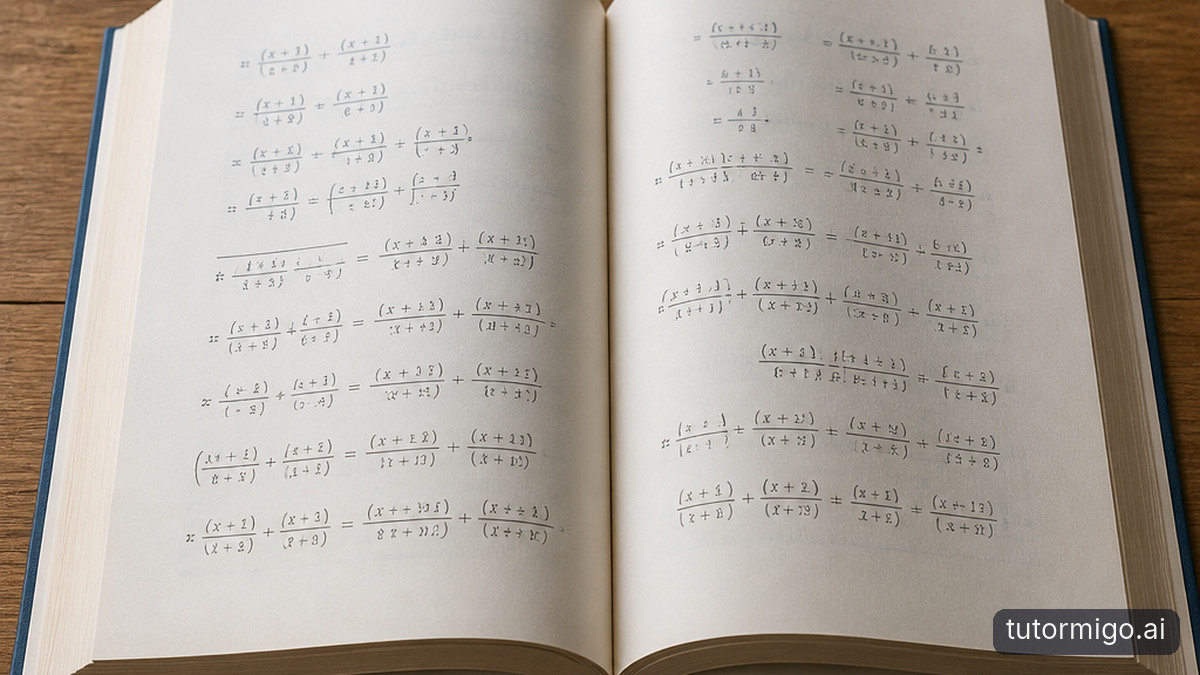
Use the algebra, solar-system, and language examples as starting points for discussion, not evidence of built-in collaboration features. Pick just one topic for the session. Before opening the chat, each partner should say what they think and identify one uncertainty. This makes differences in understanding visible before an explanation smooths them over.
For algebra, try . One partner explains why subtracting the same amount from both sides preserves equality; the other asks why simply deleting a term would not. Request one hint if you stall, then finish yourselves and substitute your answer into the original equation. The math step editor or whiteboard can help you lay out working without replacing your explanation.
For a solar-system discussion, ask what a model shows accurately and what it distorts. Partners might compare planetary order with relative distance, then consult a reliable astronomy source. The questions in this guide to interpreting solar-system models offer a useful extension.
For language practice, choose a short everyday exchange. One person responds; the other asks about meaning, grammar, or politeness. Ask for an alternative phrasing, then explain how it differs. Avoid treating one suggested translation as the only acceptable answer.
Give your session a 15-minute structure

A short routine prevents partner study from becoming one person typing while the other watches. Assign two temporary roles: explainer and questioner. Swap them halfway through the explanation phase. Keep the task small enough that you can test understanding before time runs out.
Explore: 3 minutes. Read the problem or prompt together and make separate first attempts. Name the sticking point precisely: “We disagree about why this operation is valid,” rather than “We do not understand algebra.” Ask the tutor for a hint or a focused explanation, not a finished response to copy.
Explain and question: 6 minutes. Put the screen aside. The first partner teaches the idea back while the second asks “Why?”, “What would change if…?”, and “Can you give another example?” Then swap. Compare reasoning, not just final answers. If you need a model for this exchange, try the approach in this teach-back mini lesson.
Verify: 4 minutes. Check the uncertain step or claim against an appropriate source or independent method. Correct your notes together and explain what changed.
Plan review: 2 minutes. Record one resolved question, one remaining uncertainty, and one retrieval task for next time. Keep the plan specific: explain a principle without notes, solve a fresh problem, or produce a phrase from memory.
Verify the claim that matters most
Verification should target your actual uncertainty, not become a second, unfocused research session. Asking the same AI to confirm its answer may uncover an inconsistency, but it is not independent evidence. Identify the claim you need to check, then choose a source or method suited to that claim.
In algebra, substitution can test a proposed solution, while your textbook can help check the rule behind a transformation. For a solar-system fact, consult an established science reference or an authoritative source such as NASA. For language, use a reputable dictionary, course reference, or qualified speaker, especially when the issue is register or regional usage.
Give each partner a different job. One locates the relevant evidence; the other checks whether it actually supports the statement. A source explaining planetary order, for example, does not automatically establish that a model’s spacing is accurate. Read the surrounding explanation rather than relying on a search-result snippet.
If sources disagree or the question remains unresolved, label it uncertain and save it for follow-up. You can ask a teacher or knowledgeable speaker later. Learning to say “we have not established that yet” is more valuable than leaving with a polished but unsupported answer.
Use tutoring continuity without confusing it with mastery
Convenience matters when a question occurs outside a lesson or your partner cannot explain a difficult step. The AI Tutor Workspace offers personalized chat, expert personas, and session history. Those TutorMigo benefits can make follow-up easier, but selecting a persona does not make every response authoritative. Continue using the same standards of evidence.
Before your next session, revisit the earlier conversation and find the point where your reasoning changed. Then close the history and explain the idea again. Your partner should bring a fresh example rather than reread the old answer aloud. This separates remembering the conversation from understanding the concept.
Turn a verified takeaway into a flashcard when it suits retrieval practice. TutorMigo.ai supports AI-assisted card creation, spaced repetition, and review scheduling. Check generated cards before reviewing them. A useful card might ask why an algebra step preserves equality, rather than merely request a memorized answer.
When comparing learning tools, look at the workflow you need rather than assuming every general-purpose chatbot works alike. Some offer history and learning-oriented options. TutorMigo.ai explicitly brings tutoring sessions, interactive study tools, and scheduled flashcard review into its platform. The comparison below highlights those practical differences without suggesting that a dedicated platform removes the need for judgment.
Make your next study session accountable
Start your next meeting by asking each person to answer yesterday’s review question independently. If only one partner can explain it, do not rush to new material. Ask the other to identify the missing link, then use a smaller example. Equal participation matters more than completing a long list of tasks.
Parents can support this habit by asking, “What did you change your mind about?” rather than only asking whether work is finished. TutorMigo.ai’s Parent Dashboard provides visibility into a child’s progress, learning controls, and co-learning features. Use that visibility to open a conversation, not as a substitute for hearing the child’s reasoning.
Teachers can use the Teacher Dashboard for student monitoring, knowledge base assignment, class management, and reporting. Pair those functions with a brief teach-back or independent attempt. A record of activity is useful context, but it should not be mistaken for proof that both study partners understand.
For your next session, choose one task, set the 15-minute timer, and agree to request hints before answers. Alternate explanations, verify the disputed claim, and leave with one review question each. Revisit session history only after trying to recall the idea yourselves. Let the tutor make help easier to reach while you and your partner remain responsible for the thinking.
| Study need | TutorMigo.ai | General-purpose AI chat |
|---|---|---|
| Targeted explanations | Personalized tutoring chat with expert personas. | Can explain topics; teaching style depends on the tool and your prompts. |
| Session follow-up | Session history for revisiting earlier tutoring conversations. | History availability and continuity vary by product and settings. |
| Scheduled retrieval practice | Spaced-repetition flashcards with AI-assisted creation and review scheduling. | Can help draft practice questions; check whether scheduled review is supported. |
| Working through ideas | Whiteboard, code sandbox, and math step editor. | Interactive tools vary; compare the specific working environment offered. |
| Accuracy checks | Tutor responses and generated cards still require verification. | Responses likewise require verification against appropriate evidence. |
Frequently asked questions
No. This routine uses an in-person conversation around a tutoring session. It does not depend on shared accounts, synchronized chats, or collaborative editing.
Identify the exact disputed claim, compare the reasoning, and check an independent source or method. Leave it marked uncertain if you cannot resolve it.
Try a fresh example independently, explain the reasoning without the chat, and revisit it later. Recognizing a previous answer is not the same as understanding.
Explore TutorMigo
Enjoyed this read?
Like, share, or comment below.



Comments
0Sign in required · respectful discussion · replies supported
Loading comments…