


Ryan’s turning point in sat prep: asking questions
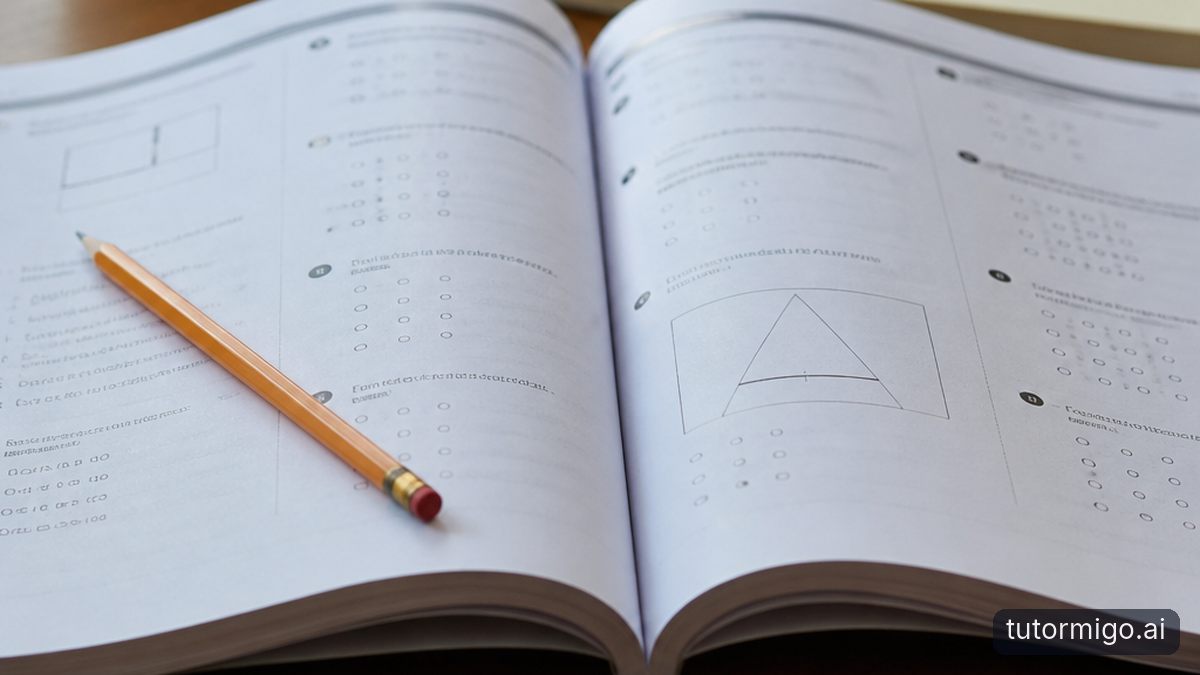
In this fictional story, Ryan was the student who always nodded. When a teacher explained a difficult problem, he copied the solution and hoped understanding would arrive later. He worried that asking a question would reveal something everyone else already knew. As he began preparing for the SAT, that habit followed him into practice sessions.
Then his teacher gave the class a problem to solve independently. Pencils moved around him, but Ryan stayed still. He recognized the topic without knowing how to begin. That evening, he asked an AI learning assistant to explain the problem one step at a time rather than simply provide the answer. When an explanation moved too quickly, he asked it to slow down.
The important change was not that someone explained a problem. It was that Ryan stopped hiding the gap. He tried the next step himself, made a mistake, and asked why it did not work. You can make the same shift during SAT practice: replace “I should know this” with “Which part do I need explained?” Asking questions is not a sign of weakness. It is the first step toward knowledge—and toward practice that addresses what you actually need.
Know the SAT clock before you chase speed

Questions become more useful when you understand the test you are preparing for. The digital SAT has two sections: Reading and Writing, with 54 questions in 64 minutes, and Math, with 44 questions in 70 minutes. Each section contains two modules. There is a 10-minute break between the sections, making the testing time two hours and 14 minutes, excluding the break.
Reading and Writing modules last 32 minutes each; Math modules last 35 minutes each. Your performance in the first module of a section helps determine the difficulty of its second module. That does not mean you should try to predict your score from how difficult a question feels. Your job is still to solve the question in front of you as accurately as you can.
At first, separate understanding from speed. If you cannot explain why an answer is correct without a timer, adding time pressure will not teach the missing skill. Once you can solve a small set reliably, try a timed module. Notice whether you lose time interpreting the question, choosing a method, or checking your work. “How can I recognize this question type sooner?” is a more useful question than “Why am I so slow?”
Turn “I don’t get it” into a useful question
You do not need to arrive with a perfectly worded question. Start by showing your attempt and identifying the last step that made sense. For example, suppose you are solving . You understand that the goal is to find , but you are unsure what to do with the parentheses. Ask, “Why can I divide both sides by three before removing the parentheses?”
A helpful explanation would show that dividing both sides gives , then subtracting two gives . Your next task is not to copy those lines. Explain why each operation preserves the equality, then solve a similar problem without looking. If you still hesitate, ask about that exact operation rather than requesting the entire solution again.
The same approach works in Reading and Writing. Instead of asking, “Why is my answer wrong?” try, “Which phrase in the passage contradicts my choice?” For a punctuation question, ask which words form a complete sentence before discussing the answer options. With any helper, including an AI learning assistant, check the reasoning against the passage or the practice question’s official explanation. A confident explanation can still be mistaken. The goal is a method you can defend and repeat, not an answer you accept on trust.
Use practice to find patterns, not just scores
A practice score tells you how one session went. Your mistakes tell you what to study next. After a practice set, review incorrect answers, unanswered questions, and correct answers you guessed. For each one, write a short note describing the cause: a missing concept, a misread instruction, an unsupported inference, or a rushed calculation. Avoid labeling every miss “careless”; that label rarely suggests a useful fix.
Suppose you miss several Math questions involving percentages. Look more closely before assigning yourself another large worksheet. Were you unsure which quantity was the starting amount? Did you understand the setup but make an arithmetic error? Those are different problems. Ask a targeted question, review the explanation, and complete a few similar questions independently. Return to the skill several days later to see whether it stuck.
Track progress with evidence beyond your total score. Can you explain the method without notes? Can you solve a fresh question accurately? Can you do so within a timed set? Occasional full-length practice tests help you check pacing and stamina, but taking them repeatedly without reviewing errors can recycle the same confusion. Score improvement is not guaranteed by a particular routine; the useful habit is adjusting your practice when the evidence shows that something is not working.
Build a weekly schedule with room for questions
A workable SAT study schedule needs time for explanation, not just question counts. Try four sessions across a week: three focused sessions of about 30 minutes and one longer session for timed practice and review. Adjust the workload around school commitments. A plan you can repeat is more valuable than an ambitious schedule you abandon after two exhausting evenings.
On Monday, review a small Reading and Writing set and investigate two uncertain answers. On Wednesday, work on the Math skill that caused the most trouble in your recent practice. On Friday, revisit both skills without notes. Over the weekend, complete a timed module and spend a separate stretch reviewing it. When you schedule a full-length practice test instead, protect enough additional time to examine the results rather than rushing immediately into another test.
Parents and tutors can make these sessions easier by asking, “Where did your reasoning change?” instead of immediately supplying the next step. Give the student time to answer, including time to say they are unsure. If embarrassment carries over from school, these ideas for helping your child ask questions in class offer a useful starting point. End each session by naming one question that was resolved and one that still needs attention. That gives the next session a clear purpose.
Your next step: ask one question today
You do not need to become the most outspoken person in class to change how you prepare. Begin privately if that feels easier. Choose one SAT practice question you missed, cover its explanation, and write down what you tried. Then finish this sentence: “I understand this part, but I lose the thread when…” Bring that sentence to a teacher, tutor, or another trusted source of help.
After the explanation, close your notes and try the question again. Next, solve a different question that uses the same skill. If you cannot transfer the method yet, that is useful information—not a reason to pretend. Ask a narrower follow-up and return to the skill in your next session. Ryan’s turning point was not suddenly knowing every answer. It was deciding that confusion deserved attention instead of concealment.
For your next study session, set a modest goal: resolve one uncertainty and demonstrate the skill independently. If you want structured support for that routine, TutorMigo.ai offers SAT practice sets and progress tracking through its Exam Preparation feature. Use that support alongside your question log, keeping the focus on understanding what to do and why.
Frequently asked questions
Write down your attempt and ask about the first step you cannot explain. You can start privately with a teacher or tutor. A specific question makes the gap easier to address, regardless of how basic it seems.
Use untimed practice to learn an unfamiliar skill, then timed sets to test pacing. Include full-length practice periodically to check stamina and how well your skills hold up across the test.
Ask the student to explain what they tried and identify where they became uncertain. Offer one prompt, then let them attempt the next step. Finish with a similar question they solve independently.
Close the explanation, describe the reasoning in your own words, and solve a fresh question using the same skill. Revisit it several days later to check that you still understand.
Related reading
Enjoyed this read?
Like, share, or comment below.



Comments
0Sign in required · respectful discussion · replies supported
Loading comments…