


Homework help: Why your child says “I don’t understand anything
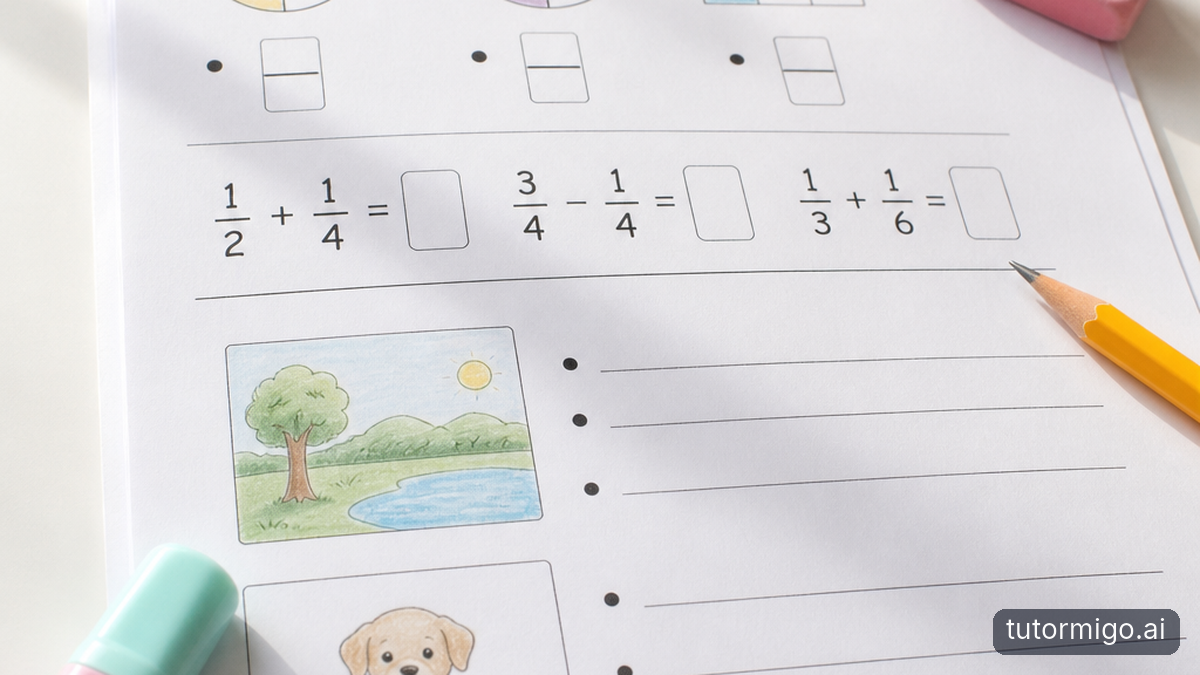
Children often describe a whole subject as impossible when one missing piece is blocking everything else. A child struggling with fractions might not understand equal parts. A child overwhelmed by a reading task might understand the story but not what “compare” means in the instructions. The difficulty is real, but its boundaries may be smaller than your child realizes.
Look beneath the unfinished worksheet
Ask, “Can you show me the last part that made sense?” Then look at what comes next. Is your child unsure what a word means, unable to recall an earlier skill, or confused about which method to use? Your goal is to notice the obstacle, not test how much they know.
Context matters, too. Hunger, tiredness, distraction, worry, and a busy day can make familiar work feel unfamiliar. If your child can explain something aloud but struggles to write it down, the barrier may involve organizing the response rather than understanding the topic.
Child learning difficulties are not proof of laziness, and one frustrating evening does not establish a learning disorder. Notice whether the same problem appears across several days or tasks. This guide to recognizing learning gaps can help you collect useful observations. Specific examples give your child’s teacher much more to work with than “everything is going badly.”
Why repeating an explanation can make things worse

When an explanation fails, it’s natural to repeat it more slowly or add detail. But if your child is missing an earlier concept, more words may simply increase the load. Imagine explaining a recipe to someone who doesn’t know what “fold” means: repeating the whole recipe won’t resolve that one confusing instruction.
Change the representation, not just your volume
Try moving from an abstract explanation to something your child can see or handle. Use equal groups of counters to explore sharing. Sketch the sequence of events in a story. Ask your child to describe what they notice before introducing the formal vocabulary. Keep the example small enough that you can discuss one idea at a time.
Repeated confusion can also affect confidence. A child who expects failure may rush, avoid starting, or say “I’m bad at this” before trying. These reactions can be ways of protecting themselves from another discouraging experience, rather than signs that they don’t care.
Replace labels with specific observations: “You understood the picture; the written instruction is the tricky part.” Recognize useful actions, such as asking a clearer question or correcting one step. Avoid promising that everything is easy. Saying “This is difficult, and we can work on one part” is both more believable and more supportive.
Make homework a shared problem, not an argument
Start with connection before correction. Try, “You seem overwhelmed. Would you like a short break, or should we look at the first instruction together?” Offering a manageable choice helps your child participate without making the assignment optional or turning the moment into a contest.
Use a small, repeatable routine
After a brief reset, choose one question rather than the entire page. Ask your child to explain what the task is asking, identify what they already know, and point to the first uncertain step. Wait before jumping in. A little thinking time can reveal whether they need a prompt, an example, or help understanding the directions.
For example, if your child cannot begin a paragraph about a story character, ask them to tell you one thing the character did. Then ask what that action suggests. Let your child choose and write the words. You’re helping them find an entry point, not composing the answer for them.
Try saying: “Let’s find the first confusing part,” rather than, “We’ve already been over this.”
Agree on a stopping point before frustration peaks. If the same obstacle remains, note what your child tried and send a concise question to the teacher. Effective homework help for children includes knowing when more practice is no longer productive. A calm pause protects tomorrow’s willingness to try.
Where an AI learning companion can help
Sometimes your child needs another explanation after you’ve exhausted your own examples. TutorMigo.ai offers a personalized AI tutoring workspace where students can explore difficult topics, ask questions, and receive learning assistance. An AI learning assistant can be an additional source of support while you remain involved and teachers guide classroom learning.
Ask for understanding before answers
Encourage a focused request: “I understand the example, but I don’t know why this step comes next. Explain that part, then ask me a question.” Using an AI Tutor this way keeps attention on the reasoning. Afterward, have your child explain the idea in their own words and try a similar task without help.
Among the relevant TutorMigo benefits are personalized tutoring chat and session history. Your child can revisit an earlier exchange instead of relying on memory alone. Interactive study tools, including a whiteboard and math step editor, offer other ways to work through ideas. For material that needs recall practice, spaced-repetition flashcards provide scheduled review rather than one long rereading session.
General-purpose chatbots can also explain topics. The practical distinction is whether you want a dedicated tutoring workspace alongside study tools and parent visibility. No AI Tutor should be treated as infallible: check unclear explanations against class materials or ask the teacher. Keep personal information out of prompts, and review practical AI safety considerations for parents before introducing a new tool.
What to do next: build confidence one small step at a time
Tonight, aim for one understandable step rather than a perfectly finished worksheet. Your child might identify the confusing instruction, explain one example, or attempt a question independently. These are useful signs of progress even when the full topic still needs work. End by asking, “What feels clearer now, and what should we ask about next?”
Track patterns without hovering
Over the next week, keep brief notes about where help was needed and what worked. Look for greater independence, clearer questions, and less avoidance—not only correct answers. TutorMigo.ai’s Parent Dashboard provides visibility into your child’s progress, learning controls, and co-learning features. Use that visibility to start supportive conversations, not to turn every study session into an inspection.
When choosing online learning for kids, consider how the tool fits your child’s actual sticking point and your family’s routine. Digital practice should leave room for rest, conversation, and guidance from school. If difficulties persist, share concrete examples with the teacher and ask whether additional assessment or specialist support would be appropriate. AI assistance cannot diagnose a learning difficulty.
You don’t have to become your child’s teacher to be helpful. Listen, narrow the problem, and support one manageable attempt. If you’d like an additional learning companion, explore TutorMigo.ai together and use it to investigate one question your child genuinely wants to understand.
Frequently asked questions
Start by identifying one specific difficulty rather than reviewing everything. Ask your child to show where understanding stops, try a small example, and contact the teacher if the same obstacle keeps returning.
The phrase can reflect a missing foundational skill, confusing instructions, tiredness, or frustration. It does not necessarily mean your child understands nothing. Ask which part last made sense.
Acknowledge frustration, offer a brief reset, and work on one question together. Let your child do the thinking and writing. Pause when frustration prevents useful practice.
No. An AI learning assistant can provide additional explanations and practice support, but it can make mistakes. Teachers, parents, and qualified specialists remain important sources of guidance.
Speak with your child’s teacher when difficulties persist, affect several tasks, or cause ongoing distress or avoidance. Bring specific examples and ask what classroom support or further assessment may help.
Enjoyed this read?
Like, share, or comment below.



Comments
0Sign in required · respectful discussion · replies supported
Loading comments…