


Building Math Confidence When Homework Triggers Self-Doubt
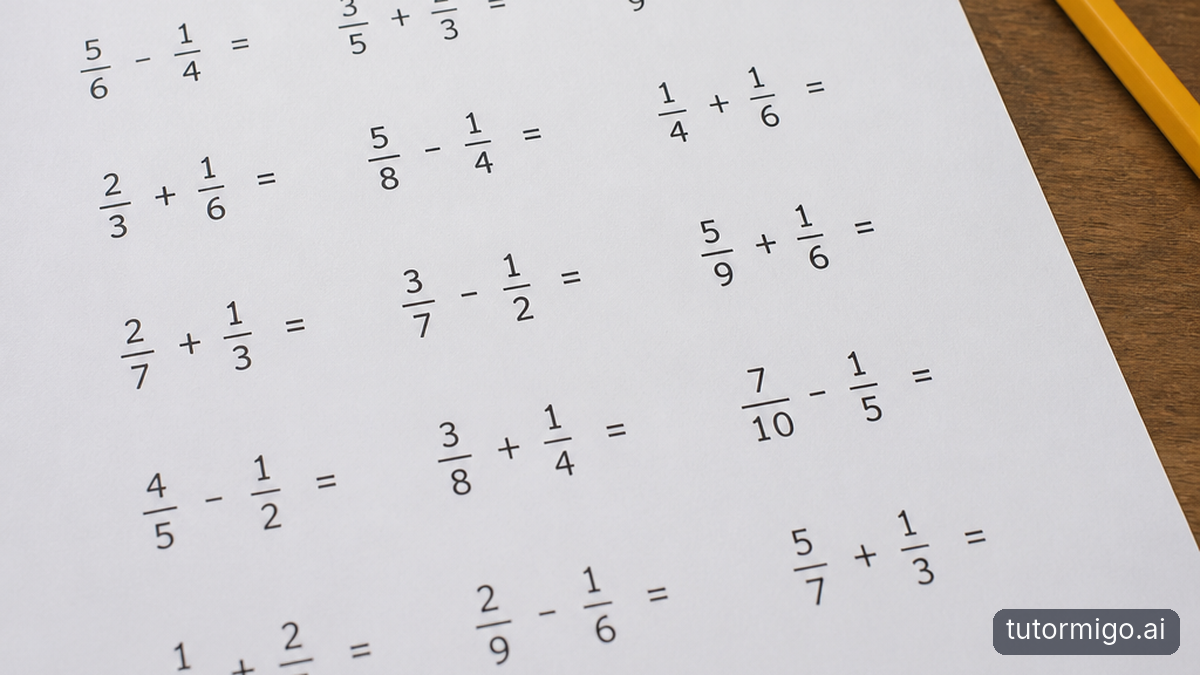
The pencil stops. Your child pushes the worksheet away and says, “I’m just bad at math.” You want to reassure them, but “Of course you’re not!” starts an argument. Begin by acknowledging the frustration, finding one specific sticking point, and making the next attempt small enough to feel manageable.
That sentence may mean several things: “I don’t understand this step,” “I’m embarrassed that I need help,” or “I’m too tired to try again.” You do not have to decide which explanation fits immediately. First, lower the pressure enough that your child can tell you more.
Put the worksheet aside briefly and sit beside them rather than standing over their shoulder. Try, “Something about this feels really hard right now. Would you like a quiet minute, or would you like me to listen?” A choice gives your child some control without asking them to solve anything.
Your aim is not to make them love math tonight or finish every question at any cost. It is to help them experience a different ending: they felt stuck, someone stayed calm, and they found a next step. That is a useful starting point, even if the worksheet remains unfinished.
Validate the Feeling First: “This Feels Frustrating, and I’m Here to Help”

Validating a feeling does not mean agreeing with a fixed label. You can accept “I feel hopeless about this” without accepting “I will never learn it.” Start with what you can observe: “You’ve erased that answer several times. This feels frustrating, and I’m here to help.” Then pause instead of immediately offering a lesson.
If your child says, “Everyone else gets it,” resist answering, “That’s not true.” You probably do not know how everyone else feels. Try, “It’s hard when it looks as though other people understand faster. Which part felt confusing for you?” This acknowledges the experience without confirming the comparison.
Some children need less conversation when upset. “We can stop for a drink and come back” may help more than a long speech about perseverance. Offer a break as support, not a reward they must earn by completing another question.
Avoid adding “but” immediately after reassurance: “I know you’re upset, but you need to try” can make the acknowledgment disappear. Instead, separate the messages: “I can see you’re upset. We can choose one small thing to look at when you’re ready.” If your own patience is running thin, take that pause together.
Find the Specific Stumbling Block Without Turning It Into a Test
Once your child is calmer, ask permission to investigate one example: “Could you show me where it stopped making sense?” Let them point, draw, or explain. You are looking for information, not checking whether they deserve help. Avoid firing off questions while they are still trying to answer the first one.
A wrong answer alone does not reveal the difficulty. With , your child might understand subtraction but struggle with regrouping. Or they might lose their place while writing. Ask, “What would you do first?” If they cannot start, offer a concrete choice: “Would drawing the tens and ones help, or would you like to see an example?”
Notice whether the obstacle is understanding the idea, recalling a fact, following the directions, or keeping track of steps. Each calls for different support. A crowded page may need a sheet of paper covering the unused questions, not more explanation of subtraction.
Stop investigating once you have a useful clue. If the same difficulty keeps returning, share that observation with the teacher: “They can explain subtraction with objects, but regrouping on paper is confusing.” Specific examples make it easier to coordinate support without labeling your child.
Replace “Bad at Math” With “This Step Is Still Tricky”
“Bad at math” turns one difficult experience into an identity. A more useful description names something you can work on: “Keeping track of the tens and ones is tricky right now.” You are not demanding optimism. You are replacing a sweeping judgment with an observation that suggests a next move.
Keep the observation accurate. If your child set up the subtraction correctly but got stuck regrouping, say, “You knew where the numbers belonged. Trading a ten for ones is the part we need to look at.” That is more believable than “You’re amazing at math,” especially when they feel discouraged.
You can model this language yourself: “My explanation went too fast. I’ll try showing it with objects.” This demonstrates that an unsuccessful attempt calls for an adjustment, not a verdict about anyone’s ability. It also avoids making your child responsible for understanding an explanation that did not help.
Do not insist that your child repeat a positive slogan before continuing. They may still feel doubtful. Offer a working sentence instead: “You don’t have to feel confident yet. We can say, ‘This step is still tricky, and I can ask for help.’” The language should make practice easier, not become another assignment.
Keep Practice Short and Low-Pressure: One Skill, a Few Minutes, No Timer
Choose one skill from the stumbling block you noticed. If regrouping is the difficulty, tonight’s practice could be showing how one ten becomes ten ones. It does not need to include a whole subtraction worksheet. Agree on a small endpoint before starting: “Let’s build one example together, then decide whether we’re done.”
Use a few minutes as a rough boundary for yourself, not a countdown your child must beat. Put the timer away and avoid speed challenges. Rushing can hide what your child understands and turn a manageable task into another performance. A small amount of thoughtful practice gives you more useful information than hurried guessing.
For , draw four tens and two ones. Show how trading one ten leaves three tens and twelve ones. Then invite your child to move or draw the pieces themselves. Ask one question, such as “What changed, and what stayed the same?” Allow quiet thinking time.
If frustration rises again, make the task smaller or stop at the agreed endpoint. You can return later. For more on keeping ownership with your child, see these suggestions for helping without taking over homework. Your role is to support the attempt, not complete it.
Praise Strategies, Not Intelligence—and Notice Progress Beyond Right Answers
Praise is most useful when it tells your child what helped. Instead of “You’re so smart,” try, “Drawing the tens and ones helped you keep track.” Instead of “You’re a natural,” say, “You checked that step and spotted something you wanted to change.” These comments connect progress to actions your child can use again.
Be careful with “You worked so hard” when the same unsuccessful approach continues. Effort matters, but children also need effective strategies and support. You might say, “You kept trying. Now let’s change the approach so you’re not stuck doing the same thing.” Persistence should include knowing when to ask for help.
Notice progress beyond correct answers: your child identified the confusing step, tried a drawing, asked a specific question, or returned after a break. Name what happened without exaggerating: “Earlier you pushed the page away. This time you told me where you needed help.” That is observable progress, even with an unfinished answer.
You do not need to praise every move. A calm “I see how you organized that” can be enough. At the end, ask, “What made this a little easier?” Their answer helps you choose useful support next time, rather than guessing from the final score.
Plan Your Next Session: One Achievable Task and a Calm Way to Help
Before the next session, choose one achievable task based on what you observed. For example: “We’ll use drawings to show one regrouping step.” Set out paper and a pencil, clear the unused worksheet, and choose a moment when your child is not already exhausted. Keep the agreement small enough to honor.
Start with a check-in: “Would you like to draw first, or watch me show one?” Stay beside them, allow thinking time, and ask before stepping in. If they become stuck, offer the smallest useful hint rather than the whole solution. If either of you gets tense, pause without calling the session a failure.
Finish by naming one thing you learned: “The drawing helped, but writing the changed digits is still confusing.” That observation gives the next session a focus. Ask your child whether the support felt helpful, too. Progress includes clearer questions, less avoidance, and a willingness to return—not just a correct answer.
If you want another way to follow your child’s learning progress, TutorMigo.ai offers a parent dashboard. Whatever tools you use, keep the same modest goal: one manageable task, a calm response, and something specific to build on next time.
Frequently asked questions
Stop trying to persuade them that they are good at math. Say, “You don’t have to feel differently right now. I can listen.” Offer a pause before discussing practice.
Focus on the chosen skill rather than interrupting every error. Discuss other mistakes later if needed, so your child can follow one idea at a time.
Reach out when confusion or distress keeps returning. Share a specific example, what your child could do independently, and where they needed support. Ask which small skill to practice next.
Enjoyed this read?
Like, share, or comment below.



Comments
0Sign in required · respectful discussion · replies supported
Loading comments…