


Why 3D Models Make ACT Prep for Science Less Abstract
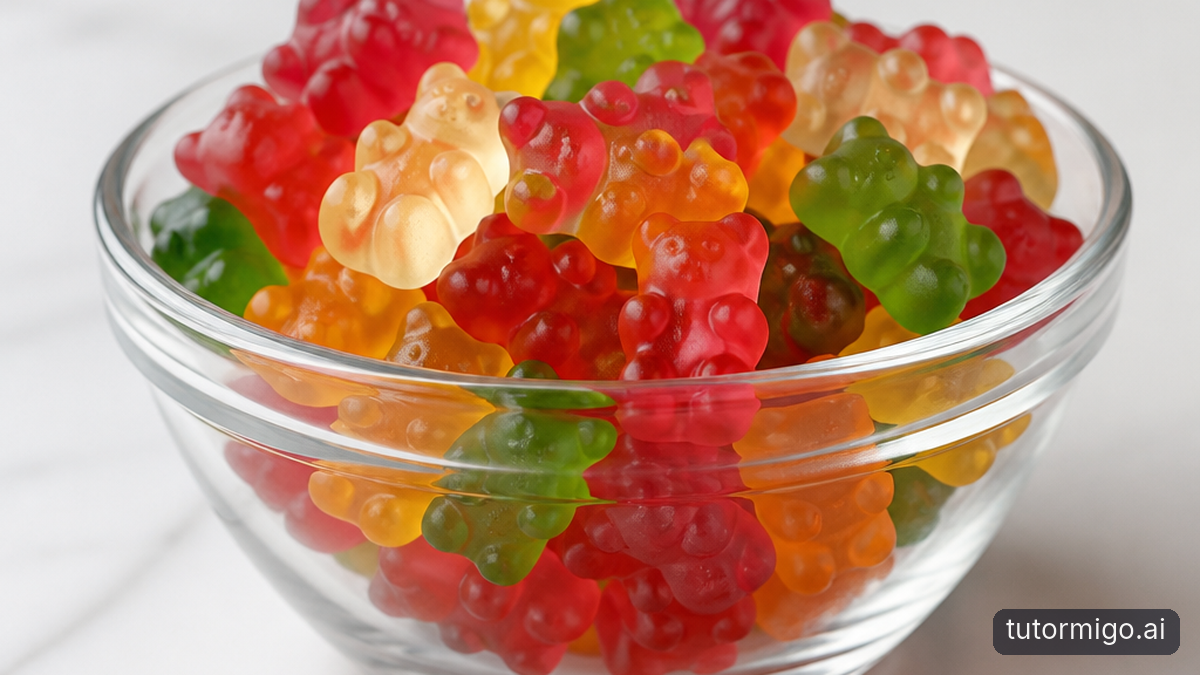
If a science passage feels like a wall of unfamiliar terms, the problem may not be your ability to reason. A flat diagram can hide what changes, what stays fixed, and how one part affects another. A simple three-dimensional model gives those relationships somewhere to live. You can move a piece, test a condition, and explain the result instead of trying to memorize a picture.
This is especially useful for ACT Science questions built around experiments, tables, graphs, and competing explanations. For example, a model of a cell membrane can help you visualize why some particles pass through while others do not. A set of beads moving through a straw can represent flow, resistance, or particle motion. The model does not replace the passage; it helps you form a prediction before you inspect the evidence.
For younger learners working on middle school science ideas, the same routine builds habits that later support ACT prep: identify the parts, describe the process, change one condition, and check the evidence. When you study, ask, “What would I see if this model were real?” That question shifts you from recalling labels to explaining cause and effect.
Start with movement. If you cannot move, separate, rotate, or compare something in your model, it may be too decorative to support reasoning.
Build a Kitchen-Table Model in Three Moves

You do not need special equipment. Choose one process from a current science unit, then gather objects that can stand in for its parts: cups for compartments, string for pathways, coins for energy, beads for particles, and index cards for boundaries. Your goal is not to make a perfect replica. Your goal is to make the important relationship visible.
First, build the baseline. Label each part in your notebook and write one sentence describing what happens under normal conditions. Second, introduce one change. Add heat, remove a barrier, increase the number of particles, or make a pathway narrower. Third, predict the result before moving anything. Record what you expected, what happened, and why the difference matters.
Try a diffusion model with two clear cups, water, food coloring, and a divider. The divider represents a barrier; colored water represents particles. If you use warmer water in one trial, predict how the rate of spreading may change, then compare the observation. Do not worry about exact measurements at first. Focus on variables: temperature is changed, while cup size and amount of water should remain constant.
For a student preparing for ACT Science, finish with a quick sketch of the setup and a sentence naming the independent and dependent variables. That turns a kitchen activity into the same kind of organized thinking used in an experiment passage.
Use the Model to Explain Invisible Processes
The strongest models make hidden events easier to discuss. You cannot watch molecules collide directly at the kitchen table, but you can use beads to represent them and a tray to represent a limited space. You can then test what happens when the number of beads increases or the available area decreases. The model gives you a way to explain pressure, concentration, or collision frequency without relying on a memorized definition.
Use a four-question explanation routine after every change: What did I change? What did I observe? What mechanism could explain it? What evidence would challenge my explanation? Suppose you move more beads into one side of a divided tray. You might predict more movement toward the less crowded side. If the movement does not occur, consider whether the divider, timing, or bead size limits the model. A failed prediction is useful because it reveals an assumption.
Adults can support this routine without supplying the answer. Ask the student to point to the model while explaining each step, then request one limitation. A model of airflow made from straws may show direction but not accurately represent pressure or turbulence. Naming that limitation is scientific reasoning, not a sign that the activity failed.
For ACT prep, practice translating the model into evidence language: “As condition A increased, measurement B changed.” That sentence structure helps you move from a physical demonstration to a graph, table, or claim.
Turn Each Model Into an ACT Practice Set
Once you understand the process, build a small practice set around it instead of rereading the same notes. Write one question about the setup, one about a prediction, one about a data trend, and one about a new condition. For the diffusion model, ask which cup should change color faster, what evidence supports that answer, and what might happen if the water volume doubled.
Then add a short table with three or four trials. Keep the pattern realistic rather than perfectly neat. ACT Science questions often reward careful reading of trends, not instant recognition. Practice identifying the highest and lowest values, describing an increase or decrease, and checking whether a conclusion is supported by every trial.
Use a timer after you understand the content. Give yourself enough time to read the setup, answer the questions, and review one uncertain choice. If your score goal is still far away, first measure accuracy without rushing. If accuracy is strong but you leave questions blank, shorten the reading stage by previewing the figures and question stems before reading every detail.
Review errors by category: misread variable, missed trend, unsupported inference, or pacing decision. A model can help with the first three, but only timed practice reveals whether you can use that understanding efficiently. Keep each set small enough to review the same day.
This guide to making ACT Science concepts click can complement the model routine when you need another way to connect content knowledge with passage reasoning.
Pace Your Reasoning and Track a Score Goal
Good modeling does not mean spending unlimited time on one interesting question. Build pacing into the routine from the start. Before a practice set, choose a target: finish four questions in a set time, answer at least three accurately, or reduce the number of rereads. A specific target gives you useful feedback even when the raw score does not change.
Try a two-pass approach. On the first pass, answer questions that follow directly from a graph or table and mark anything requiring a longer explanation. On the second pass, return to questions involving competing hypotheses or unfamiliar terminology. Your model should help you make a quick prediction, but the data still decides the answer.
Keep a simple log with the date, set size, time used, correct answers, and one error pattern. If a 10-question set takes 18 minutes with eight correct answers, your next goal might be the same accuracy in 16 minutes. Do not lower accuracy just to finish faster. Once timing improves, raise the challenge by using less familiar contexts or more closely spaced data values.
Parents and teachers can ask for the reasoning behind a missed answer rather than focusing only on the score. “Which part of the model or table changed your mind?” often reveals whether the issue was science knowledge, reading precision, or pacing. For additional support around shared practice, see this perspective on learning as a shared process in ACT prep.
Make the Routine Repeatable
A useful 3D model routine should be easy to repeat on an ordinary weeknight. Choose one concept, build a rough representation, change one variable, explain the mechanism, and complete a short timed set. The whole cycle can fit into 30 to 40 minutes once you know the process. Save the model or photograph its parts for later review, but keep the written explanation even if you throw the materials away.
Use spaced review rather than rebuilding everything every day. The next day, cover your notes and recreate the model from memory. Three days later, explain one prediction without touching the materials. A week later, use a new data table and ask whether the same mechanism still applies. Flashcards can help with vocabulary, but each card should connect a term to an observable relationship, not just a definition.
For a student with a specific ACT score goal, schedule one model-based session early in the week, one timed practice set later, and one error review before the weekend. Adults can help by protecting the time, supplying safe household materials, and asking for a clear explanation without turning the session into a lecture.
If you want a digital next step after trying this routine, TutorMigo.ai offers structured ACT practice sets and interactive study tools that can support timed review and model-based explanations.
| Need | Useful approach | Best use |
|---|---|---|
| Make relationships visible | Interactive whiteboard or math step editor | Sketch a process, annotate variables, and revise a prediction |
| Practice under test conditions | Structured ACT practice sets | Measure accuracy, timing, and progress toward a score goal |
| Remember key terms | Spaced-repetition flashcards | Review vocabulary linked to a process or evidence pattern |
Pros and cons
Pros
- Makes invisible processes easier to visualize and explain
- Connects hands-on experiments to ACT data and reasoning questions
- Creates clear opportunities to practice variables, evidence, and pacing
- Uses inexpensive materials available at home
Cons and limitations
- A simple model may leave out important scientific details
- Building the model can take time if the routine is not kept focused
- Physical models cannot replace timed ACT practice sets
- Some concepts are easier to represent with sketches or data than with objects
Frequently asked questions
Yes. Vocabulary tells you what a process is called, while a model helps you reason about what changes, what causes the change, and what evidence should appear in a table or graph. That distinction is valuable in ACT Science questions.
Write down its limitation. A simple model is useful when it preserves the relationship you are studying, even if it leaves out details. Explaining what the model shows and does not show is part of strong scientific reasoning.
Use the model for understanding first, then switch to a short timed set. Track both accuracy and time. The model should make your first prediction faster, not become a reason to spend unlimited time on one question.
Review it briefly the next day, again after several days, and once more the following week with a new question or data table. Spacing the reviews helps you retrieve the reasoning instead of depending on the physical materials.
Related reading
Enjoyed this read?
Like, share, or comment below.



Comments
0Sign in required · respectful discussion · replies supported
Loading comments…