


Different Perspectives on ACT Prep

ACT prep can feel frustrating when you study alone: you review a question, choose an answer, and move on without knowing whether your reasoning was strong or merely lucky. Imagine three students facing the same algebra problem. One draws a table, another looks for a pattern, and a third tests the answer choices. Explaining, questioning, and comparing those approaches can make the underlying idea easier to see.
That is the promise of collaborative learning for students. It does not mean every study session should become group work, or that a classmate can replace focused individual practice. It means using another person's reasoning as a mirror for your own. You may discover a gap in your understanding, a faster route through a question, or an assumption you never noticed.
What are the benefits of collaborative learning for students? Thoughtful collaboration helps students articulate ideas, identify misunderstandings, evaluate evidence, and consider more than one way to solve a problem. For ACT preparation, those benefits can support better decisions in English, Math, Reading, and Science, especially when students explain why an answer works instead of only naming the answer.
The key word is thoughtful. A useful group has a clear task, balanced participation, and permission to disagree respectfully. Without those conditions, group study can become social time with a few answers copied at the end.
Why Thinking Together Can Help
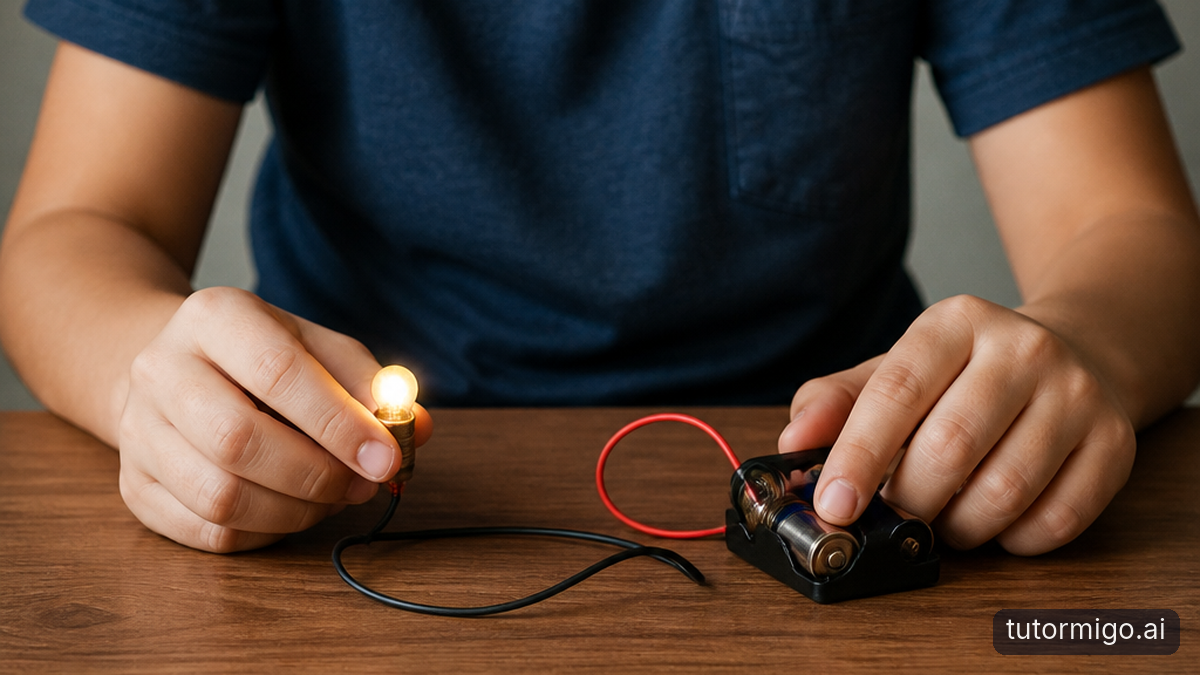
Explaining an idea in your own words is a test of understanding. If you cannot explain why a comma belongs in an ACT English answer, you may recognize a rule without being ready to apply it. A partner can ask, “What changes if the sentence is rearranged?” That question pushes you beyond memorization and toward reasoning.
Hearing alternative approaches is useful too. In ACT Math, one student may solve a problem by substituting answer choices while another builds an equation. Comparing both methods helps you judge when each is efficient. In Reading, students can identify the same central idea but point to different lines as evidence. The discussion becomes a check: does the passage actually support the claim?
Collaboration also makes gaps visible. A student who says, “I understand this,” may hesitate when asked to teach the next step. That hesitation is helpful information, not a failure. The group can pause, locate the uncertain step, and return to the relevant rule or example.
Effective peer learning strategies include asking for evidence, paraphrasing a partner before responding, and comparing methods rather than ranking people. The aim is not to find the fastest student. It is to make reasoning observable so everyone can improve it.
For a broader look at using an AI Tutor alongside human guidance, readers can explore how AI tutoring supports human tutors.
Why Group Learning Sometimes Fails
Group learning fails when the structure rewards silence or speed. One student may complete every practice set while others watch. A simple solution is to assign rotating roles: solver, explainer, checker, and timekeeper. Change roles each question so responsibility is visible and no one becomes the permanent answer provider.
Passive agreement is another problem. Students may nod because they want to keep moving, even when an explanation is unclear. Build in a “challenge pause” after each solution. One person must ask what evidence supports the answer, or offer a possible objection. This makes disagreement part of the process rather than a personal confrontation.
Distractions and fear of asking questions require different responses. Keep sessions short, choose a specific target such as ten Reading questions, and let students submit uncertainties before discussion. An anonymous question list can help someone ask about a basic Math skill without feeling exposed.
Confident voices can also dominate. Use a round-robin opening in which everyone explains one step before anyone speaks twice. A quieter student might notice that a Science graph has been misread, but that insight can be lost if the group accepts the first confident interpretation.
These solutions do not guarantee higher scores. They make participation and reasoning more balanced, which gives the group a better chance to learn from practice instead of simply dividing up answers.
Five Practical Collaborative Learning Activities
1. Explain-and-switch. One student explains an ACT concept, such as subject-verb agreement, for two minutes. The partner asks one clarifying question, then they switch roles using a new example. The purpose is to reveal whether each person can apply the rule, not repeat a definition.
2. Compare solutions. Give both students the same Math problem and ask them to solve it independently before discussing it. They should identify the first different step, then test both approaches. For example, compare substitution with working backward from the answer choices. This develops flexibility and helps students choose methods under time pressure.
3. Evidence challenge. In Reading or Science, one student makes a claim and points to a passage detail, graph feature, or experimental result. The partner must support the claim with another detail or question whether the evidence is sufficient. The goal is careful interpretation, not winning a debate.
4. Teach-back. After reviewing a topic, one student gives a three-minute summary without notes. The group records one accurate point, one missing point, and one follow-up question. This is especially useful for ACT Science processes and English grammar patterns.
5. Question exchange. Each person writes two original questions, swaps them, and explains every answer. Include one tempting wrong answer and discuss why it fails. This activity turns practice into a test of reasoning and exposes predictable mistakes.
Making Collaboration Inclusive and Accurate
Inclusive student collaboration starts with clear expectations. Agree that questions are welcome, interruptions are limited, and disagreement must address the reasoning rather than the person. “I read the graph differently because…” is more useful than “That is wrong.” These small language choices make it safer to revise an answer publicly.
Participation should not depend on being the fastest speaker. Give students a minute to write before discussion, invite responses in a predictable order, and allow someone to read a prepared explanation instead of improvising. Clear responsibilities also help: one person tracks the time, another checks evidence, and another records unresolved questions.
Accessibility matters in practical ways. Share the question aloud when needed, use readable print or digital zoom, allow extra processing time within the group's schedule, and offer more than one way to contribute. A student who finds live discussion difficult may provide a written comparison of two solutions.
Finally, never treat group consensus as proof. Check the official question explanation, a trusted teacher, or a reliable study resource when the group disagrees. An AI Tutor can help a student request another explanation, but students still need to inspect the reasoning and compare it with the question. For responsible use, see these guidelines for using AI in ACT prep.
The strongest groups are not those that agree quickly. They are groups that can explain how they reached an answer and revise it when the evidence changes.
Collaboration Beyond the Classroom
Collaboration does not require everyone to sit in the same room. Students can exchange a short explanation in an online discussion, compare marked-up solutions in a shared study routine, or hold a structured debate about which evidence best supports a Reading answer. The same principles still apply: one clear question, defined turns, evidence, and a record of what remains uncertain.
Digital learning activities can support this process by giving students practice material, explanations, or a place to organize questions. However, a tool is not automatically collaborative. A student working alone with an app is completing individual study unless another person is involved in the thinking, feedback, or review.
TutorMigo.ai can fit into that broader routine through its confirmed individual tools. Its Exam Preparation area provides structured ACT preparation with practice sets and progress tracking. A student might complete a timed set alone, then bring two missed questions to a peer session for comparison. Its AI Tutor Workspace can provide a personalized explanation or an alternative way to approach a difficult question before the student discusses that reasoning with a teacher or classmate.
Those capabilities should not be confused with live group sessions, shared workspaces, or real-time communication. The collaboration still comes from the students' questions and discussion. The platform can support preparation for that discussion, while people supply perspective, challenge, and accountability.
If studying gets difficult, a focused routine can help you decide when to work alone and when to ask for another viewpoint; this ACT prep guide for difficult study days offers a related approach.
Make Learning Visible
Try one activity this week with a classmate, friend, tutor, or study group. Choose a single ACT target, such as comparing two Math methods or challenging the evidence behind a Reading answer. Set a short time limit, give each person a role, and finish by writing down one idea that became clearer and one question that still needs checking.
Then follow up with individual practice. Collaboration should improve your thinking, not let another person do the work. Complete a fresh question alone and see whether you can apply the method without prompting. If you cannot, return to the explanation and ask for a smaller step.
This balance matters for pacing and score goals. Independent timed sets show what you can do under ACT conditions; discussion helps you understand why mistakes happened and how to prevent them. Together, they create a more useful feedback loop than either activity alone.
When you are ready, use TutorMigo.ai's structured ACT practice to work toward a personal score goal, then bring selected questions into a meaningful peer conversation. Its AI Tutor can offer another explanation when you are stuck, while your study partners help you test that explanation, question its assumptions, and make the learning visible.
Learning together is not a shortcut around effort. It is a way to make effort more informed, so every student leaves the conversation better able to reason independently.
| Study approach | Best use in ACT prep | What it reveals |
|---|---|---|
| Individual timed practice | Complete a full section or focused practice set under time limits | Your pacing, stamina, and independent decision-making |
| Explain-and-switch with a peer | Review a missed question or difficult concept | Whether you can articulate and apply the underlying rule |
| Compare solutions | Discuss two valid methods for the same Math or interpretation question | Which approach is efficient and where your reasoning diverges |
| AI Tutor Workspace | Request a personalized explanation when a concept remains unclear | An additional explanation to inspect before checking it with people or trusted sources |
Pros and cons
Pros
- Makes reasoning visible instead of focusing only on final answers
- Helps students discover gaps and compare efficient approaches
- Creates practice opportunities for explaining evidence and asking questions
- Can support both ACT score goals and independent problem-solving
Cons and limitations
- Poorly structured groups can create distractions or unequal participation
- Confident students may dominate while quieter students remain silent
- Group consensus can be wrong if evidence is not checked
- Collaboration does not replace individual timed ACT practice
Frequently asked questions
Group learning can help you explain concepts clearly, notice gaps, compare solution methods, question evidence, and practice communicating under pressure. It works best when the task and roles are clear.
Teaching a grammar rule, Math method, Reading inference, or Science interpretation requires you to organize your reasoning. Questions from a peer can reveal whether you understand the idea or only recognize it.
Yes. Students can exchange questions, compare written solutions, hold structured discussions, or review evidence online. Digital tools can support the routine, but meaningful collaboration still requires people to respond to one another's reasoning.
Unequal participation, distractions, passive agreement, fear of asking questions, and dominant voices can reduce learning. Rotating roles, using short focused sessions, requiring evidence, and giving everyone a turn can address these problems.
Use both. Individual timed practice shows your pacing and independent performance, while collaboration helps you diagnose mistakes and compare approaches. Alternate between the two based on your current study goal.
Related reading
Enjoyed this read?
Like, share, or comment below.

Comments
0Sign in required · respectful discussion · replies supported
Loading comments…