


Build Study Skills Through Consistent Routines and Organization
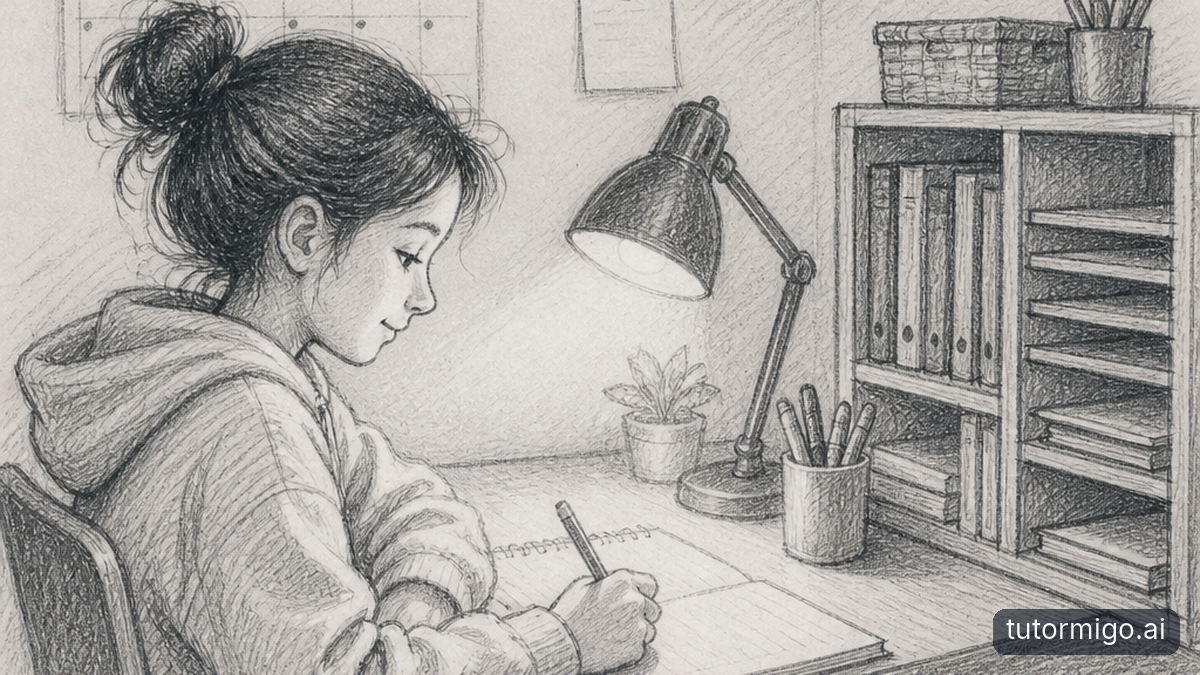
Homework can feel chaotic when every afternoon begins with the same question: “What should we do first?” Study skills are rarely taught directly, yet they shape success from elementary school through graduation. The goal is not to fill every evening with work. A dependable time, place, and simple plan help children begin with less resistance and remember more.
For a younger child, try 15 focused minutes at the same table after a snack, followed by a short movement break. A middle school student might use 30 minutes after school, while a teen may need 45–60 minutes for assignments, review, and planning. The exact time matters less than making it predictable. Keep supplies nearby, silence unnecessary notifications, and use a visible timer so the session has a clear beginning and end.
Organization makes the routine easier to repeat. Elementary students can use a picture checklist: unpack, check the folder, finish one task, pack the backpack. Middle and high school students can record homework deadlines in a planner, check the next day’s schedule, and choose the first task before opening a device. End with a two-minute backpack reset. Teachers can reinforce the same sequence in class, so home and school use familiar language.
Try this: Keep the first week intentionally small. Start with one regular study location and one daily checklist before adding extra goals.
Practice Active Recall with Flashcards, Practice Questions, and TutorMigo Benefits

Rereading a page can feel productive because the information looks familiar. Active recall is more demanding and more useful: the learner closes the book, tries to retrieve an idea, and then checks the answer. That effort shows what is understood and what still needs attention. It also gives parents and teachers better evidence than a child saying, “I know this.”
For younger students, turn recall into a game. Write a question on one side of a card and draw a simple clue on the other. Ask, “What are the three states of matter?” or “Can you show 7 + 5 with counters?” Let the child earn a point for explaining the answer, not just saying it. Older students can write practice questions from a science chapter, solve a math problem without looking at worked examples, or answer a history prompt in three sentences.
TutorMigo benefits include giving learners a focused place to practice instead of relying on one long rereading session. In the AI Tutor workspace, a student can name a topic and ask for practice questions, then request a simpler explanation when an answer exposes a gap. Spaced-repetition flashcards can support AI-assisted card creation and scheduled review, while session history helps the learner return to an ongoing topic. An AI Tutor is most useful here as a practice partner: the child still has to retrieve, explain, and correct the answer.
Break Big Assignments into Small, Manageable Steps
A long assignment often feels difficult before the first sentence is written. Children may avoid it because “finish the book report” is too vague to act on. Breaking the task into visible steps lowers the starting barrier and gives the learner several small chances to feel progress. This is useful for a seven-year-old cleaning up a worksheet and for a teenager managing a multi-day project.
Take a book report and turn it into five mini-tasks: read the assigned chapters, write five key events, choose one theme, draft an introduction and body paragraphs, then revise and submit. Add a due date beside each step. A younger child might complete one step per study session with an adult checking it off. An older student could schedule reading on Monday, notes on Tuesday, drafting on Wednesday, and revision on Thursday.
Make each step specific enough to start immediately. “Work on science” becomes “read pages 12–15 and answer questions 1–3.” “Study vocabulary” becomes “sort 12 words into known, unsure, and new.” If the assignment is still too large, divide it again. Parents can ask, “What is the next action?” rather than taking over. Teachers can model the process by showing a sample checklist and inviting students to estimate how long each step may take.
Helpful rule: A checklist should describe actions, not wishes. “Find two sources” is easier to begin than “research the topic.”
Explain Lessons Out Loud to Reveal Learning Gaps
Silent reading can hide confusion because familiar words create a sense of recognition. Asking a child to explain the idea out loud changes the task from noticing information to using it. When the explanation stops, becomes vague, or skips an important connection, the gap becomes visible without turning the moment into a test.
Keep the audience low-pressure. A child might teach a stuffed animal how plants use sunlight, explain a new word to a parent during dinner, or use a whiteboard to show why an answer in math works. The listener does not need to know the subject. Ask neutral prompts such as, “What happens first?” “How do you know?” and “Can you give me an example?” Avoid correcting every sentence; let the learner finish, then return to one unclear point.
Older students can give a two-minute lesson after reading a chapter or completing a problem set. They might explain the causes of a historical event, compare two characters, or describe each step in a calculation. A personalized AI Tutor can also serve as an attentive practice audience when a parent is busy. In TutorMigo’s tutor workspace, a student can explain a concept in chat, ask for a follow-up question, and revisit the session later. That continuity makes it easier to notice patterns in what the learner can explain confidently and where another example is needed.
Use Spaced Practice Instead of Last-Minute Cramming
One long review session the night before a quiz can create short-lived familiarity, but it leaves little time to discover and repair gaps. Spaced practice places shorter reviews across several days. Each return asks the learner to retrieve the idea after some forgetting, which makes the memory more durable and reduces the pressure of a single cram session.
Parents do not need a complicated system. Try a simple weekly rhythm: introduce or learn the material on Monday, review it for five minutes on Tuesday, test it again on Wednesday, revisit the hardest items on Friday, and do a quick mixed check on Sunday. A younger child might review five words or three multiplication facts. A teen might spend 10 minutes recalling biology terms, solving two algebra questions, or summarizing a reading without notes.
Keep reviews short and targeted. If an item is easy twice, set it aside and spend more time on the ones missed. TutorMigo’s flashcards are designed for spaced-repetition decks with review scheduling, so families can use a prepared topic deck rather than deciding every day what to revisit. A parent can ask the child to show which cards felt difficult, while a teacher can recommend a small set connected to current classwork. The point is consistency, not a perfect streak or a longer study session.
Make Asking for Help a Strength and Choose One Skill to Practice First
Many students avoid questions because they worry that confusion means they are not capable. Adults can change that message by treating questions as useful information. Say, “That is a good place to pause,” or share a time you needed an explanation. At home, ask children to bring one question to each study session, even if it is only, “Which part should I try first?” Praise the clarity of the question rather than praising speed.
Teachers can offer question stems such as “I understand ___, but I am unsure why ___” and allow students to submit them privately before group discussion. Parents can separate help from rescue: read the directions together, ask the child to explain the obstacle, and choose the next small step. A patient AI Tutor can make this practice feel low-pressure because a learner can ask for another example, request simpler wording, or return to a previous session without waiting for a busy adult. TutorMigo’s personalized workspace supports that kind of ongoing tutoring conversation.
Do not try to overhaul every habit at once. Choose one skill for this month. For example, use a 15-minute routine in week one, add a three-question recall check in week two, and review the results together in week three. A printable parent checklist can track the routine, one question asked, and one review completed. For extra practice support, visit this overview of TutorMigo benefits or explore TutorMigo.ai. Small, repeated actions are more likely to become independent habits.
Study skills are gifts that last a lifetime.
Building a routine, quizzing yourself, breaking big tasks into small steps, explaining ideas out loud, practicing a little each day, staying organized, and asking for help all take time to learn. Don't worry about mastering everything at once. Pick one skill this month, practice it together, and celebrate every bit of progress. Those small wins add up to independent, confident learners.
Your child doesn't have to practice alone. Tutormigo offers friendly, patient K-12 support that makes it easier to put these skills into action, from working through practice questions to feeling comfortable asking for help when something doesn't click.
Ready to turn good study habits into real confidence? Visit tutormigo.ai and give your child the support to practice them every day.
| Study need | TutorMigo feature | General-purpose chat comparison |
|---|---|---|
| Return to an ongoing topic | Tutor workspace includes session history for personalized tutoring continuity. | A general-purpose chatbot may require the learner to restate context or find an earlier conversation. |
| Practice and review | Flashcards support AI-assisted card creation and spaced-repetition review scheduling. | A general-purpose chatbot may generate questions, but learners typically need to organize review themselves. |
| See learning progress | Parent Dashboard offers parent visibility into child progress, learning controls, and co-learning features. | A general-purpose chatbot is not necessarily connected to a parent progress view. |
| Support structured test preparation | Exam Preparation provides practice sets and progress tracking for SAT, ACT, AP, and IELTS. | A general-purpose chatbot may discuss exam topics without providing this dedicated preparation structure. |
Pros and cons
Pros
- Builds repeatable routines around retrieval, explanation, planning, and spaced review.
- Combines personalized tutoring continuity with flashcard-based practice.
- Offers parent visibility and structured progress features through dedicated dashboards and tools.
Cons and limitations
- Students still need to do the recalling, explaining, and planning; a tool cannot replace active participation.
- Families may need to begin with one feature and one habit so the routine stays manageable.
Frequently asked questions
Start with a manageable period that matches age and workload: about 15 focused minutes for younger children, around 30 minutes for many middle school students, and 45–60 minutes for teens when assignments require it. Consistency matters more than simply adding hours.
Flashcards support active recall when students answer before checking the back. They work best when difficult cards return for spaced review and when learners explain an answer instead of guessing from recognition.
Ask the child to identify the confusing step, break the assignment into a smaller action, and explain the idea back after support. Use prompts such as “What do you know already?” rather than supplying the answer immediately.
Begin with a consistent routine and one small daily recall activity. After the habit feels stable, add planning, spaced review, or explanation practice. One focused change is easier to maintain than a complete overhaul.
Related reading
Enjoyed this read?
Like, share, or comment below.



Comments
0Sign in required · respectful discussion · replies supported
Loading comments…