


How Emotion Crowds Out Working Memory for Math
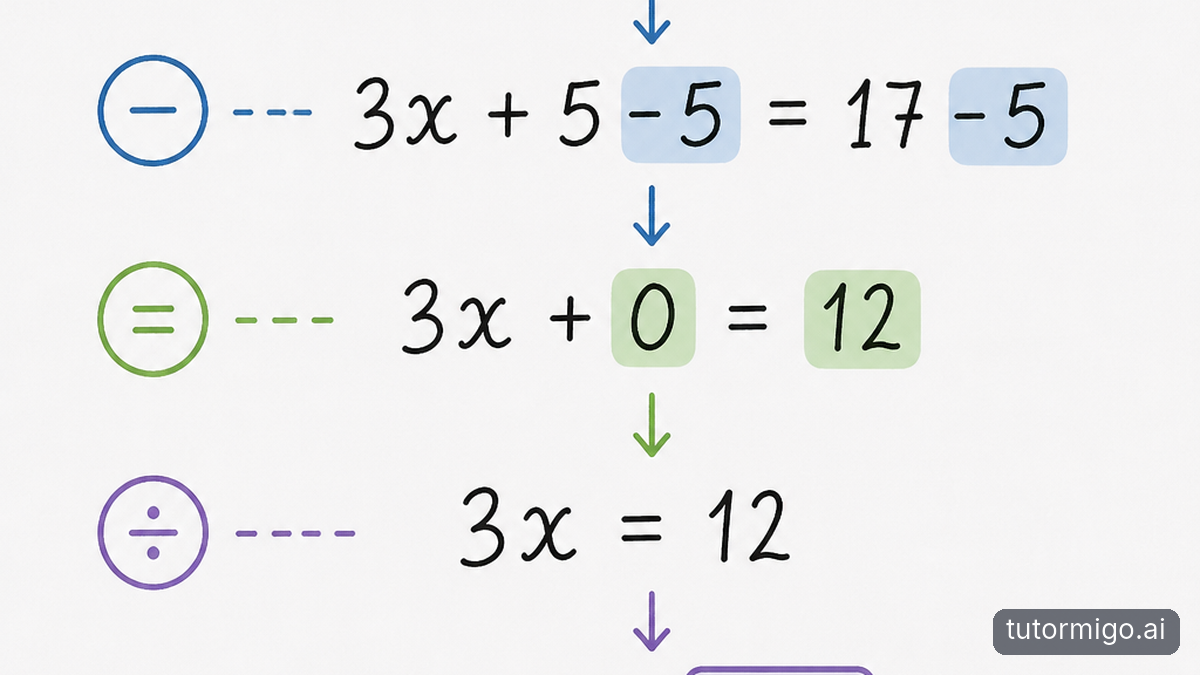
You can understand a method and still freeze when a math problem appears. That reaction is not proof that you are bad at math. When worry, embarrassment, or time pressure rises, your brain shifts attention toward detecting threat. The same limited working-memory system you need to hold a partial calculation, remember a rule, and compare possible steps is now monitoring thoughts such as “What if I get this wrong?”
Working memory is temporary mental space, not a measure of intelligence. A multi-step problem may require you to keep several details active while transforming them. Emotional interference competes for that space. For example, if you are solving while repeatedly checking the clock, you may lose track of whether you already subtracted . The error comes from interrupted attention, not necessarily from missing the underlying skill.
Use a short reset before you calculate
The goal is not to eliminate every nervous feeling. It is to lower the mental noise enough for deliberate thinking to resume. Before starting, place both feet on the floor, exhale slowly for longer than you inhale, and name the immediate task in plain language: “I need to isolate the variable.” This gives attention a concrete target instead of leaving it attached to a vague fear.
Next, externalize the first step. Write the known information, underline the question, or draw a quick diagram. Moving details from your head onto paper reduces the number of items working memory must hold. If you make an error, pause and identify the exact line where your reasoning changed. A calm review of one line is more useful than staring at the whole problem and deciding that nothing makes sense.
Try this: Give yourself ten quiet seconds before solving. Breathe, state the task, and write only the first observable step. You are not trying to feel perfectly confident; you are making room to think.
Build emotional control into math practice
Practice works better when it trains both the procedure and the conditions under which you must retrieve it. Begin with one problem you can solve, then add a slightly harder example. After each problem, explain why the next step follows. This prevents lucky answers from hiding a fragile process and makes it easier to spot where working memory is being overloaded. A useful review of lucky guesses and hidden math gaps can help you distinguish recognition from real understanding.
Vary the pressure gradually. First work without a timer, then use a generous time limit, and only later simulate test conditions. Keep distractions low and group similar problem types before mixing them. If anxiety spikes, record what triggered it: a confusing word, a skipped prerequisite, or fear of being watched. That observation turns a global judgment into a solvable practice target. Over time, repeated calm retrieval teaches your brain that challenge is manageable.
What to do next when you get stuck
When a problem feels impossible, do not immediately search for a complete solution. Ask one narrower question: What information is given? What is the problem asking me to find? Which definition or operation might connect those two facts? A helpful explanation should prompt your reasoning rather than replace it. For more ideas about handling a stalled problem, see these practical strategies for stuck math moments.
You can also use an AI practice environment to make your first step visible, test a calculation, and revisit it without social pressure. TutorMigo.ai offers interactive study tools, including a whiteboard and math step editor, as a possible next step when you want structured practice that supports the same calm, externalized process. Keep the central habit: regulate first, show your work, and treat mistakes as information about the next step.
Frequently asked questions
No. Anxiety can consume working-memory capacity and interrupt procedures you already understand. Performance may improve when you reduce distraction, externalize steps, and practice retrieval gradually.
Start with about ten to thirty seconds: place your feet on the floor, take a slow exhale, and identify the first step. The reset should be brief enough to use during ordinary practice or an assessment.
No. Learn the method without time pressure first. Add generous timing later, then move toward realistic conditions once the steps are more stable.
Find the first line where your reasoning changed, describe what you expected, and correct that specific step. This is more useful than restarting the entire problem or labeling yourself as incapable.
Why Chunking Frees Working Memory
Working memory has limited space, so treating every symbol as separate information can overload it. Chunking groups related details into meaningful units: a multiplication fact, a familiar formula, or a repeated procedure. With practice, these units become easier to retrieve, leaving more capacity for reasoning. Students can support this by labeling patterns, using consistent notation, and explaining how the parts connect.
How Sleep and Movement Support Recall
Sleep supports the brain’s ability to retain procedures and retrieve facts. Regular movement can also improve attention and mental flexibility. A short walk before practice may help students stay engaged.
Related reading
Enjoyed this read?
Like, share, or comment below.



Comments
0Sign in required · respectful discussion · replies supported
Loading comments…