


Why the Matthew Effect Starts with Literacy

If a student begins school with a smaller vocabulary, reading can feel difficult from the first page. That difficulty often means less reading practice, which slows vocabulary growth and makes later texts feel even harder. This cycle is the Matthew Effect: early advantages tend to compound, while early gaps can widen without timely support. Linguistic capital is more than knowing many words. It includes the language a student can use to explain an idea, ask for clarification, connect experiences, and understand how different communities communicate. For example, a child who knows several ways to describe movement—stroll, rush, wander, and dash—has more tools for understanding a story and expressing a precise thought. The goal is not to label a student as behind. It is to increase meaningful exposure, practice, and confidence before frustration becomes a habit.
Build vocabulary through rich, repeated talk
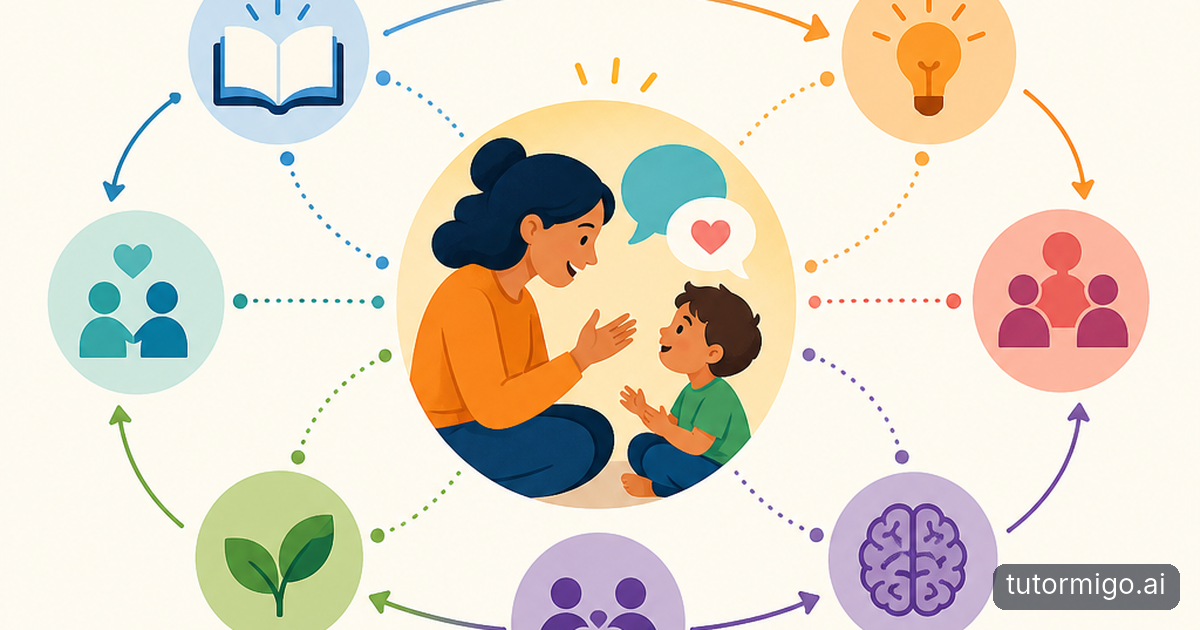
The strongest early intervention is often ordinary conversation made more intentional. Choose a short passage, picture, science observation, or shared experience, then introduce two or three useful words. Explain each word in plain language, connect it to something familiar, and use it in more than one sentence. If the word is fragile, you might compare a soap bubble, a paper crane, and a sturdy mug. Invite the student to speak, not just repeat. Ask, “What makes the bubble fragile?” and accept an approximate answer before refining it together. Revisit the same words later that day and again during the week. A quick game—sorting objects into “fragile” and “not fragile,” then explaining the choices—turns recall into active use.
Give students words they can use immediately, then create several low-pressure reasons to use them again.
This approach expands both receptive vocabulary, the words a learner understands, and expressive vocabulary, the words they can produce.
Make reading accessible without making it smaller
Students build literacy when they can understand enough of a text to stay engaged. Before reading, preview a few essential words and briefly explain background knowledge the passage assumes. During reading, pause at a meaningful point and ask for a prediction, an image, or a connection—not a quiz after every paragraph. You can keep the intellectual demand high while reducing unnecessary language barriers. For example, when reading about erosion, show a photograph of a worn riverbank, define gradual with a visible example, and model one sentence: “The change is gradual because it happens over time.” Then ask the student to create a new sentence about something else that changes gradually. Offer choices in response: speaking, drawing and labeling, arranging events, or writing a sentence. These options reveal understanding while giving developing readers more ways into the text. As confidence grows, gradually remove the supports rather than removing the complexity of the ideas. Track small evidence of growth: a new word used without prompting, a longer explanation, or a willingness to reread a difficult paragraph. Those signs matter because motivation is part of literacy development.
Create an early-intervention routine that lasts
A useful routine does not need to be long. Set aside 15 minutes several times a week for a predictable sequence: introduce two words, read a short passage, discuss one idea, and reuse the words in a new context. Keep a simple record of the words, examples, and questions that helped. Review it every two weeks to decide what needs more practice and what can be retired.
Adults should also coordinate language across settings. A teacher might share the week’s key terms with a family, while a parent or caregiver sends back an example of the student using one at home. The point is not to assign more worksheets; it is to make language visible and connected.
AI can support this planning when an adult checks its suggestions for age-appropriateness, cultural fit, accuracy, and clarity. It should help generate varied examples or discussion prompts, not replace responsive conversation. If you want a structured place to monitor classroom progress and assignments, TutorMigo.ai offers a teacher dashboard that can support that kind of follow-through. The human relationship remains the intervention: notice the learner, respond to their meaning, and keep offering the next usable word.
Frequently asked questions
It describes how early differences in reading and language experience can compound over time. Students who read easily often read more, while students who struggle may read less and face increasingly difficult texts.
Linguistic capital is the language knowledge and communication flexibility a learner can draw on. It includes vocabulary, ways of explaining ideas, familiarity with different language styles, and confidence using language in context.
It should begin as soon as a learner shows persistent difficulty with vocabulary, comprehension, oral expression, or engagement. Early support can happen before a formal diagnosis and should be adjusted as evidence of progress appears.
Talk about interesting words during daily activities, read short texts together, ask open questions, and reuse new words in playful contexts. Focus on conversation and curiosity rather than testing every definition.
Enjoyed this read?
Like, share, or comment below.


Comments
0Sign in required · respectful discussion · replies supported
Loading comments…