


AI tutoring costs and availability: compare your support needs
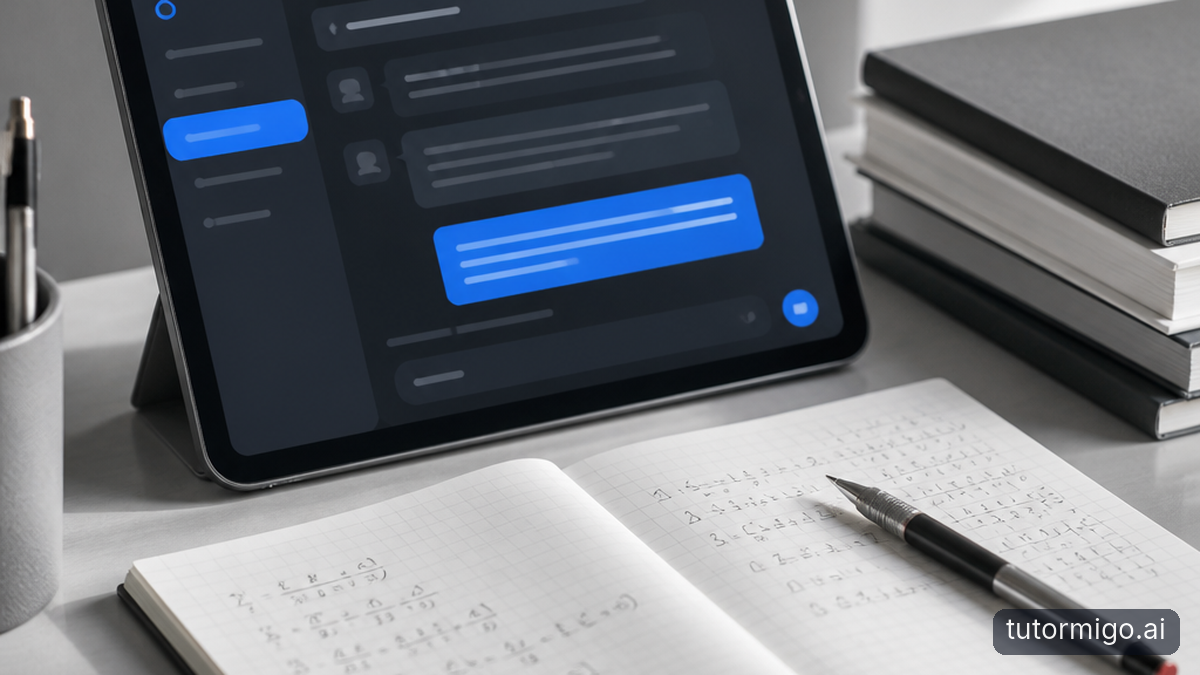
You’re stuck on homework, your next tutoring session is days away, and another paid lesson may stretch your budget. AI and human tutors offer different kinds of help. Understanding TutorMigo benefits means comparing everyday access, personalized practice, and feedback with the judgment and encouragement a skilled human tutor brings.
Affordability is often the first difference you notice. Human tutoring typically involves paying for scheduled time, although rates vary widely by tutor, subject, location, and provider. AI tutoring may be a lower-cost way to get frequent support, but compare actual subscription prices, usage limits, and included features before deciding. More access is only valuable if you use it productively.
Imagine you need help with three separate homework questions across the week. A scheduled tutor can explore them deeply during a lesson, while a Tutormigo.ai can offer help when you open your study session, without coordinating another person’s calendar. That flexibility can suit students and lifelong learners whose available study time changes daily. Check service availability and account limits rather than assuming unlimited access.
The strongest choice depends on what you need. Frequent practice may favor an AI option; persistent confusion or a need for accountability may justify human support. You can also reserve paid lessons for difficult material and use AI between appointments.
Personalized learning works best with continuity

Personalization should mean more than receiving a friendly explanation. Useful tutoring responds to what you understand, where your reasoning breaks down, and which explanation helps you move forward. A human tutor can ask follow-up questions, notice hesitation, and change direction based on your conversation. That judgment is especially helpful when you cannot explain why a topic feels confusing.
An AI Tutor can support personalization when you provide useful context. Instead of asking for an answer, explain what you have tried and request one hint at a time. For example, if you confuse correlation with causation, ask for two contrasting scenarios, then explain your reasoning and request feedback. Your responses give the conversation something specific to work with.
TutorMigo.ai’s personal tutor workspace includes personalized tutoring chat, expert personas, and session history. Session history lets you revisit an explanation or earlier attempt rather than treating every study session as a completely fresh start. It does not mean you should assume perfect recall of every detail: briefly restating your goal and current difficulty still helps.
One practical habit is to end each session by identifying what now makes sense and what remains uncertain. At your next session, revisit that uncertainty first. This turns continuity into a learning routine rather than simply a saved conversation.
Instant feedback helps when you stay involved
Fast feedback is useful because it lets you address a mistake while your reasoning is still fresh. If you are working through homework and misunderstand an instruction, a quick explanation can keep that confusion from spreading across the rest of the assignment. A human tutor can provide immediate feedback during a lesson; AI makes conversational feedback available without arranging that lesson first.
Speed, however, does not guarantee accuracy. AI responses can be incorrect, incomplete, or inconsistent with your course’s preferred method. Ask why a step works, check the explanation against your notes, and bring unresolved disagreements to your teacher or tutor. For assessed work, follow your school’s rules about outside assistance.
TutorMigo.ai’s Study Tools Hub includes a whiteboard, code sandbox, and math step editor. These tools give you different ways to work through a difficult concept. For a coding exercise, you might try your own solution in the sandbox, then discuss why its behavior differs from your prediction. For a math problem, writing out each step can help you formulate a more precise question.
The key is to keep doing the thinking. Attempt the task, request a hint, revise your answer, and explain the result in your own words. Getting unstuck is useful; understanding why you were stuck is what makes the next attempt easier.
Build flexible practice around exam goals
Exam preparation needs more structure than occasionally asking questions about topics you dislike. You need practice tied to the assessment, a way to see progress, and enough repetition to retain what you learn. A human tutor can help prioritize weak areas, interpret recurring mistakes, and keep you committed to a realistic plan. AI-supported practice can make the time between those conversations more productive.
TutorMigo.ai offers structured preparation for SAT, ACT, AP, and IELTS, with practice sets and progress tracking. Choose the relevant exam rather than treating all practice as interchangeable. For example, if you are preparing for IELTS and repeatedly struggle with a particular question type, use your practice results to focus your next study session and bring specific examples to a human tutor if needed.
Spaced-repetition flashcards serve a different purpose: revisiting information over time. TutorMigo.ai includes flashcard decks with AI-assisted card creation and review scheduling. You might build cards around unfamiliar vocabulary or concepts you repeatedly confuse, then check that each card is accurate and clear before relying on it.
Keep those cards focused on recall, not lengthy explanations. Combine short reviews with fuller practice tasks so familiarity does not masquerade as understanding. Flexible learning works best when brief sessions reinforce a plan, rather than becoming disconnected bursts of activity.
Compare visibility and purpose, not just chat quality
If you are a parent or teacher, a convincing conversation is not enough to show that learning is happening. You need a basis for asking better questions: What has the learner been practicing? Where is progress uneven? What needs human attention? A traditional tutor can share observations and discuss difficulties directly, although the detail and frequency of those updates depend on the arrangement.
TutorMigo.ai’s Parent Dashboard provides visibility into a child’s progress, learning controls, and co-learning features. Its Teacher Dashboard supports class management, student monitoring, knowledge base assignment, and reporting. These features can support informed conversations, but they should not replace asking a learner to explain a concept or demonstrate a skill independently.
This also offers a practical way to compare a tutoring platform with a general-purpose generative chatbot. General chatbots can explain concepts, suggest practice, and discuss mistakes. Instead of assuming they cannot help, compare the actual learning setup: session history, review scheduling, structured exam practice, progress information, and the visibility available to adults supporting a learner.
A dedicated platform’s value lies partly in bringing relevant study activities together. If you already have an effective system, assess whether switching improves it. Teachers considering a combined approach can explore how AI tutoring supports human tutors without treating either option as a complete replacement for the other.
Your next step: test one learning routine
You do not need to choose one kind of tutoring forever. Start with a problem you can clearly describe: getting stuck between lessons, forgetting material after studying, or lacking a consistent exam-preparation routine. Then choose the support that addresses that problem. This is a more useful test of TutorMigo.ai benefits than simply asking which type of tutor is best overall.
For your next homework session, attempt the task independently before seeking help. Use the tutor workspace to discuss one confusing step, then close the explanation and try a similar task yourself. Save a useful conversation for review, or create a focused flashcard if the difficulty involves remembering a fact or distinction. Follow any rules your teacher has set.
After several sessions, look for evidence of greater independence. Can you explain the idea without copying? Do you make fewer of the same mistakes? Are your questions becoming more specific? These observations matter more than the number of messages exchanged or the speed at which you finish homework.
If confusion persists, involve a human tutor or teacher and bring your attempts. If the routine helps, keep it simple and repeatable. The best balance combines accessible practice with human judgment when you need it—and leaves you better able to learn on your own.
Frequently asked questions
It may be, especially for frequent practice, but compare current subscription costs and usage limits with human tutoring rates. The better value depends on the support you need and actually use.
You can use personalized tutoring chat to request explanations, hints, and discussion of your attempts. Try the work first, ask focused questions, and follow your school’s rules for outside assistance.
Not in every situation. AI can support practice and explanations, while a skilled human tutor offers personal judgment, accountability, and encouragement. Combining them can be a practical option.
TutorMigo.ai offers structured SAT, ACT, AP, and IELTS preparation with practice sets and progress tracking. Choose the preparation relevant to your exam and combine it with regular review.
Explore TutorMigo
Enjoyed this read?
Like, share, or comment below.



Comments
0Sign in required · respectful discussion · replies supported
Loading comments…