


Good AP exam prep should not depend on your budget
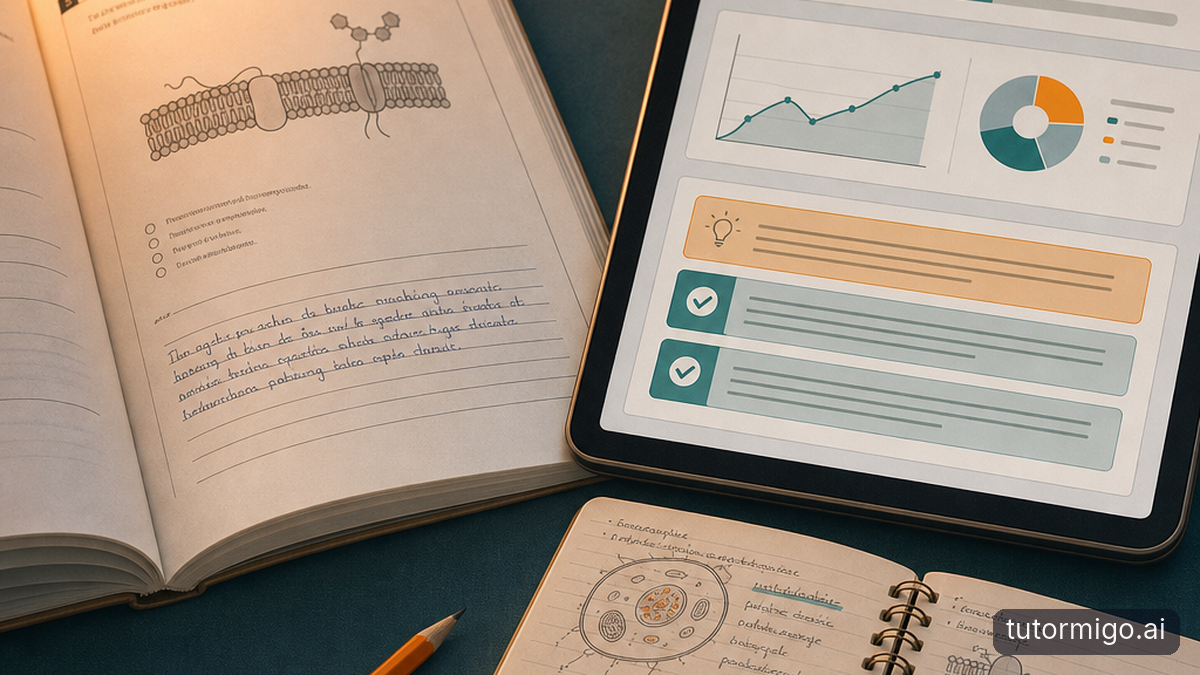
You need help understanding AP questions, not another bill your family cannot comfortably pay. Private tutoring can cost hundreds of dollars an hour, putting regular support out of reach. Affordable AP exam prep starts with official practice, clear scoring criteria, and targeted help from TutorMigo.ai.
The expensive part is often the feedback loop. You attempt a question, get stuck, and need someone to explain what went wrong. If every explanation requires another paid appointment, you may start saving questions for later instead of fixing misunderstandings while they are fresh. That delay can make a manageable gap feel like an entire unit you do not understand.
Consider an AP Biology response that correctly identifies a biological process but never explains how the evidence supports the claim. More memorization may not solve the problem. You need to recognize the missing connection, revise the explanation, and test that skill on another question.
That is the goal of a lower-cost approach: spend less on access to explanations and more of your study time acting on them. TutorMigo.ai offers structured AP preparation with practice sets and progress tracking. Use that support alongside your course materials and official scoring guidance, rather than treating any single resource as a complete replacement for your class.
Find the gap before you pay for more practice

Before choosing a resource, work through a small sample of questions from your current AP course. Include both multiple-choice and free-response work when those formats apply. Use released questions from AP Central or materials your teacher assigns, and check that they match the current course and exam format. Your first goal is diagnosis, not a flattering score.
Sort your mistakes into three categories: missing knowledge, difficulty applying knowledge, and incomplete communication. In AP Chemistry, confusing two concepts calls for content review. Recognizing the right concept but misreading a data table calls for application practice. Reaching a defensible conclusion without explaining it calls for clearer reasoning.
Keep a simple error log in a notebook. Record the question source, what you did, why it missed the mark, and what you will try next. Write something specific, such as “I described the trend but did not connect it to the proposed mechanism.” “Study harder” is not an actionable diagnosis.
This step protects your budget because it stops you from buying broad help for a narrow problem. If most of your errors involve interpreting evidence, another comprehensive review book may add less value than focused practice on that skill. Bring the pattern to your teacher or use it to guide your next study session.
Use the rubric to turn feedback into a revision
A useful response to your work should explain more than whether it looks correct. Official AP scoring guidelines show which elements earn credit on a particular released question. Read them after making an honest attempt, then compare your response against each requirement. Course-specific rubrics matter: an AP English argument and an AP science explanation are not judged in the same way.
For example, an AP English Language paragraph might state a defensible position and include relevant evidence, yet leave the connection between them unexplained. Instead of rewriting the whole essay immediately, revise the commentary: explain how that evidence advances your reasoning. Then check whether the revised paragraph actually addresses the scoring criterion.
An AI Tutor can help you work through that comparison. Provide the question, your attempt, and the relevant official scoring guidance, then ask: “Which part of my explanation needs clearer support? Ask me a question before suggesting a revision.” Do not assume the response is an official score or that automated feedback is always correct.
For a closer look at the distinction, read why general AI can fall short on AP preparation. Verify disputed points with the official guidance or your teacher. The learning happens when you make and explain the revision, not when you collect a polished replacement answer.
Build a weekly plan around concepts and question types
A practical review plan should tell you what to do when you sit down, not simply announce that you will “study AP.” Start with the course framework and your error log. Choose one content area and one exam skill for the week. That might mean reviewing cellular processes while practicing evidence-based explanations in AP Biology.
In your first session, review the concept and answer a few short questions without notes. In the next session, complete a relevant free-response question under a reasonable time limit. Use another session to compare your attempt with the scoring guidelines and revise it. Finish the week with a different question testing the same underlying skill.
Keep retrieval separate from recognition. Reading a definition can make it feel familiar without proving you can use it. Close your notes and explain the idea aloud, sketch the relationship, or predict what would happen in a new scenario. Then reopen your materials to check your reasoning.
You can use spaced-repetition flashcards for vocabulary and recurring distinctions, but do not let cards replace extended responses. Knowing a term is only one part of explaining a result or defending an interpretation. Keep each review block short enough that you still have time to apply what you recalled to an exam-style question.
Choose affordable support by what you will actually use
Start with resources you already have access to: your teacher, course notes, assigned materials, and released AP questions. Ask your teacher which resources match the current exam and whether school-based review sessions are available. A free resource that addresses your exact weakness can be more useful than an expensive package you rarely open.
When comparing Free and Premium options on TutorMigo.ai, check the current pricing page and access limits before committing. Do not assume every tool or usage allowance is identical across tiers. Look for a fit with your actual routine: enough opportunities to practice, ask focused questions, and return to difficult concepts.
Try a representative task before deciding what additional access is worth. For instance, bring one attempted AP response to an AI Tutor and ask for help identifying an unsupported claim. Judge the interaction by whether you can explain the correction yourself and apply it to a fresh question—not by how confident the answer sounds.
Private tutoring can still be useful when you need sustained human accountability or help resolving a persistent misconception. It does not have to be an all-or-nothing purchase. The benefits and trade-offs of AI and private tutoring can help you decide which kind of support deserves your limited budget.
Your next step: one question, one correction, one retry
You do not need to rebuild your entire study routine tonight. Choose one released question from a topic you have already covered. Attempt it without looking at the answer, then compare your work with the official scoring guidance. Identify one change that would make the response more accurate, complete, or clearly justified.
Make that correction yourself. If you need help, ask a narrow question about the reasoning rather than requesting a finished answer. For example: “I identified the evidence, but how can I tell whether my explanation connects it to my claim?” Keep your original attempt so you can see exactly what changed.
Within a few days, try another question that requires the same skill. This second attempt matters: improving an answer you have already seen does not necessarily mean you can handle an unfamiliar prompt. If the same mistake returns, revisit the underlying concept or bring both attempts to your teacher.
Affordable AP exam prep is not about finding a shortcut to a guaranteed score. It is about making useful practice and feedback available often enough to act on them. Start with one question today, use the resources within your budget, and let your next attempt show you what to work on next.
Frequently asked questions
Yes. Use course materials, released AP questions, official scoring guidelines, and teacher support. A consistent attempt-review-retry routine matters more than buying every available resource.
Treat it as provisional feedback, not an official result. Compare the explanation with the relevant scoring guidelines and ask your teacher about unclear or disputed judgments.
Let your errors guide the balance. Review concepts you cannot explain, then apply them immediately. If you know the material but miss credit through incomplete reasoning, prioritize written responses and revision.
No. Start with available school resources and official released questions. Before purchasing additional support, check current tier details and identify a specific need it would meet.
Related reading
Enjoyed this read?
Like, share, or comment below.



Comments
0Sign in required · respectful discussion · replies supported
Loading comments…