


Spaced repetition: look for explanations, not just correct answers

A correct answer is useful evidence, but it does not tell you how your child reached it. They might understand the idea, recognize a familiar question, or remember yesterday’s example. Ask one neutral follow-up: “Why did you choose that step?” You are listening for a connection, not a polished speech. Everyday language, a sketch, or a worked example can all reveal understanding.
Suppose your child solves . Instead of asking them to repeat the procedure, ask why subtracting from both sides is allowed. “It keeps both sides equal” shows more understanding than “That’s what you do next.” Then change the numbers and let them try a similar problem without your help. A small variation tests whether the idea travels beyond the original example.
Look for three signals together: they can explain a choice, use the idea independently, and retrieve it after a delay. None needs to be perfect every time. Hesitation followed by a sound explanation can be more informative than an instant answer. If you want more examples, explore how to spot learning progress before grades improve. Compare your child with their earlier attempts, rather than expecting every review to look effortless.
Build flashcard decks that test useful knowledge
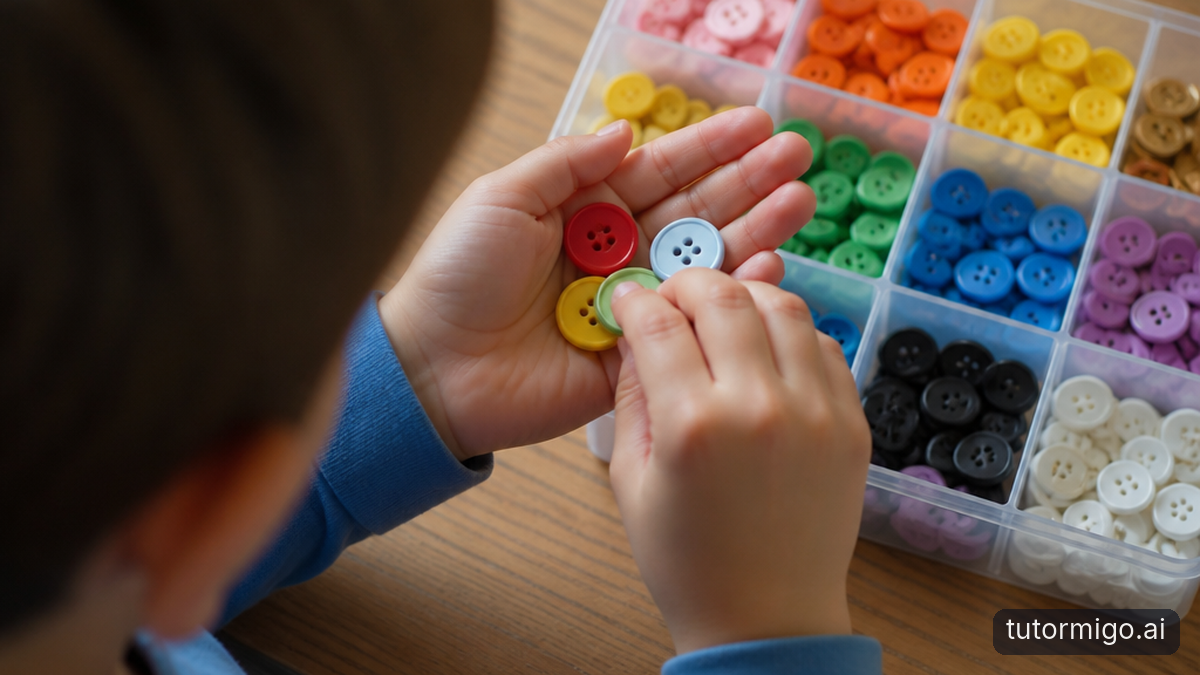
Your flashcards study routine will reveal more when the cards ask focused questions. Start with a small deck drawn from current learning, especially ideas your child needs to remember or keeps confusing. One card should usually test one clear target. A crowded card asking for an entire topic makes it difficult to tell what your child actually knows.
Mix straightforward recall with short explanation prompts. A card might ask, “What does the denominator tell you?” Another might ask, “Why must fractions have equal-sized parts before you add them?” Keep the expected answer brief enough to check, but allow equivalent wording. Repeating the exact sentence on the back is not the goal; expressing the same meaning accurately is.
TutorMigo.ai’s Flashcards supports spaced-repetition decks, AI-assisted card creation, and review scheduling. If your child uses assistance to create cards, encourage them to check each prompt and answer against their learning materials before reviewing. That check is itself a useful moment to notice confusion. When a card is repeatedly missed, examine its wording before assuming the concept is the problem. Split a double question, clarify an ambiguous prompt, or add a separate example card. A manageable, accurate deck offers better evidence than a large collection your child avoids.
Check what comes back after several days
An answer remembered immediately after reading is not the same as an answer retrieved several days later. Spaced repetition gives your child repeated opportunities to bring knowledge back after time has passed. Use scheduled reviews as a rhythm, rather than asking them to repeat the whole deck every evening. The point is durable recall, not collecting a perfect score while the answers are still fresh.
During a review, your child should attempt an answer before revealing the back. If they cannot retrieve it, they can read the answer, explain its meaning, and continue with the review routine. Encourage an honest judgment about how well they remembered. Marking a guessed or partly remembered answer as secure hides the very information that makes practice useful.
Imagine your child explains a science term on Monday but cannot recall it on Thursday. That does not erase Monday’s learning; it identifies something that needs another encounter. A stronger signal appears when they recall it later and give a sensible example without a hint. Notice that change over several reviews, not just one sitting. Keep sessions short enough that attention remains steady, and avoid turning missed cards into extra punishment. Honest difficulty is valuable information, especially when your child feels safe admitting it.
Monitor a small sample without hovering
You do not need to watch every answer to track progress. Agree on a small sample beforehand: your child chooses one flashcard they now remember and one they still find difficult. Ask to hear the answers after their review, not throughout it. This gives you a window into learning while leaving them responsible for doing the work.
For problem-solving, try a simple boundary: an independent attempt comes first, followed by help if needed. With an AI Tutor, your child can ask for an explanation of a confusing step, then attempt a similar problem without looking back. The independent attempt matters because following a helpful explanation can feel like understanding before the child can reproduce the reasoning alone.
TutorMigo.ai’s AI Tutor Workspace includes session history. During an agreed check-in, your child can open a relevant past exchange and show what they asked, what became clearer, and what remains uncertain. Treat that history as context, not proof of mastery: reading a conversation cannot replace hearing an explanation or seeing an unaided attempt. Set your own family boundaries around when help is used and what you review together. Keep these learning controls collaborative, so checking progress feels predictable rather than like a surprise inspection.
Offer support when a difficulty becomes a pattern
One forgotten answer rarely calls for a major intervention. Offer support when the same difficulty returns across separate reviews, when your child consistently needs the same hint, or when they can repeat a definition but cannot use it. Frustration also matters. A child who is increasingly reluctant to start may need a smaller task or a clearer explanation, not more reminders to concentrate.
Match the support to the obstacle. If a flashcard prompt is unclear, rewrite it together. If the answer contains several ideas, split it into smaller cards. If your child remembers a rule but cannot explain it, return to one concrete example before adding more review. For the equation example, ask them to describe what keeps both sides equal, then let them choose the next step themselves.
An AI Tutor can be part of that support: your child can ask about the specific point they cannot explain, rather than request another full solution. Afterward, close the explanation and check the idea again independently. If confusion persists despite manageable practice, contact their teacher with a precise observation, such as “They recall the rule after practice but cannot apply it to a changed question.” That is more useful than saying they need to study harder.
Use a weekly check-in to choose one next step
Choose a regular ten-minute slot when neither of you is rushing to finish homework. Let your child bring a small sample: a recently reviewed deck, one independent problem, and, if useful, a past tutoring exchange. You are looking for a learning pattern, not conducting another test. Keep the same simple structure each week so your child knows what to expect.
Start with a gain: “What can you remember or explain now that felt difficult last week?” Ask for one example and name the change specifically. Next, explore a difficulty: “Which idea still needs a hint?” Listen before suggesting a fix. Finally, choose one action together, such as rewriting two confusing cards, keeping the scheduled reviews consistent, or asking the teacher about one recurring misunderstanding. Record a brief note so next week’s comparison does not depend on memory.
For example, your note might read: “Explained why both sides stay equal; recalled the science term after several days; still confuses two definitions. Next step: make one comparison card.” That captures gains and needs without reducing progress to a grade. End there. A calm, repeatable check-in gives you enough visibility to offer timely help while showing your child that the purpose of review is understanding—not performing perfectly for you.
Frequently asked questions
Ask for an explanation in their own words, a slightly different example, and recall after several days. Look for these signals together rather than relying on one correct response.
Usually, an agreed check-in is more useful than watching every card. Let your child review independently, then share one secure answer and one difficulty.
Reach out when the same misunderstanding persists across reviews despite targeted support, or frustration keeps growing. Share a specific example of what your child can and cannot yet do independently.
Explore TutorMigo
Enjoyed this read?
Like, share, or comment below.



Comments
0Sign in required · respectful discussion · replies supported
Loading comments…