


When Siblings Learn at Different Speeds, Fair Support Matters More Than Equal Progress

Managing different learning needs fairly can be frustrating. One child may remember a concept after two reviews, while the other needs more examples, quieter practice, or several days before it feels familiar. If you give both children the same task for the same amount of time, one may feel bored and the other may feel behind. Fair support means giving each child what helps them grow, not making their progress look identical.
Start by separating effort, understanding, and speed. For example, a child who finishes a vocabulary deck quickly may still need stronger recall a week later. Another child may take longer to build the deck but explain each answer accurately. Notice those differences without describing either child as “the fast one” or “the slow one.” Use private goals such as “remember eight terms tomorrow” or “explain one process without prompts.”
At home, set a shared study time but allow separate targets. At school, offer the same learning objective with different amounts of practice. A simple weekly check-in can ask: What feels easier now? What still takes effort? What should we review next? This keeps the focus on growth and helps adults respond to evidence rather than comparisons. An AI Tutor can support that approach by giving each learner a separate place to ask questions and revisit their own work.
Personalize AI Tutoring for Each Child Without Turning Learning Into a Competition

Personalization begins with separate learning contexts. Give each child an individual TutorMigo workspace routine rather than placing both siblings in one shared conversation. One child might ask for a calm explanation of a difficult science idea, while the other asks for practice questions on the same topic. Their sessions can follow different starting points, examples, and review needs without suggesting that one approach is better.
Before a session, help each child name a small goal: “I want to explain this without looking at my notes” or “I need to distinguish these two ideas.” Afterward, ask the child to identify one answer they can now give independently and one question that remains. Session history can help the adult notice continuity over time, while the child remains responsible for explaining what they learned.
Use the AI Tutor as a coach for thinking, not an answer dispenser. Ask it to break down a confusing step, offer a similar example, or prompt the learner to retrieve an answer before revealing help. If both children study the same subject, compare strategies rather than scores: “You used a diagram; your sibling used an example.” That language protects motivation. The goal is not equal completion counts. It is increasing independence, accuracy, and willingness to keep working.
Keep one rule visible to everyone: you may share study ideas, but each child’s goals and progress belong to that child.
Build Individual Flashcards Study Decks Around Each Child’s Gaps and Goals
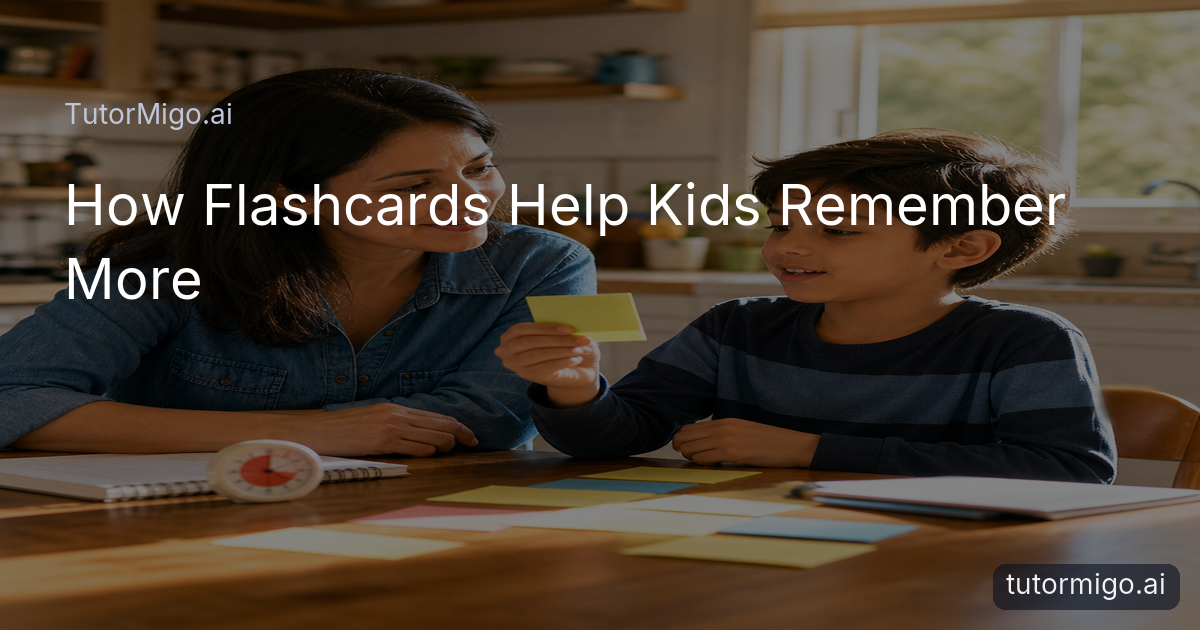
A useful flashcards study routine starts with a specific gap, not a huge pile of facts. Ask each child to collect terms, steps, or questions they could not answer confidently. One sibling might build a deck for confusing vocabulary; the other might need cards that ask them to sequence stages in a process. Different cards make sense even when both children are preparing for the same unit.
Make cards active and small. Instead of writing “The water cycle,” write “What happens after water vapor cools?” or “Explain why condensation occurs.” For a history topic, one child may need a cause-and-effect card, while another needs a card that asks for a definition. Encourage the learner to answer aloud before checking the back. If a card requires a long paragraph, split it into two or three questions so the review shows exactly what is remembered.
TutorMigo’s flashcards feature can help with AI-assisted card creation, but adults should still check whether each card is clear and accurate. Invite the child to edit cards into words they understand. Keep separate decks for separate goals, such as “terms I mix up” and “steps I must explain.” That makes review manageable and gives adults useful evidence without turning deck size into a family leaderboard. A smaller deck with strong recall is more valuable than a large deck that receives little attention.
Use Spaced Repetition and Review Habits That Strengthen Long-Term Retention
Spaced repetition works because recall becomes more durable when practice is spread across time. A child may feel confident immediately after learning a term, yet forget it two days later. A short review at the point of effort strengthens the memory more effectively than one long rereading session. Use the review schedule in a flashcard deck to bring difficult cards back sooner and familiar cards back after a longer gap.
Build a habit that fits real life. For example, one sibling can review ten cards after breakfast, while the other reviews six cards before starting homework. The number can differ; the routine is what matters. Ask both children to pause before flipping a card and rate the answer privately: correct, partly remembered, or not yet known. A partly remembered answer deserves attention, even if it sounds close.
Adults can reinforce retention with brief retrieval prompts away from the deck. On a walk, ask, “What are the three steps you practiced yesterday?” At dinner, ask one child to teach a term and the other to give an example. Do not turn these prompts into a contest. Let each child answer a different question matched to their deck. If a child misses a card, respond with “That tells us what to practice next,” not “Your sibling knew it.” Consistent, low-pressure review builds stronger habits than occasional cramming.
Use TutorMigo to Combine Personalized Sessions, Interactive Tools, Exam Preparation, and Private Progress Tracking
TutorMigo can bring several parts of an individualized routine together without requiring both siblings to learn in the same way. Use the AI Tutor Workspace for a focused session, then turn the session’s difficult ideas into separate flashcard decks. A child who struggles to explain a math process might use the interactive math step editor to work through the sequence, while another child uses the whiteboard to sketch a concept. Choose the tool that matches the barrier, rather than assigning both children an identical activity.
For structured exam preparation, organize work around each learner’s current needs: one child may review key terms and explanations, while the other practices showing steps or correcting common mistakes. Keep the plan specific and reviewable. A session goal, a small deck, and a scheduled review create a clearer path than telling both children to “study more.” The available study tools can support active practice when a learner needs to write, draw, code, or show a process rather than simply read an explanation.
Progress visibility should help adults notice growth privately. Review session history, completed reviews, and changes in confidence with each child one at a time. Record observations such as “can explain the idea with one prompt” or “recalls four of five terms after a week.” Do not display sibling totals side by side. Adults can coordinate support while children see their own next step. For more guidance on moving from quick AI responses to genuine understanding, explore this guide to AI tutoring and real understanding.
Start Today: Set Up Separate Decks, Review Routines, and Growth Check-Ins
You can begin with a 20-minute setup rather than redesigning the whole week. First, meet with each child separately and choose one narrow goal. Next, create or review a deck with cards tied to that goal. Ask the child to remove cards that are vague, combine duplicates, and rewrite difficult questions in their own words. Give each deck a private name based on the skill, not the child’s rank or expected speed.
Then choose a repeatable review time. It might be eight minutes after school, ten minutes before dinner, or a short teacher-led routine. Let each child have a different card limit and different support. One may answer aloud; another may need to write or use an interactive study tool first. End by recording one private note: what the child recalled, where they needed help, and what should return in the next review.
At the end of the week, hold two short growth check-ins rather than one comparison meeting. Ask each child to demonstrate one skill from the starting goal and choose the next small target. Celebrate useful behaviors—returning to a difficult card, correcting an error, or explaining an idea clearly. If you need a simple model for building confidence through manageable practice, read this problem-by-problem study approach. Keep the routine flexible, private, and focused on long-term retention.
Start now: choose one goal per child, create one focused deck, schedule the first review, and ask each learner to name one improvement at the next check-in.Frequently asked questions
Give each child separate decks, targets, and review records. Discuss individual changes over time, such as improved recall or fewer prompts, instead of comparing card totals, speed, or accuracy.
Use a manageable amount that fits the child’s attention and current gaps. One child may review six cards and another ten. Increase the amount only when the routine is consistent and recall remains accurate.
TutorMigo combines personalized tutoring with session history, spaced-repetition flashcard decks, and interactive study tools. That makes it easier to maintain separate routines and return to each child’s actual learning needs.
Keep a private note for each child with the goal, review date, independent answers, and support needed. Compare the child with their earlier performance, not with a sibling’s speed or score.
Related reading
Enjoyed this read?
Like, share, or comment below.


Comments
0Sign in required · respectful discussion · replies supported
Loading comments…