


When Gifted Learners Finish Early but Face More Repetition
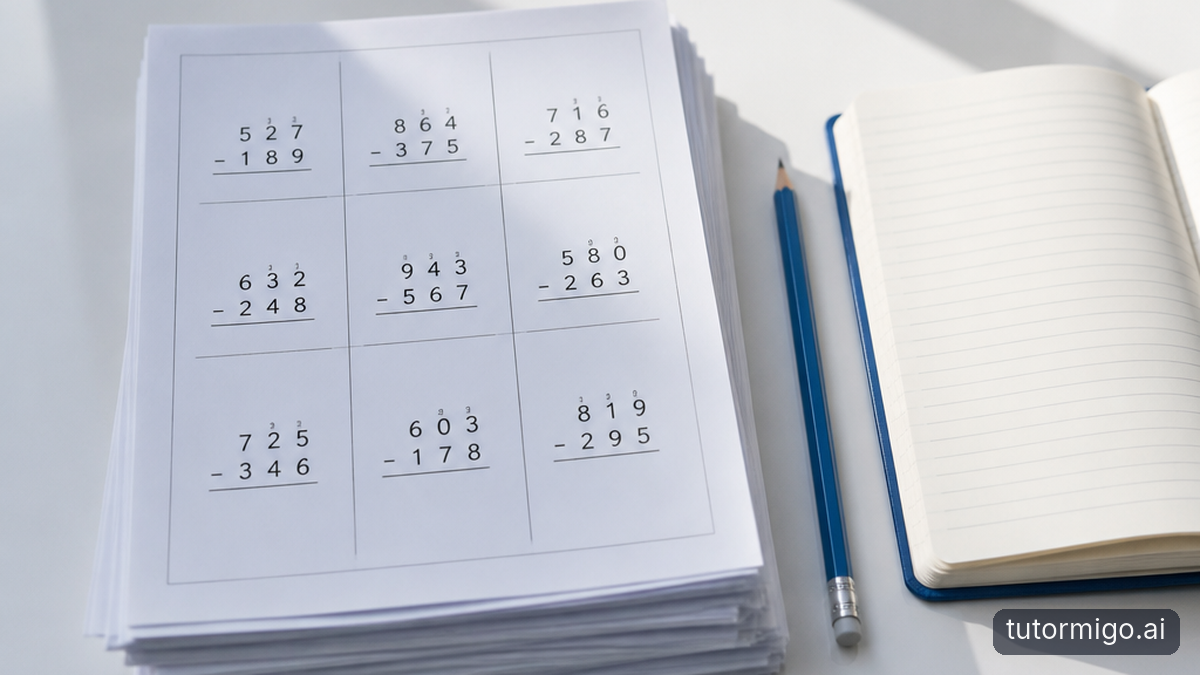
Your child finishes the first few questions easily, then groans at another page of the same thing. You want meaningful challenge, not extra homework. Start by checking whether the skill is secure, agree with the teacher on fewer repetitions, and replace—not supplement—them with a task that requires deeper thinking.
Finishing quickly can leave a learner in an awkward position: showing competence seems to earn more work. If every early finish brings another worksheet, slowing down or disengaging can begin to look sensible. The answer is not automatically harder content, though. First, identify what the assignment is meant to teach and whether the learner has already demonstrated it.
For example, a page might practice regrouping in subtraction. A learner who completes varied examples accurately and explains the regrouping may not need every near-identical question. But speed alone does not establish mastery: someone can race through familiar-looking questions while missing an important distinction.
Your aim is a fair exchange, not a reward for being fast. Keep the learning goal, reduce practice that adds little, and use the available time for reasoning or transfer. A thoughtful explanation can be more demanding than a full page of calculations—and shorter. That distinction helps parents and teachers discuss challenge without framing ordinary practice as pointless.
Is It Boredom, Confusion, or Trouble Getting Started? How to Tell
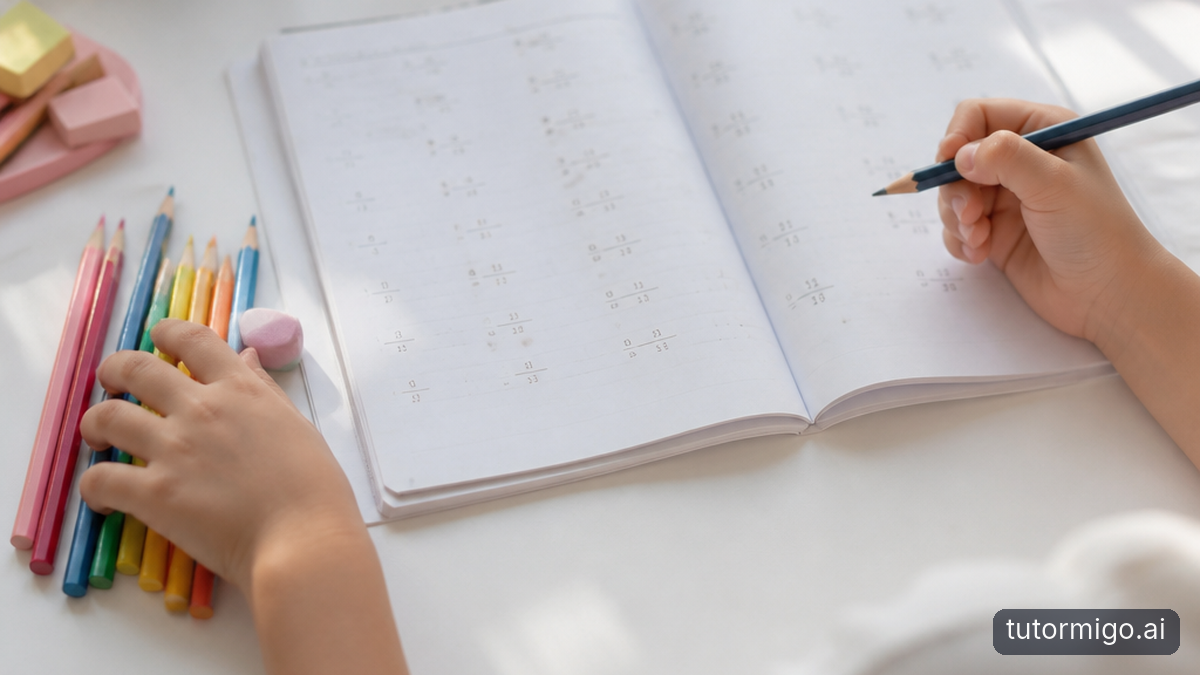
“This is boring” is useful information, but it is not a diagnosis. It can mean “I know this,” “I do not understand this,” or “I cannot figure out how to begin.” Ask neutrally: “Show me where the work stopped feeling useful.” Then watch what happens with one representative question rather than debating the whole assignment.
When repetition is the problem, the learner may solve independently, explain the reasoning, and handle a slightly different example. Confusion may show up as guessing, copying a remembered procedure without understanding it, or making the same conceptual error. Difficulty starting can look different: the learner understands the task aloud but struggles to locate materials, choose a first action, or organize a response.
Try a small change before drawing conclusions. Ask the learner to restate the directions, choose a starting question, and attempt it without coaching. If choosing the question unlocks the work, the obstacle may be getting started rather than insufficient challenge. These homework routines that support executive functioning offer relevant ways to reduce that friction.
These patterns can overlap. A learner may understand the mathematics yet struggle to record an explanation. Check on more than one occasion, and ask what feels repetitive versus difficult. Support the actual obstacle rather than treating every complaint as avoidance—or every quick answer as proof that the entire topic is mastered.
Check Mastery Before Cutting Repetitive Homework
A useful mastery check is short, representative, and agreed upon. Look at the assignment's learning goal with the teacher: is it accurate calculation, choosing a method, explaining a concept, or building fluency? The evidence should match that goal. An eloquent explanation alone may not establish fluency, just as quick answers alone may not establish understanding.
Select a few questions covering the meaningful variations, not simply the easiest opening items. For subtraction, that might include regrouping, a zero within a number, and a word problem requiring the learner to recognize subtraction. Ask the learner to work independently, then explain one decision and check an answer. Avoid coaching during the check, because you need to see what they can do without support.
Include a small transfer task: change the wording, present an unfamiliar example, or ask whether a plausible wrong answer makes sense. A learner who can explain why a method works and spot its limits offers stronger evidence than one who reproduces a familiar pattern. For broader pacing decisions, consider moving faster without leaving foundation gaps.
Agree beforehand on what happens if a gap appears. It need not cancel the whole adjustment. Practice the specific weak point, then check again. Treat mastery as evidence about this skill today, not a permanent label or a promise that the learner will never need review.
Agree on Fewer Practice Questions While Respecting Assignment Requirements
Do not quietly cross out assigned questions and hope for agreement afterward. Parents can share what they observe, while teachers can explain requirements that are not obvious from the worksheet. A task may contribute to assessment, require a particular written method, or prepare learners for a later activity. Any adjustment needs to preserve those purposes.
Make a specific, manageable proposal: “Could we try a short set covering each question type? If the work is accurate and independently explained, could a deeper task replace the remaining repetition?” Ask which questions must stay, what evidence is sufficient, and how the replacement should be submitted. The teacher may prefer to select the sample rather than use the first few questions.
Set a workload boundary too. For example, agree that the replacement uses roughly the time the omitted practice would have taken, rather than adding an open-ended project. Keep a brief record of the arrangement so the learner knows what counts as complete. Parents can support the conversation while avoiding taking over the homework.
If a teacher cannot change the assignment immediately, ask about a small trial on a future task. Avoid making the child responsible for negotiating an adult disagreement. A respectful trial with clear evidence and a review date is easier to evaluate than a blanket request to eliminate homework whenever the learner feels bored.
Replace Repetition With Depth: Explain a Second Solution or Design a Harder Problem
Good homework extensions for fast learners change the thinking, not merely the quantity. Ask for a different method, a justification, a counterexample, or a problem with carefully chosen constraints. Keep the same learning goal visible. If the assignment concerns addition strategies, an elaborate poster about numbers may require effort without deepening that particular understanding.
For a second-solution task, start with . The learner might first add tens and ones, then explain why moving two from the second addend to the first gives . Ask: “Why does the total stay unchanged? When would this approach make a calculation easier?” The explanation matters more than producing two answers that look different on paper.
For a design task, ask the learner to create two addition problems with the same total: one requiring regrouping and one not. They should solve both and explain how they chose the numbers. This is deeper than “make the numbers bigger,” because it requires understanding the feature that changes the method. If that is too demanding, provide one example and ask them to alter it.
When challenging gifted kids at home, keep the task bounded and offer a choice between two useful options. A brief explanation, diagram, or discussion may be enough evidence; a polished presentation is unnecessary. Stop when the agreed goal is demonstrated. Otherwise, even a creative extension can become busywork in disguise, especially when it is added after every original question.
Start With One Repetitive Assignment and Agree on a Mastery-Based Adjustment
Choose one assignment that regularly creates friction, rather than trying to redesign the learner's whole workload. Name its learning goal in plain language: “Use regrouping accurately,” or “Support an interpretation with evidence.” Then identify what convincing mastery would look like and which deeper alternative would preserve that goal. Keep the first experiment small enough to review easily.
You might write to the teacher: “The repeated questions seem to be causing frustration, but we want to check understanding rather than assume. Could you choose a representative sample? If that shows secure understanding, could an explanation of a second method replace the remaining similar questions?” This gives the teacher a concrete proposal and room to adjust it.
After the trial, ask whether accuracy held up, the explanation revealed any gaps, and the workload stayed reasonable. Include the learner's view: did the alternative feel meaningfully challenging, or merely different? If the task became too large, narrow it. If understanding was shaky, restore targeted practice rather than treating the experiment as a failure.
If you want a place to discuss alternative approaches, TutorMigo.ai offers a tutoring chat workspace. Your next step needs no new tool, though: identify one repetitive assignment and agree with the teacher on a mastery-based adjustment that preserves its learning goal.
Frequently asked questions
No. Check accuracy, independent reasoning, and performance on a slightly unfamiliar example. Speed is one observation, not enough evidence on its own.
Respect the current requirement while asking about a future trial. Share specific observations and propose a representative mastery check, a bounded replacement task, and a review date.
When the purpose is to reduce unnecessary repetition, the challenge should replace agreed portions of practice. Adding it afterward can make demonstrating mastery feel like a penalty.
Identify whether the difficulty comes from the underlying concept, unfamiliar directions, or an oversized task. Offer a small scaffold or targeted practice, then reassess without assuming all earlier mastery was invalid.
Enjoyed this read?
Like, share, or comment below.



Comments
0Sign in required · respectful discussion · replies supported
Loading comments…