


Why Students in Bangladesh May Struggle With Debate Skills, Confidence, and Participation
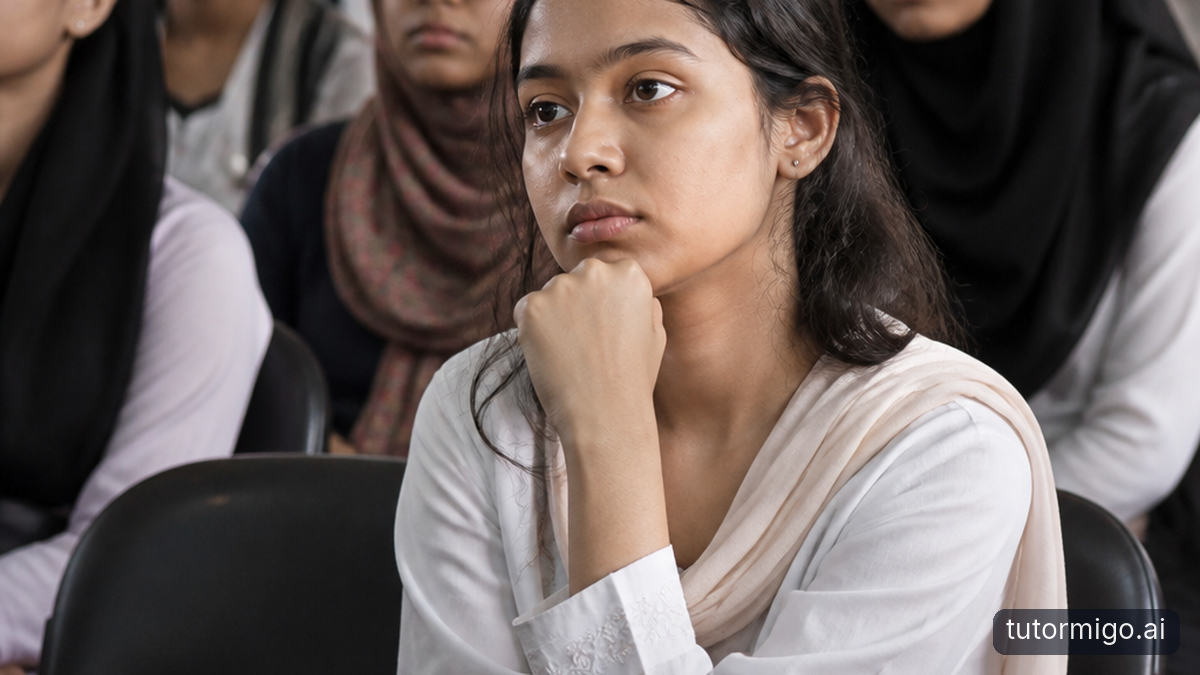
> If you understand what a good argument looks like but hesitate when it is your turn to speak, you are not alone. Students in Bangladesh may know the rules of debate yet have few low-pressure chances to test an opinion, answer disagreement, or ask a public question. That gap matters because civic confidence grows through repeated practice, not knowledge alone. Several practical pressures can narrow participation. Large classes leave limited time for each student to speak. Lessons may reward accurate recall more consistently than open-ended questioning. Some learners also worry about making a language mistake, appearing disrespectful to an older person, or being judged by classmates. A student who can explain a policy in writing may therefore stay silent during a discussion. Access is uneven too. A school with an active debate club, trained teacher, and regular competitions offers a different practice environment from a school where speaking activities happen only occasionally. Home expectations, travel, cost, and confidence in English or Bangla can shape who joins. These are not signs of low ability; they are opportunities to design more inclusive practice. For students, parents, teachers, and lifelong learners, the useful question is not whether someone is naturally outspoken. It is whether they can practise a claim privately, receive specific guidance, and gradually participate in real conversations.
If you understand what a good argument looks like but hesitate when it is your turn to speak, you are not alone. Students in Bangladesh may know the rules of debate yet have few low-pressure chances to test an opinion, answer disagreement, or ask a public question. That gap matters because civic confidence grows through repeated practice, not knowledge alone.
Several practical pressures can narrow participation. Large classes leave limited time for each student to speak. Lessons may reward accurate recall more consistently than open-ended questioning. Some learners also worry about making a language mistake, appearing disrespectful to an older person, or being judged by classmates. A student who can explain a policy in writing may therefore stay silent during a discussion.
Access is uneven too. A school with an active debate club, trained teacher, and regular competitions offers a different practice environment from a school where speaking activities happen only occasionally. Home expectations, travel, cost, and confidence in English or Bangla can shape who joins. These are not signs of low ability; they are opportunities to design more inclusive practice.
For students, parents, teachers, and lifelong learners, the useful question is not whether someone is naturally outspoken. It is whether they can practise a claim privately, receive specific guidance, and gradually participate in real conversations.
What Credible Evidence Shows About Students’ Debate Participation and Speaking Confidence
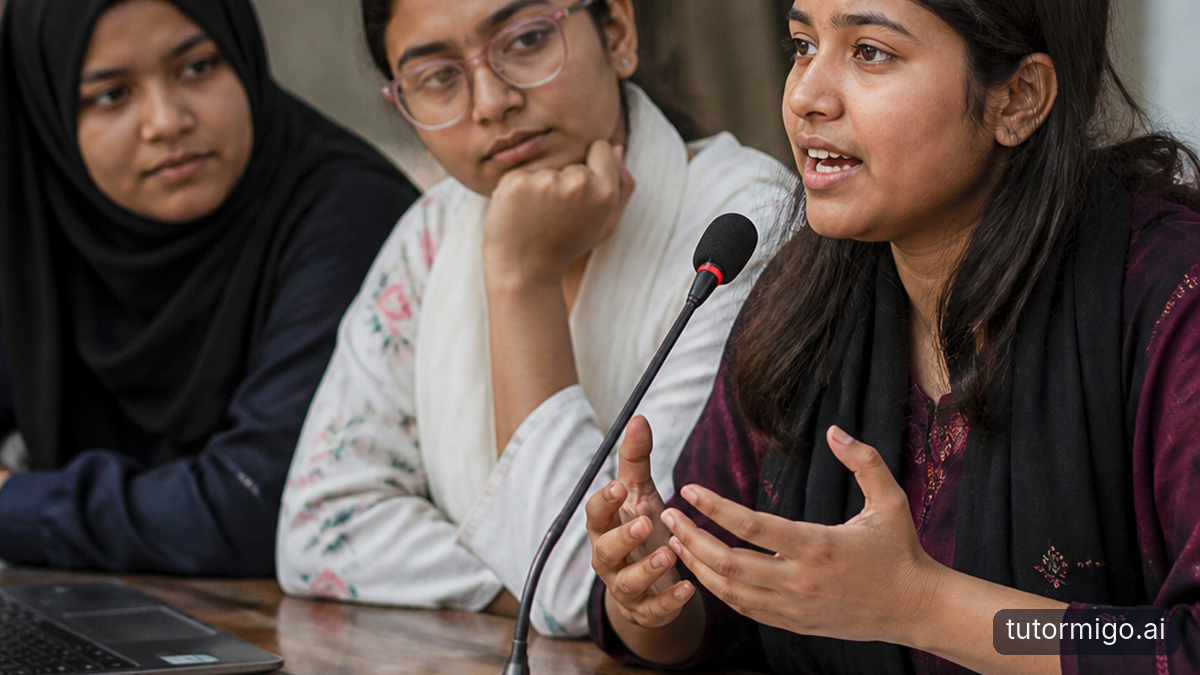
A careful answer begins with an evidence limit: Bangladesh does not appear to have one widely used, nationally representative measure that tracks every student’s debate participation and speaking confidence over time. Debate-club counts cannot stand in for all learners, because students who already feel comfortable speaking are more likely to join. Claims that “Bangladeshi students lack confidence” therefore need caution.
Still, credible evidence points to a real participation and skills gap. Education research and international learning frameworks consistently distinguish subject knowledge from communication, collaboration, critical thinking, and agency. UNICEF and UNESCO work on adolescent skills also treats communication and participation as learnable capacities that improve when young people have safe opportunities to practise. Bangladesh-focused education reporting has repeatedly highlighted unequal access to quality learning, extracurricular activity, and student voice, even when it does not measure debate confidence directly.
The strongest conclusion is modest but useful: opportunity is uneven, practice matters, and national averages cannot tell us what one learner can do. A teacher can gather better local evidence by tracking who speaks, who asks follow-up questions, and whether participation becomes more balanced after structured activities. A parent can ask for examples rather than a label: “Can my child state a claim and respond to a different view?”
That approach matches the broader evidence on personalized learning and learner agency: progress is easier to notice when practice is repeated and feedback is specific.
Why Shyness and Limited Practice Matter for Civic Discussion and Parliamentary Engagement
Shyness is not a character defect. It is often a sensible response to risk: an incorrect answer may bring laughter, correction in front of peers, or conflict with someone older. The problem is that avoiding every speaking opportunity prevents the learner from discovering that disagreement can be managed. Without rehearsal, even a well-informed student may speak too quickly, abandon a point after one challenge, or confuse confidence with volume.
These habits matter beyond school competitions. Civic discussion requires people to explain priorities, listen to another group, ask for evidence, and revise a position. Parliamentary engagement has similar building blocks, whether a person is following a national debate, contacting a representative, attending a local meeting, or evaluating a proposed law. A citizen who never practises questions may accept unclear claims; a citizen who only practises winning may fail to understand opposition.
Consider a learner discussing whether a city should restrict plastic bags. A weak rehearsal says, “They are bad, so ban them.” A stronger one defines the problem, names likely effects on shopkeepers, suggests a transition period, and asks how enforcement would work. The learner can then respond to “What about low-income customers?” without treating the question as a personal attack.
Private practice lowers the social cost of making an early mistake. It does not replace real people or public responsibility. It creates a bridge from quiet preparation to respectful participation, helping learners build the habit of speaking with reasons while remaining open to correction.
How to Practise Arguments, Rebuttals, and Questions Privately with Structured AI Support
Begin with one question that has a genuine trade-off, such as whether schools should require community service. Write a one-sentence claim, two reasons, one example, and one concern your opponent might raise. Then ask an AI Tutor to act as a careful practice partner: request one challenge at a time, ask it to identify an unsupported assumption, and answer in your own words before requesting the next challenge.
Use a simple four-round routine. In round one, explain the claim in sixty seconds. In round two, answer a question beginning with “What evidence supports this?” In round three, state the strongest opposing point fairly before responding. In round four, summarise what you would change after hearing the other side. A whiteboard or math step editor is useful for organising evidence and relationships when the topic includes quantities; the Study Tools Hub also includes interactive tools for structured work.
Ask for feedback on observable behaviours, not a vague confidence score: “Did I define my key term?” “Did I answer the question asked?” “Did I separate evidence from opinion?” General-purpose chat can produce a fluent reply, but a focused session is more useful when you set the role, limits, and sequence yourself. Never present generated examples as evidence; verify facts through reliable sources and add local context.
Spaced-repetition flashcards can preserve definitions, names of institutions, and useful question stems such as “Who benefits?” and “What could go wrong?” Review a small deck before the next session, then use the terms in a fresh argument. This combines memory practice with speaking practice rather than treating debate as memorising a script.
TutorMigo Benefits for Debate Practice: Personalized Tutoring, Session History, and Learning Continuity
The main TutorMigo benefits for this use case are continuity and structure. In the AI Tutor Workspace, you can set a topic, audience, language preference, and practice role, then ask for a manageable sequence of prompts. A student might request a neutral moderator for a discussion on public transport, while a teacher might ask for age-appropriate follow-up questions and a parent might co-learn by reviewing the conversation.
Session history helps you continue instead of starting from zero. At the end of a practice session, record the recurring issue in a short note, such as “I give reasons but no example” or “I interrupt when challenged.” In the next session, ask the AI Tutor to focus on that issue and use a new topic. This makes improvement visible through work completed and reflections made, without claiming that the platform provides a dedicated debate score or formal competition ranking.
TutorMigo is also more useful when debate practice sits beside other learning habits. Flashcards can review civic vocabulary and question stems; interactive study tools can help organise an argument. If a learner is preparing for a listed SAT, ACT, AP, or IELTS task, Exam Preparation provides structured practice sets and progress tracking, but it should not be described as parliamentary-debate training.
Parents and teachers can add human accountability through the Parent Dashboard or Teacher Dashboard, where the relevant visibility and monitoring tools support follow-up. An AI Tutor can prompt rehearsal; trusted adults still help judge fairness, accuracy, tone, and real-world context.
A Practical Weekly Debate Routine for Students, Parents, Teachers, and Lifelong Learners
Choose one civic question for the week and keep the scope small. On day one, define two terms and write a claim in one sentence. On day two, gather two reliable sources and make flashcards for unfamiliar vocabulary. On day three, use the TutorMigo Workspace for a private claim-and-rebuttal session. Ask for one challenge at a time, save the session, and note the answer you could improve.
On day four, switch sides. Defend the position you initially rejected, including its strongest practical concern. This is especially valuable for learners who equate debate with defeating an opponent. On day five, practise three questions aloud: one seeking evidence, one testing consequences, and one asking who may be affected. Keep each answer under a minute so clarity matters more than speed.
On day six, invite a trusted person to listen for five minutes. A parent can ask a follow-up without correcting every sentence; a teacher can use a small rubric covering claim, evidence, listening, and response; a lifelong learner can join a reading group or community discussion. On day seven, review the session history and write one next target. Do not measure success only by speaking more. Notice whether you answer the actual question, acknowledge uncertainty, and make room for another voice.
To begin, open TutorMigo.ai, choose a single topic, and describe the practice role you want. Keep facts verifiable, protect personal information, and treat AI feedback as rehearsal rather than authority. After four weeks, compare your notes: which question types still cause hesitation, and which practice format helps you participate more calmly?
Pros and cons
Pros
- Private, repeatable practice can reduce the pressure of making an early mistake.
- Session history supports continuity and targeted follow-up.
- Flashcards and interactive study tools can reinforce vocabulary and argument structure.
- Parents and teachers can add human guidance and visibility where appropriate.
Cons and limitations
- AI rehearsal cannot replace real discussion, source verification, or civic participation.
- TutorMigo should not be treated as providing a dedicated debate score or competition ranking.
- Confidence develops gradually and depends on opportunities beyond the platform.
Frequently asked questions
There is no single widely used national measure that captures every student’s debate participation and speaking confidence over time. Available education and youth-participation evidence supports concern about uneven opportunities, but it does not justify labelling all Bangladeshi students as shy or unprepared.
No. Private practice is a low-pressure rehearsal space for claims, questions, and rebuttals. Real people are still needed for listening, cultural context, accountability, and the unpredictability of civic discussion.
Give the AI Tutor a clear topic, position, audience, and role. Ask for one challenge at a time, answer in your own words, and request feedback on definitions, evidence, relevance, listening, and tone rather than an unsupported debate score.
Reward preparation and respectful listening, not just frequent speaking. Use short turns, private rehearsal, and specific feedback, then gradually move toward paired or group discussion. Dashboard visibility can help adults follow learning activity without turning confidence into a label.
Enjoyed this read?
Like, share, or comment below.



Comments
0Sign in required · respectful discussion · replies supported
Loading comments…