
Why personalized learning needs more than personalization

When a student is stuck, the problem is rarely a lack of effort. They may need a different explanation, more practice with one skill, or a way to connect today’s lesson with what they studied last week. A one-size-fits-all lesson can move too quickly for one learner and too slowly for another. Personalized learning addresses that gap by adjusting support to a learner’s goals, knowledge, pace, and preferred ways of practicing.
AI tutors at tutormigo.ai make this approach more available between lessons. Instead of waiting for office hours or the next tutoring session, a learner can ask for a worked example, request a simpler explanation, or try a follow-up question while the topic is still fresh. The strongest systems do not treat personalization as merely changing the tone of a response. They connect explanations with practice, review, progress, and continuity.
That distinction matters when you evaluate the TutorMigo benefits. The value is not simply receiving an instant answer. It is having a personal learning workspace that can support a study routine, interactive tools, spaced review, structured preparation, and appropriate visibility for adults who support learning.
Practical test: Ask whether a learning tool helps you decide what to study next, explains why an answer works, and makes it easier to return to the same goal tomorrow.
How AI tutors adapt while preserving session continuity

An AI tutor can adapt within a conversation by responding to the learner’s question, previous attempt, and request for help. A student solving a science problem might first receive a hint, then a concept explanation, and finally a similar practice question. This sequence is more useful than immediately revealing the final answer because it keeps the learner involved in the reasoning.
Continuity adds another layer. With session history, a learner can return to a previous topic instead of rebuilding the context from memory. For example, a student preparing for an exam could revisit an earlier discussion about evidence in an essay, ask for another practice prompt, and continue from the same learning objective. Expert personas can also provide different kinds of support, such as a patient explainer or a focused practice partner.
Adaptation is not the same as flawless judgment. AI-generated guidance should be checked, particularly for high-stakes decisions or complex subject matter. The U.S. Department of Education’s 2023 report on artificial intelligence in teaching and learning emphasizes human oversight, transparency, and the importance of keeping educators involved.
For learners, the practical question is whether the tutor makes the next step clearer. A useful AI Tutor should encourage thinking, surface misconceptions, and adjust the amount of help rather than making the student passive.
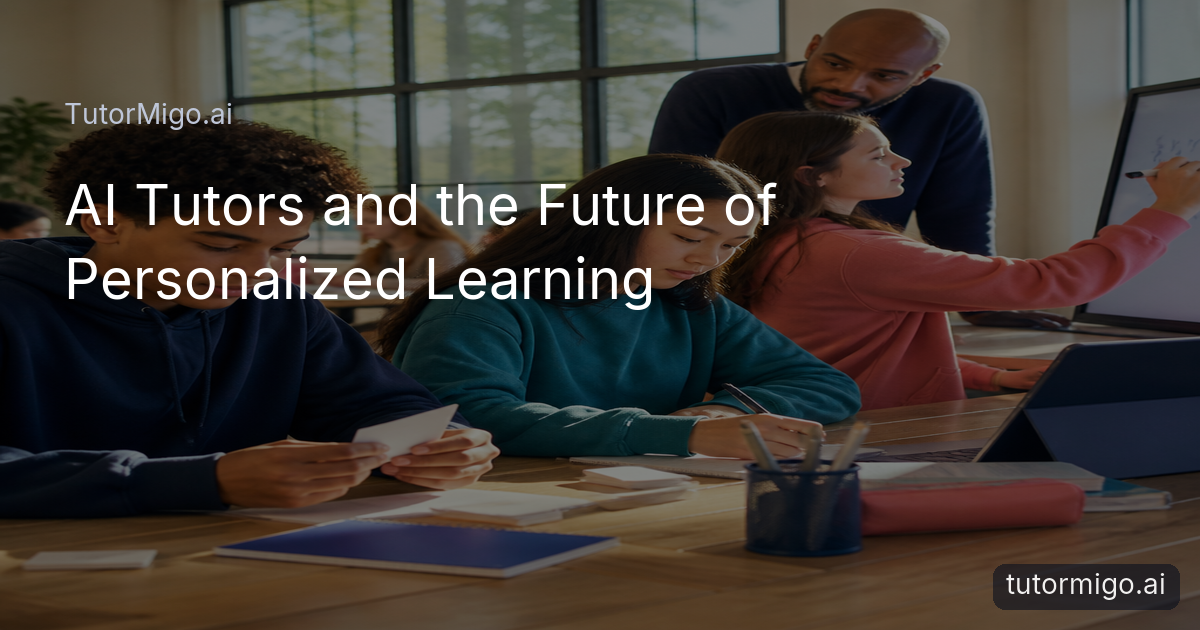
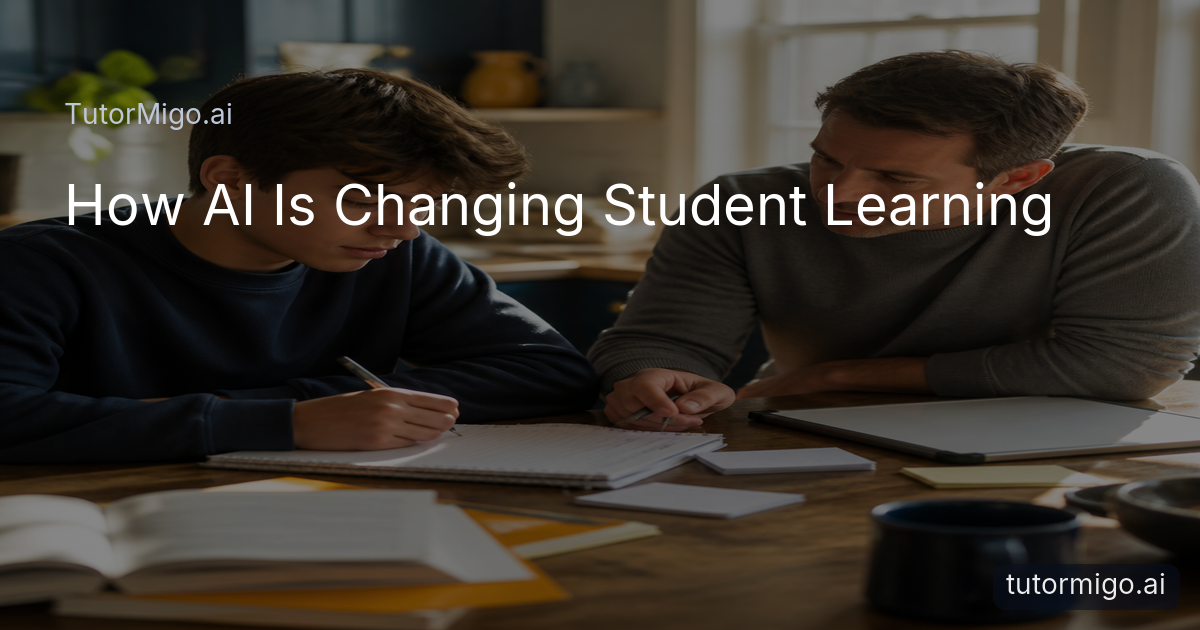
Learn more about the research context in how AI is changing student learning.
Instant feedback can turn confusion into productive practice
Feedback is most useful when it arrives close to the attempt and tells the learner what to do differently. If a student waits several days to learn that an argument lacks evidence, the correction may feel disconnected from the original work. An AI tutor can respond immediately to a question, explain a mistake in plain language, and invite the learner to try again while the reasoning is still active.
Interactive study tools make that feedback more concrete. A learner can work through a problem on a whiteboard, use a math step editor to inspect the stages of a solution, or experiment in a code sandbox. These activities reveal process, not just the final answer. A teacher or tutor can then focus on the misconception behind the error: perhaps the student selected the wrong operation, misunderstood a variable, or skipped a condition in a programming task.
Instant feedback should not become constant interruption. Students also need time to think, make productive mistakes, and explain their choices. A good routine might be: attempt independently, request a hint, revise the work, and only then review a complete explanation. This preserves challenge while reducing unproductive frustration.
For parents and teachers comparing tools, look for feedback that is specific and actionable. “Try again” is weak. “Your conclusion introduces a new claim; connect it to evidence from the second paragraph” gives the learner a clear revision path.
Spaced repetition and exam preparation make learning stick
Personalized tutoring becomes more powerful when it extends beyond a single session. Spaced repetition helps learners revisit information at increasing intervals, strengthening recall over time instead of relying on one long cram session. Flashcards are especially useful for definitions, vocabulary, formulas, dates, and concise question-and-answer practice. AI-assisted card creation can reduce setup time, while review scheduling helps a student return to material before it is forgotten.
Consider a learner preparing for a language exam. On Monday, they review unfamiliar vocabulary. On Wednesday, they practice the cards they missed. At the weekend, they use those terms in a short exercise. The sequence combines retrieval with application, which is more meaningful than repeatedly rereading a list.
Structured exam preparation adds goals and visibility to this routine. Practice sets and progress tracking can help a learner see whether the problem is content knowledge, timing, or a particular question type. That information supports a more focused plan: review one weak topic, complete a short practice set, inspect errors, and schedule another review. visit; tutormigo.ai
The Education Endowment Foundation’s learning guidance highlights retrieval practice and metacognition as useful approaches when applied thoughtfully. They are not shortcuts; they work best when students understand what they are learning and use feedback to adjust.
Use an AI-supported study routine as a model, then adapt the timing and difficulty to your own workload.
Accessibility means flexible support, not lower expectations
Accessibility in AI-supported learning is partly about access to explanations at the moment they are needed. A learner can ask for a definition in simpler language, request a step-by-step example, or approach the same idea through a different context. This flexibility can help students who are learning in a second language, returning to study after a break, or balancing education with work and family responsibilities.
It is important, however, to distinguish flexibility from reduced rigor. Simplifying an explanation should not mean removing the underlying idea. A strong learning interaction can begin with an accessible explanation and then move toward precise terminology, independent practice, and a more demanding application. Students should be able to control the amount of support they receive as their confidence grows.
Accessibility also includes practical availability. An AI tutor can offer support outside a fixed lesson schedule, while flashcards and interactive tools let learners choose shorter study sessions when time is limited. That does not eliminate unequal access to devices, connectivity, quiet space, or expert help. It simply creates another support layer that should be designed and used responsibly.
UNESCO’s guidance on generative AI in education calls for an inclusive, human-centered approach. In practice, that means checking whether a tool is understandable, usable, privacy-conscious, and appropriate for the learner’s age and context. Accessibility should expand participation while keeping human encouragement and professional support within reach.
AI tutors should strengthen teachers and parent support
Personalized learning does not mean removing teachers from the learning process. Teachers see classroom dynamics, motivation, misconceptions, and social needs that an automated system cannot fully understand. An AI tutor can support that work by giving students another place to practice and by making patterns in learning activity easier to discuss.
A teacher dashboard can help educators manage classes, monitor student progress, assign knowledge-base material, and review reports. Imagine a teacher noticing that many students have practiced a topic but continue to miss the same concept. The next lesson can address that shared misconception, while students who are ready for extension work can continue at a suitable level.
Parents need a different kind of visibility. A parent dashboard can show progress, provide learning controls, and support co-learning without requiring a parent to sit beside the student for every session. A useful conversation might begin with, “I noticed you have been reviewing vocabulary consistently. Which words still feel difficult?” That is more constructive than using activity data as a judgment.
Visibility must be paired with context and trust. Activity counts do not prove understanding, and dashboards should support conversations rather than surveillance. Teachers and parents should ask what the learner attempted, where support was needed, and what the next goal should be.
This human partnership is central to the future of AI in education: technology can extend attention and practice, while adults provide judgment, care, motivation, and accountability.
AI tutors versus general-purpose generative chatbots
General-purpose generative chatbots can be useful for brainstorming, explanations, and quick questions. They may help a learner get started, but a learning-focused tool is evaluated by a wider set of needs. Does it preserve session history? Can it connect conversation with practice? Does it provide an appropriate place for flashcard review, interactive problem-solving, structured exam preparation, or progress tracking?
An AI tutor workspace is designed around those learning behaviors. A student can ask questions in a tutoring conversation, return to earlier sessions, and use expert personas for different types of support. Separate study tools can provide a whiteboard, code sandbox, or math step editor. Exam preparation can organize practice sets and progress tracking for SAT, ACT, AP, or IELTS learners. These features do not make every response correct, and they do not replace a teacher. They create a more coherent environment for sustained study.
The difference is best understood as workflow rather than intelligence. A chatbot may answer a question; a learning platform can help organize the cycle of question, attempt, feedback, review, and progress. When comparing tools, test a realistic task: explain a difficult concept, save the learning thread, practice it in another format, review it later, and identify what still needs work.
For a balanced comparison of human and AI support, read AI tutoring versus traditional tutoring. The right choice depends on the learner’s goals, support network, budget, and need for accountability.
What the future of personalized learning may look like
Fact: AI tutoring is already changing how learners access explanations, practice, and feedback. Prediction: Over the next decade, the most useful systems are likely to become better at coordinating these activities into a coherent learning journey. Instead of treating tutoring, flashcards, interactive work, and progress reports as separate experiences, platforms may connect them around clear goals and evidence of learning.
A future learner might finish a tutoring session with three specific next steps: complete a short problem set, review a small deck of difficult terms, and return for a targeted check-in. A teacher could see which concepts need group instruction, while a parent could support a consistent routine without interpreting every individual mistake. These possibilities depend on careful design, reliable evaluation, data protection, and meaningful human oversight.
There are also risks. If recommendations are inaccurate, learners may practice the wrong material. If progress measures reward activity instead of understanding, students may optimize for completed tasks. If systems are difficult to explain, teachers and families may struggle to challenge a recommendation. Responsible education technology must therefore make room for transparency, correction, privacy, and the learner’s own voice.
To get started now, choose one measurable goal, use an AI tutor for guided practice, reinforce it with spaced review, and check progress weekly with a teacher, parent, or trusted adult. Start small enough to sustain. The future of personalized learning will be shaped not only by better AI, but by better learning habits around it.
Pros and cons
Pros
- Personalized explanations and guided practice
- Session continuity for more coherent study
- Spaced repetition and structured exam preparation
- Interactive tools for showing work and receiving feedback
- Progress visibility for teachers and parents
Cons and limitations
- AI guidance still needs human review and oversight
- Activity data does not automatically prove understanding
- Access depends on suitable devices, connectivity, and a supportive learning environment
Frequently asked questions
AI tutors can provide immediate explanations, adapt the amount of support, maintain session continuity, and offer practice between lessons. Their value increases when tutoring is connected with flashcards, interactive study tools, structured preparation, and progress tracking.
No. An AI tutor can extend practice and provide on-demand guidance, but teachers and human tutors provide judgment, encouragement, context, safeguarding, and social understanding. The strongest approach combines AI-supported practice with human support.
Use progress information as a conversation starter, not a final judgment. Look at the learner’s attempts, feedback, and consistency alongside their goals and circumstances. Ask what support is needed and allow the learner to participate in planning next steps.
A learning-focused AI tutor is organized around sustained study. It may combine session history with guided tutoring, spaced-repetition flashcards, interactive tools, structured exam preparation, and visibility for parents or teachers. A general-purpose chatbot may still be useful, but it may not provide the same connected learning workflow.
Explore TutorMigo
Enjoyed this read?
Like, share, or comment below.

Comments
0Sign in required · respectful discussion · replies supported
Loading comments…