


Build Emotional Intelligence Through Homework Frustration

“I can’t do this!” Your child pushes the workbook away, and you’re torn between explaining again and calling it quits. Building emotional intelligence in children starts in moments like this: notice the frustration, acknowledge it, help your child settle, then support one manageable attempt without doing the work yourself.
Homework frustration can feel like a problem you need to fix immediately. Perhaps you point out how easy the question is, offer the answer or insist that your child keep going. Those responses are understandable, especially when everyone is tired. But they can miss what your child needs first: help handling the feeling that comes with difficulty.
Emotional intelligence includes recognising feelings and responding to them thoughtfully. Persistence means returning to something difficult, not staying calm every second or working without rest. Both can grow through small, repeated experiences of being upset, getting support and trying again.
Imagine your child getting stuck on written instructions. The aim isn’t to make the irritation disappear or finish the page at any cost. It’s to help them move from “This feels impossible” towards “I’m frustrated, and I can choose what to do next.”
Spot Frustration Early: Notice Your Child’s Words, Body Language and Behaviour
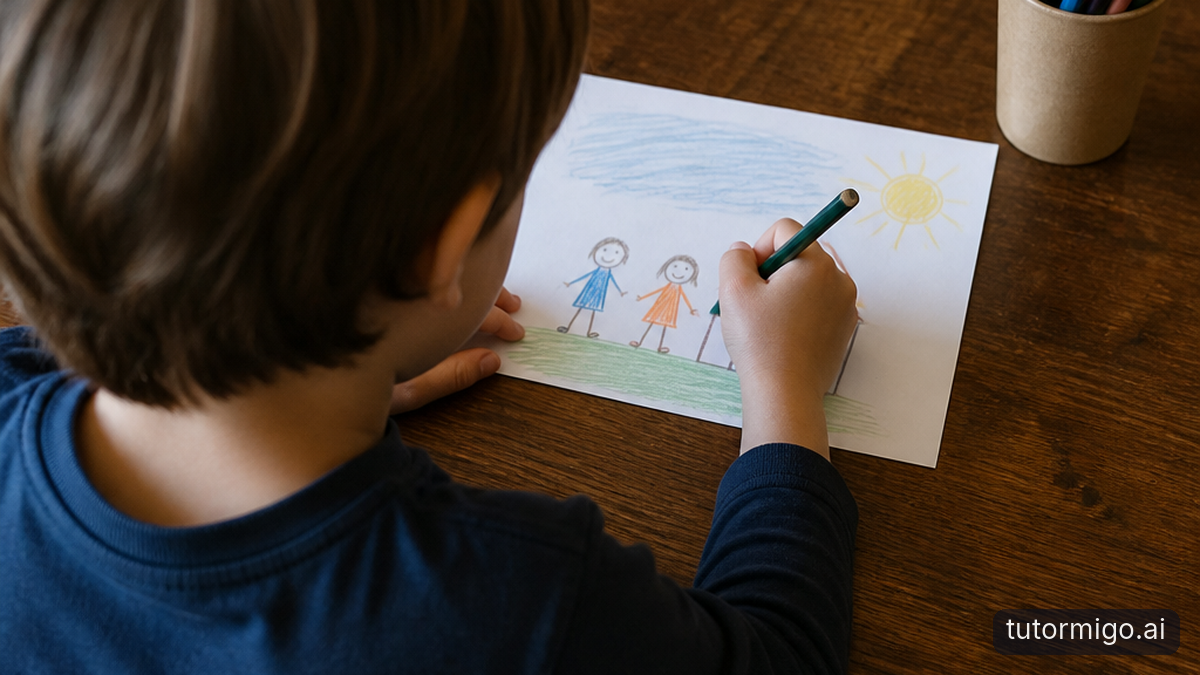
Frustration often shows up before tears or shouting. You might hear “This is stupid,” repeated sighs or a sudden insistence that the work doesn’t matter. Watch for a tight pencil grip, hunched shoulders, rubbing out the same answer or staring at the page without starting. Some children become louder; others go quiet.
Look for a change from your child’s usual behaviour rather than treating any single action as proof. Fidgeting might mean frustration, but it could also mean hunger, tiredness or simply needing movement. Start with a neutral observation: “You’ve read that sentence a few times and put your pencil down. What’s happening?”
If your child struggles to explain, offer possibilities without deciding for them: “Are you feeling stuck, worried about getting it wrong, or something else?” Accept a correction. Learning to recognise emotions works better when children have a say in naming their experience.
Notice your own early signs, too. If your voice gets sharper or you start reaching for the pencil, pause. Helping kids manage homework frustration is harder when both of you are becoming overwhelmed. Taking a breath yourself shows that calming down is a skill everyone practises.
Validate the Feeling Without Removing the Challenge: What You Can Say
Validation means showing that you understand the feeling, not agreeing that the task is impossible. Try: “You’ve worked on this and it still isn’t making sense. That’s frustrating.” Then leave a little silence. A quick explanation after every acknowledgement can make the acknowledgement feel like a lead-in to another instruction.
You can accept an emotion while keeping a boundary. If your child throws a pencil, say: “It’s okay to feel angry. I won’t let you throw things. Put the pencil here, and we’ll pause.” Keep your words brief and your tone steady. Save a longer conversation about behaviour until everyone is calmer.
Avoid reassurance that accidentally dismisses the difficulty. “It’s easy” can sound like “You shouldn’t be struggling.” Instead, try: “This part is difficult for you right now. We can work out what would help.” You’re neither rescuing your child nor leaving them alone with the problem.
If they ask you to finish it, respond warmly and clearly: “I can sit with you and help you understand the instructions. The answer will still be yours.” For more examples of that boundary, explore supporting homework without taking over.
Practise a Simple Calming Routine Together: Pause, Breathe and Name the Feeling
A familiar routine gives your child something concrete to do when words become difficult. Introduce it during a calm moment, rather than presenting a new technique halfway through an argument. You might say: “Let’s practise a quick reset we can use when homework starts feeling too much.”
First, pause. Put the pencil down and let hands rest on the table or in the lap. You can move the workbook aside briefly without packing everything away. Say, “We’re pausing, not giving up.” Keep your own movements unhurried so the pause doesn’t feel like another demand.
Next, breathe comfortably together. Invite two or three gentle breaths, with an easy, slightly longer breath out if that feels comfortable. Don’t insist on deep breathing if your child dislikes it. Pressing feet into the floor or quietly noticing objects in the room can offer another way to settle.
Finally, name the feeling: “I’m frustrated,” “I’m worried about being wrong,” or “I’m disappointed.” You can model this yourself. The routine isn’t a test your child must pass or a guarantee of instant calm. These self-regulation strategies work best as familiar options you practise together, not commands to stop feeling upset.
Choose a Short Break or a Smaller Step Based on What Your Child Needs
After acknowledging the feeling, ask yourself: can your child take in a simple question? If they’re sobbing, shouting or unable to follow what you’re saying, explaining the task again is unlikely to help. Offer a short break with a clear return point: “Let’s get some water and stretch. Then we’ll come back and look at the instructions.”
Agree on something concrete, such as returning after a few minutes with a timer you both accept. Choose a reset that’s easy to finish: walking to the kitchen, stretching or sitting somewhere quiet. A break shouldn’t depend on proving that they’re completely calm.
If your child can listen but feels overwhelmed by the amount of work, shrink the next action instead. Cover the rest of the page and ask them to read just the first instruction. For writing, the next step might be saying one idea aloud before writing anything.
Offer a limited choice: “Would a short movement break help, or shall we find the first tiny step together?” Neither choice is a reward or punishment. If you picked a smaller step and distress rises again, switch to a break. You’re responding to what you notice, not enforcing a rigid rule.
Encourage Another Attempt With Supportive Words, Not Answers
When your child is ready to return, make the invitation small and specific. “Let’s finish all of this” can bring the overwhelm straight back. Try: “Which part of the instruction makes sense?” or “What could you try before we check it?” Give them time to think rather than filling every silence.
Keep the pencil with your child. If they’re stuck on a reading question, ask them to show you the sentence that might help. If they can’t begin a written response, invite them to explain their idea aloud. Your job is to support their thinking, not quietly turn your thinking into their answer.
Notice the process accurately: “You felt stuck, took a pause and came back to read the question again.” That tells your child what they did that was useful. Avoid making praise depend only on getting the right answer. An unsuccessful attempt can still reveal what needs explaining next.
Don’t insist on endless retries without new support. If the same obstacle remains, identify it together and note a question for the teacher. A practical approach to moving beyond “I can’t” includes changing strategies and asking for help, not simply trying harder.
Next Time: Ask “What’s One Small Step You Could Try?”
Choose one thing to practise at the next homework flashpoint: after acknowledging the feeling and allowing a pause, ask, “What’s one small step you could try?” You don’t need to remember a perfect script. The aim is to make room for your child to choose an action rather than waiting for you to take over.
If they say “I don’t know,” offer two manageable possibilities: “Would you like to read the instruction aloud or show me where you got stuck?” Let them choose, then step back enough for the attempt to belong to them. Stay available without correcting every movement or checking every word.
Later, when homework is over, briefly revisit what helped: “Did the pause help, or was covering the rest of the page more useful?” Their answer can guide your response next time. Look for modest progress, such as noticing frustration sooner or returning with less prompting, rather than expecting upset to disappear.
If you later want a broader view of your child’s learning progress, TutorMigo’s Parent Dashboard offers progress visibility that you can use alongside these conversations, without hovering over every answer.
Frequently asked questions
Don’t turn it into another struggle. Offer quiet company, water or a little space. Practise the routine together later, when neither of you is upset.
A break with an agreed return point supports practice in coming back. Keep the next action manageable rather than demanding that your child finish everything immediately.
Get in touch if distress is frequent, intense or repeatedly linked to the same difficulty. Share what you notice and ask whether the task or support needs adjusting.
Related reading
Enjoyed this read?
Like, share, or comment below.



Comments
0Sign in required · respectful discussion · replies supported
Loading comments…