


Start with a Clear Learning Target in a Flipped Classroom

Flipped learning works best when students know exactly what they are expected to understand before they arrive. If the pre-class task is simply “watch this video,” some students may complete it without knowing what to notice, remember, or question. Begin with one visible learning target, such as “Explain how changing force affects acceleration” or “Use evidence from a primary source to support a claim.”
Then separate the lesson into two parts. The first is individual preparation: a short video, reading, worked example, or teacher explanation. The second is the classroom application: solving a new problem, discussing evidence, revising an answer, or practicing a skill with feedback. The two parts should connect directly. If students read about proportional relationships at home, class time might involve comparing graphs and explaining why one relationship is proportional.
Keep the first cycle small. Try flipping one 20-minute segment rather than an entire unit. Tell students how the preparation will be used the next day and what they should bring with them: a completed note catcher, two questions, or one example they found difficult. That connection makes preparation feel purposeful instead of like extra homework.
Design pre-class assignments students can finish
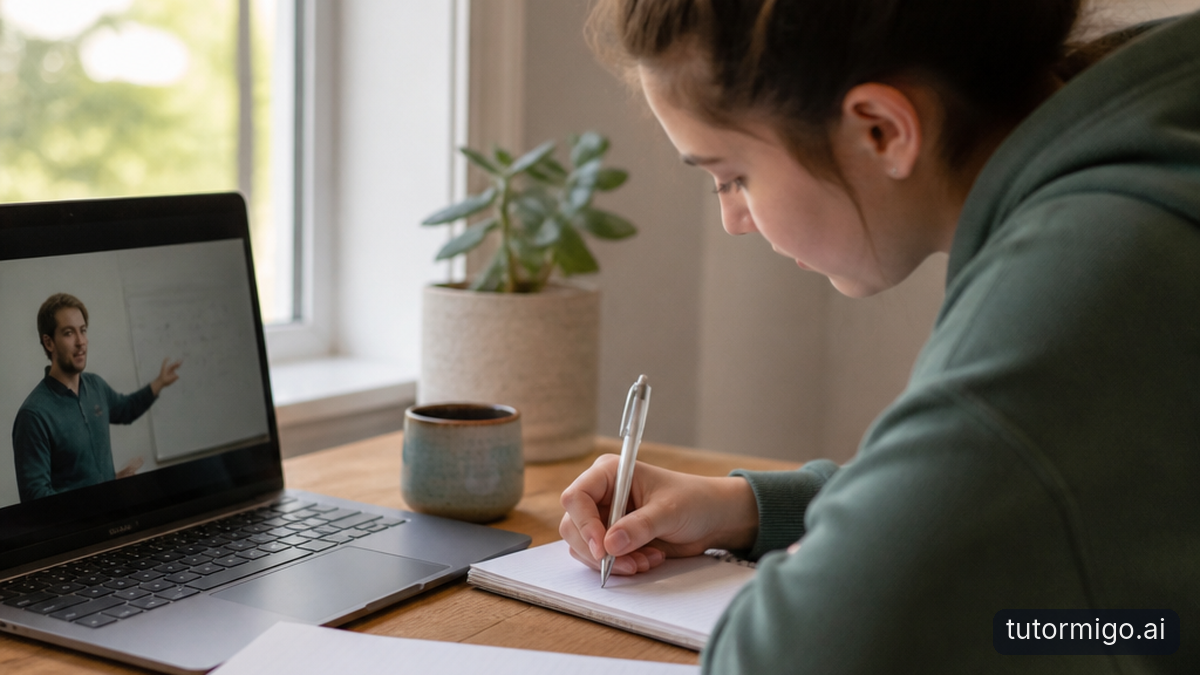
A flipped assignment should be short enough to complete reliably and specific enough to show whether students engaged. A useful starting point is 10 to 15 minutes of learning material followed by a small check for understanding. For example, assign eight minutes of instruction on solving linear equations, then ask students to solve two problems and identify the step that felt least certain.
Give students more than one way to process the material when possible. A reading can be paired with a diagram to label, while a video can be accompanied by a transcript or worked example. The goal is not to produce a large packet. It is to create enough evidence for you to plan the next session. Ask for a response that reveals thinking, not just completion: “Which detail supports your conclusion?” is more useful than “Did you watch the video?”
Set a consistent routine for submission. Students might upload a response before class, bring a written question, or complete a short check at the beginning of the period. Avoid grading every detail. A completion mark, a quick accuracy check, and a note about common confusion can give you what you need without turning preparation into a second major workload.
Make the preparation an invitation to think ahead: one short resource, one concrete task, and one question students can carry into class.
Use class time for practice and questions
The classroom portion should do something students could not do as effectively alone. After reviewing the most common difficulty, move quickly into guided practice, discussion, or problem solving. If half the class struggled to distinguish correlation from causation, present two short examples and ask groups to defend which conclusion is justified. You can then circulate, listen for reasoning, and address misconceptions while they are still visible.
Plan a sequence that moves from supported to independent work. Start with a worked example or shared model, continue with a similar task completed with a partner, and finish with an unfamiliar problem each student attempts alone. This structure gives students a safe place to ask questions before they are expected to perform independently. It also gives you several points at which to notice who needs another explanation.
Prepare questions that make practice active. Instead of asking whether students understand, ask them to predict the next step, compare two answers, or explain why a tempting answer is incorrect. A student who can repeat a definition may still be unable to use it. The flipped model earns its value when session time is reserved for that transfer: applying an idea, receiving feedback, and trying again.
Monitor student work without micromanaging
Monitoring in a flipped classroom is not about watching every minute of preparation. It is about collecting a few useful signals before and during class. Review completion, common errors, written questions, and the point at which students stopped or became uncertain. A simple three-column tracker can record “ready,” “partly ready,” and “needs a reset,” giving you a quick starting point for grouping.
Use the first five minutes to verify what your pre-class evidence suggested. Give students a brief retrieval prompt or one representative problem, then compare their responses with the submitted work. If a student completed the assignment accurately but cannot explain the idea, you have found a different need from a student who left the task unfinished. Both require support, but not necessarily the same support.
During practice, record observations by skill rather than by general impression. “Needs help” is difficult to act on; “can identify the main claim but cannot cite evidence” tells you what to reteach. Keep notes concise and time-stamped when possible. Over several sessions, these small observations create a clearer picture of progress than a single quiz score and help you decide who needs a conference, a new example, or another opportunity to practice.
Use a teacher dashboard to plan the next lesson
A teacher dashboard can make the monitoring stage more manageable when assignments, student activity, and progress information are gathered in one place. Before class, look for patterns rather than isolated records. If many students missed the same question, plan a short whole-class clarification. If a smaller group shows the same misconception, prepare a targeted station or guided practice task.
Reports are most useful when they lead to a specific instructional decision. For example, suppose students complete a lesson on interpreting slope. The work shows that most can calculate slope from a table, but several confuse a negative slope with a negative intercept. Your next session might begin with two contrasting graphs, then move into paired explanations before students return to independent problems. The report is valuable because it changed the lesson, not because it produced more data.
Check progress across assignments as well as within one assignment. A student who improves from incomplete explanations to accurate explanations is showing meaningful growth, even if the latest score is not perfect. Share that evidence with the student in plain language: “Your claim is clear now; the next step is choosing stronger evidence.” Keep reporting focused on the learning target, the evidence you saw, and the next action you will take.
Refine the cycle and choose your next step
After two or three flipped lessons, review the cycle with your class. Ask which preparation materials helped, where instructions were unclear, and what made it easier or harder to ask questions. You may find that students need a model of effective notes, a shorter video, or a predictable time to begin unfinished preparation at school. Flipped learning is a routine to refine, not a rule that every lesson must follow.
Also review your own workload. If making new materials takes longer than the classroom practice saves, reuse a strong explanation and improve the task around it. If students arrive with questions but too little time to work through them, reduce the amount of pre-class content. A successful cycle has a practical balance: preparation gives students a foundation, and class time gives them meaningful support and feedback.
If you want help coordinating class setup, assignments, monitoring, and reporting, TutorMigo.ai offers a teacher dashboard for those educator workflows. You can use that kind of workspace as a next step after deciding what your flipped routine should accomplish, rather than allowing a tool to determine the lesson for you.
Frequently asked questions
They should complete a short learning task, such as a reading, video, worked example, or guided note catcher, and respond to a question that shows what they understood or found difficult.
Start with about 10 to 15 minutes of focused material and a small check for understanding. Adjust the length based on completion patterns and the amount of practice students need in class.
Use a brief start-of-class reset, such as a condensed explanation or guided example, then let students join a practice task. Track the pattern and address unclear instructions, access barriers, or unrealistic workload.
Useful reporting should connect assignment activity and student responses to a learning target, highlight common errors or unfinished work, and support a clear next instructional decision.
Enjoyed this read?
Like, share, or comment below.



Comments
0Sign in required · respectful discussion · replies supported
Loading comments…