


Parent Support When Your Child Still Seems Stuck
You explain it carefully. Your child nods, then asks the same question—or cannot take the next step. It is frustrating when helping seems to change nothing. Instead of finding a longer explanation, focus on how parents can guide the thinking: help your child notice the problem, try something, and check what happens.
A nod can mean several things: “That sounds familiar,” “I want to finish,” or “I followed you until the last part.” It does not necessarily mean your child could use the idea alone. Before explaining again, ask, “What were you trying to do, and where did it stop making sense?” Listen for the exact sticking point.
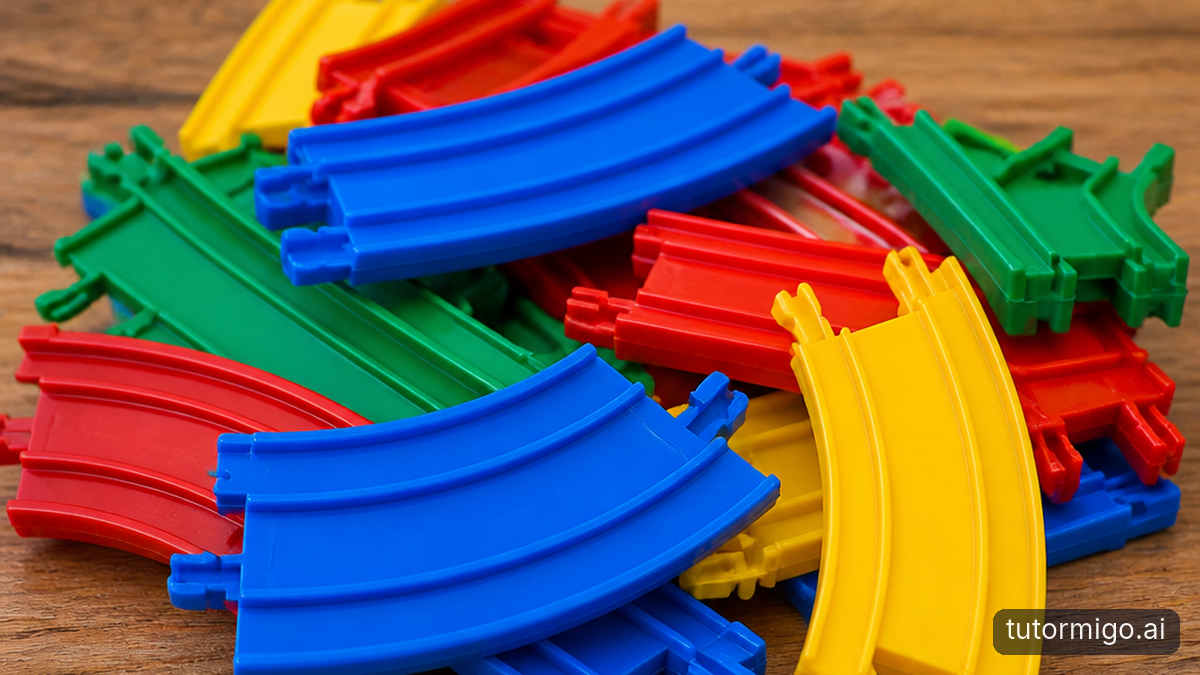
Suppose your child cannot assemble a toy track. You might assume they need the instructions repeated. But perhaps they understand the picture and cannot tell which pieces match. Asking them to show you the problem reveals what another explanation would miss.
Your job is not to avoid giving information. It is to give information that helps them make the next decision. Sit beside them, keep your hands off the pieces for a moment, and let their account of the problem shape your response.
Help Your Child Ask Better Questions When They Don’t Know What to Do

“I don’t get it” is a useful signal, but it does not tell either of you where to begin. Help your child turn that broad feeling into a question they can investigate. Start with, “What are you trying to make happen?” Then ask, “What do you already know about it?” These questions separate the goal from the obstacle.
If your child says, “This game is impossible,” resist explaining every rule. Ask them to point to the moment they get confused. They might say, “I don’t know whether I can move after picking a card.” Now you have a specific question: “Where could we look to find out when movement happens?”
You can model this aloud without taking over: “I know whose turn it is. I’m unsure what happens after drawing. My question would be: what comes next?” Then invite your child to phrase their own question. They do not need polished wording; pointing, drawing, or demonstrating can work too.
Ask one question and wait. A string of prompts can feel like another task to complete. If frustration is blocking the conversation, first acknowledge it: “You wanted this to work, and it hasn’t yet.” Then return to one small uncertainty.
Encourage Another Approach: Troubleshoot a Toy Without Fixing It for Them
A toy car that will not roll offers a useful chance to practise another approach. Before touching it, ask, “What do you notice when you push it?” Your child might spot that one wheel stays still. That observation gives them something concrete to investigate instead of repeatedly pushing harder.
Next ask, “What could we try to find out why?” Perhaps they suggest turning the car over or comparing the stuck wheel with a moving one. Let them choose a safe test. Encourage changing one thing at a time so they can tell what made a difference. Moving the car to a smooth surface, for example, tests whether the carpet is the problem.
If nothing changes, avoid treating the attempt as wasted effort. Say, “It still sticks on the table. What does that tell us about the carpet idea?” They have ruled something out. Then ask, “What could we look at differently?”
Offer choices only when they need help generating a next move: “Would you rather inspect the wheels or compare the surfaces?” Keep the investigation theirs. You should handle anything involving unsafe parts or tools, but you can still invite your child to predict what your check might reveal.
Ask “Can You Show Me?” Instead of “Do You Understand?”
“Do you understand?” asks your child to judge their understanding before they have used it. “Can you show me?” gives both of you something to observe. Keep the invitation friendly: “Let’s see whether my explanation helped. Show me what you would do first.” This makes it a check on the explanation, not a judgment of your child.
After explaining how two track pieces connect, hand over a different pair. Ask, “How would you decide which ends fit?” If your child connects them, follow with, “What did you look for?” A successful action plus a reason tells you more than a confident yes.
Other useful prompts include, “Can you explain that in your own words?” and “Which part would you show someone who had never done this?” Choose one, rather than turning the moment into an interview. Let them use gestures or a drawing if words are getting in the way.
If they repeat your explanation word for word, try a small variation: “Would that still work if we turned this piece around?” If they struggle, return to that specific point. Avoid restarting the whole explanation when only one connection is missing.
Check Whether an Answer Makes Sense: Try Explaining a Game’s Rules
Getting an answer is only part of thinking something through. Your child also needs a way to decide whether it fits. A familiar game makes this visible because rules have consequences you can act out together. Ask your child to explain one turn, then test the explanation with the pieces.
Suppose they say, “You can move wherever you want after drawing a card.” Instead of saying, “That’s wrong,” ask, “Can you show me a turn using that rule?” Then ask, “What would decide who reaches the finish first?” They may notice that unrestricted movement makes the cards pointless.
That does not prove what the actual rule is. It gives you a reason to check the instructions together. Ask, “Which sentence tells us how far to move?” Compare the written rule with the demonstration, and invite your child to revise their explanation.
Keep your tone curious rather than setting a trap. You can say, “I’m not sure that fits; let’s check.” Over time, useful checking questions become familiar: “Does this match what we know?” “What would happen if we used this answer?” and “Where could we verify it?” The aim is a reason to trust an answer, not just your approval.
Know When to Offer a Hint and When to Step Back
Step back when your child has a possible next move, is testing an idea, or is quietly comparing options. Silence is not automatically a request for help. Give them room to work, and avoid narrating every action. You can say, “I’ll let you try that. I’m here if you want a hint.”
Offer support when they keep repeating an unhelpful action, cannot identify any next step, or become too upset to explore. First ask, “Would you like more time, a small hint, or a break?” Their answer can help you avoid supplying help they neither need nor want.
A useful hint narrows attention without completing the task. For the toy car, try, “Compare the two front wheels,” rather than, “Pull the thread off that wheel.” If that is not enough, make the clue more specific. If a missing fact is the obstacle, simply provide it; not everything needs to be discovered.
When tears, exhaustion, or urgency take over, pause the lesson. You can demonstrate a step and invite them to try the next one later. For everyday tasks, helping without taking over homework involves the same judgment: give enough support to restart their thinking, then return control.
Try This Next Time: “What Have You Tried? What Could You Try? How Will You Check?”
Next time your child gets stuck, use one short conversation routine: “What have you tried? What could you try? How will you check?” Ask each question separately, with time to answer or demonstrate. You do not need to use every prompt from this article. These three are enough to give the conversation a shape.
With the toy car, it might sound like this: “I pushed it on the carpet.” “I could try the table.” “I’ll see whether the same wheel still sticks.” Your role is to listen, clarify anything unclear, and let the test happen. If the attempt fails, return to what your child noticed rather than immediately supplying a fix.
Finish by naming a useful action: “You compared two surfaces instead of guessing again.” That is more informative than praising them for being clever. It tells them which thinking habit they can use next time. If they cannot answer the routine’s first question, start together: “Let’s look at what happened when you tried.”
If you want a shared place to show ideas, TutorMigo.ai’s Study Tools Hub includes an interactive whiteboard. But the routine needs no special tools: one real problem, a little waiting time, and room for your child’s next thought.
Frequently asked questions
Try “Can you show me the first step?” or “What would you do differently with this example?” Keep it friendly, not a test.
Make the question smaller: “Which part can you show me?” If they remain overwhelmed, offer a small hint or take a break.
Yes. Supply missing facts or demonstrate when needed. Then let your child use that information to make the next decision.
Related reading
Enjoyed this read?
Like, share, or comment below.



Comments
0Sign in required · respectful discussion · replies supported
Loading comments…