

Why Flashcards Study Works at Home

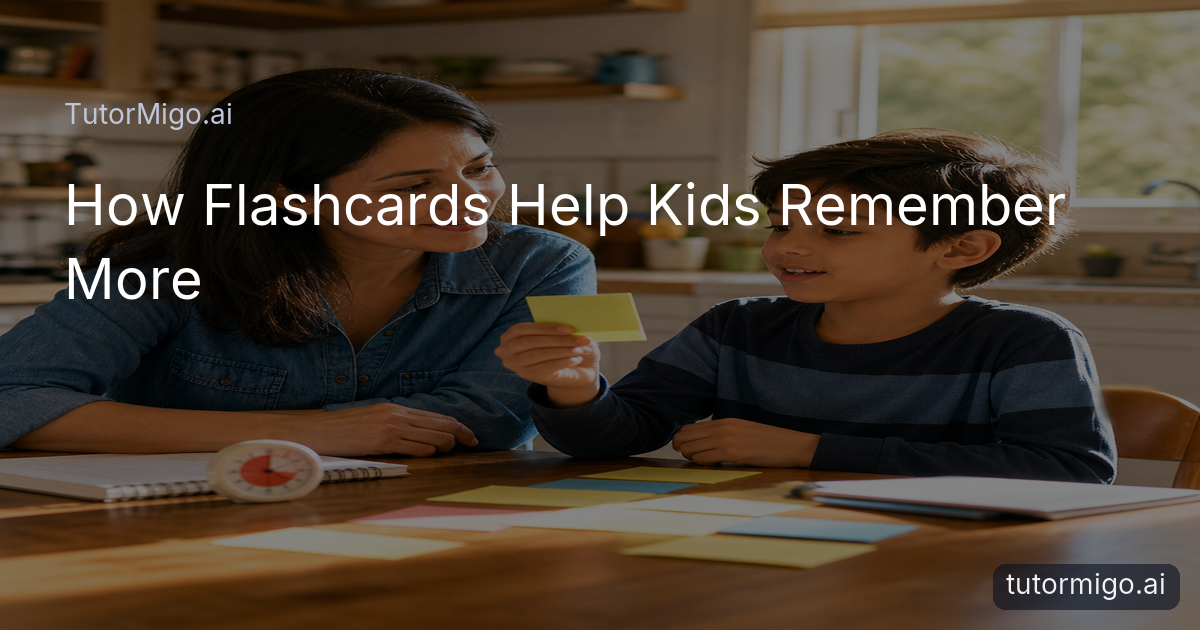
When your child says, “I knew it yesterday,” the problem is often not effort; it is that the memory was never brought back often enough. Flashcards study helps because each card asks your child to retrieve an answer instead of simply rereading it. That small pause—thinking before checking—strengthens the path to the information.
For example, a card might ask, “What is the main job of the heart?” Your child looks at the question side, answers aloud, and then turns the card over to check. If the answer is incomplete, that is useful information, not a failure. You now know what needs another look.
Flashcards are also practical for parents. A review can take ten minutes while dinner cooks or before packing a school bag. You do not need to reteach an entire lesson. Your role is to ask, listen, and notice which ideas are secure and which need more practice. Teachers can use the same routine in class by asking students to explain an answer rather than quietly recognize it on a page.
Think of each card as a tiny memory workout: the effort to recall is the part that makes later recall easier.
Build Cards That Make Kids Think
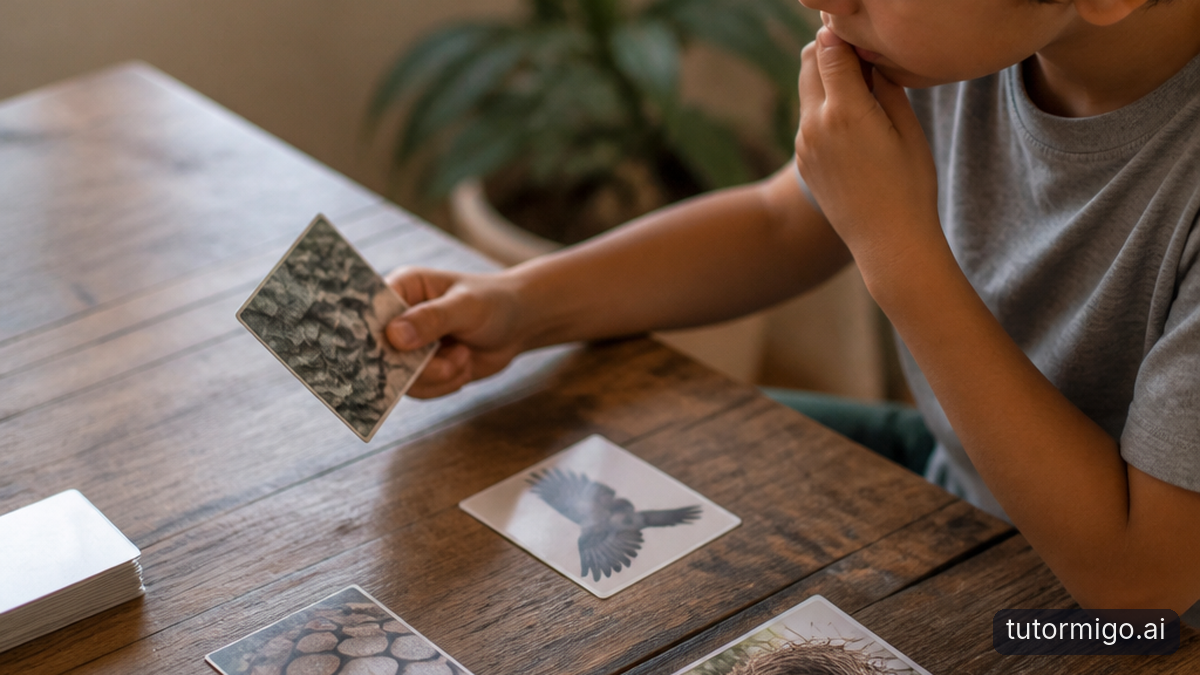
The quality of a deck matters more than its size. A card with a short question on the front and a clear answer on the back gives your child one focused task. Avoid copying a whole paragraph onto a card. Instead of writing “Explain everything about photosynthesis,” create smaller prompts such as “What do plants use sunlight for?” or “Where does photosynthesis happen?”
Good cards ask for meaning, not just recognition. For a vocabulary word, the front might say, “Use reluctant in a sentence,” rather than showing the word and asking your child to choose its definition. For a history lesson, ask, “Why did this event matter?” For a math skill, ask for the first step or the reason a method works. If a calculation is necessary, write the expression in LaTeX, such as , and ask your child to explain how to find .
Build the deck soon after a lesson, while the material is still familiar. Invite your child to suggest cards, then edit them together. If a card causes confusion every time, split it into two simpler cards. A manageable deck of twelve precise prompts is more useful than fifty vague ones.
Use Spaced Repetition Without Battles
Spaced repetition means reviewing information at growing intervals instead of cramming it all into one sitting. A new card may need attention today, tomorrow, and again in a few days. Once your child can answer it reliably, let more time pass before the next review. The goal is to meet the memory just before it fades completely.
You can keep the system simple at home. Make three groups: “again soon,” “later this week,” and “next week.” After each answer, your child decides whether the card was easy, uncertain, or incorrect. An uncertain answer belongs in the earlier group even if it happened to be correct. This teaches honest self-checking and prevents a lucky guess from being treated as mastery.
Keep sessions short enough to end successfully. Ten to fifteen minutes is often plenty, especially for a younger child or a difficult subject. If frustration rises, stop after one easy card and schedule the next session. Parents sometimes turn review into a test of character, but memory improves more when the routine feels predictable and low-pressure. Teachers can reinforce the habit by assigning a small set of cards for several brief reviews rather than one long night of preparation.
Try this rhythm: review new cards today, repeat them tomorrow, revisit them three days later, and check them again the following week.Turn Review Into a Steady Habit
A flashcard deck only helps when it gets used, so attach review to something that already happens. Your child might review six cards after breakfast, on the ride home, or immediately after putting away a school bag. A consistent cue removes the daily question of when to study. Put the cards where the routine happens, but keep the session short and clearly defined.
Use a visible finish line. “Review biology” feels endless; “answer ten cards before snack” feels possible. Let your child shuffle the deck, hold the cards, or choose which subject comes first. Small choices increase ownership without changing the learning goal. A simple calendar mark can show that the routine happened, but avoid rewarding only perfect scores. The important behavior is returning to difficult cards.
When a child misses an answer, ask for a calm correction: “Take another look, say the answer, and try it once more.” Do not make the review a speed contest. Fast guessing can hide weak understanding. Once a week, remove cards that are consistently easy and add a few from recent lessons. This keeps the deck connected to current schoolwork instead of allowing it to become a pile of disconnected facts.
If your child skips several days, restart with a small group. Recovering the habit matters more than catching up on every missed card in one sitting.
Help Children Become Independent Reviewers
Parents can begin by asking every question, but the long-term goal is for children to manage more of the process themselves. Show your child how to read the front, pause before answering, explain the response aloud, and check the back only afterward. Then gradually move from sitting beside the deck to checking in at the end of the session.
Teach your child to label cards honestly. “Easy” means the answer came quickly and accurately. “Almost” means the answer was partly right or required a hint. “Again” means the answer was missing. This language makes progress visible without turning every session into a judgment. It also helps students decide which cards need spaced repetition sooner.
Once a week, ask your child to teach you three cards. If the explanation is clear, the knowledge is probably becoming flexible. If your child can repeat a definition but cannot give an example, add an example card. If they know a process but cannot explain why it works, create a “why” question. Teachers can encourage the same independence by having students write one card from memory after a lesson and trade it with a partner for a quick check.
Stay available for misunderstandings. Flashcards reveal gaps; they do not always explain them. When a child repeatedly misses a card, pause the deck and return to the lesson, a worked example, or a conversation about the idea.
What to Do Next With Flashcards
Start with one subject and one week, not an ambitious system for every class. Ask your child to choose a recent lesson, then build ten to twelve focused cards together. Schedule the first review today, the second tomorrow, and two more reviews later in the week. At the end, ask which cards still feel difficult and why.
During each session, protect the essentials: retrieve before looking, say or write the answer, correct mistakes immediately, and place difficult cards back into earlier review. Keep the deck small enough to finish and revise cards that produce confusion. After a week, look for better recall rather than a perfect score. Can your child explain the idea without a prompt? Can they use it in a new example? Those are stronger signs of retention.
If you want help organizing this routine, TutorMigo.ai’s Flashcards feature can support spaced-repetition decks, review scheduling, and assisted card creation. Use it as a convenient structure around the same habits: focused prompts, active recall, honest self-checking, and regular review.
Frequently asked questions
Start with about ten to fifteen cards, especially for a new topic. A short session your child completes thoughtfully is more useful than a large deck reviewed with hurried guesses. Add cards gradually as the routine becomes comfortable.
No. Have your child look at the question, pause, and answer aloud or in writing before checking the back. Even an imperfect attempt helps reveal what is remembered and what needs more practice.
Review new cards the same day, again the next day, and then after several days. Easy cards can move to longer intervals, while uncertain or incorrect cards should return sooner.
Check whether the card is too broad or unclear. Split it into a smaller question, add an example, and briefly revisit the original lesson. Then test the revised card during a later short session.
Enjoyed this read?
Like, share, or comment below.



Comments
0Sign in required · respectful discussion · replies supported
Loading comments…