


Supporting Your Child's Learning Pace When They're Stuck

You’ve explained it three different ways, and your child still looks lost. Before trying a fourth explanation, pause. Helping your child learn at their own pace means noticing what is difficult, offering one manageable next step, and leaving room for a break without treating it as failure.
Repeated explanations can become frustrating for both of you. You might start speaking faster or pointing more insistently. Your child might nod just to end the conversation. Neither response tells you much about what they understand. Instead of asking, “Why aren’t you getting this?” try, “Show me the last part that made sense.”
Imagine your child can read a sentence aloud but cannot explain what happened. Reading it aloud again may not address the difficulty. You could ask them to point to the person the sentence describes, then talk about what that person did. You are finding the sticking point rather than repeating the whole task.
When you focus on how to help rather than how quickly your child should finish, you have more options. Tonight’s useful outcome might be discovering the confusing step—not completing the page. That gives you somewhere clearer to begin next time.
Try Again or Take a Break? Spot the Difference Between Effort and Overwhelm
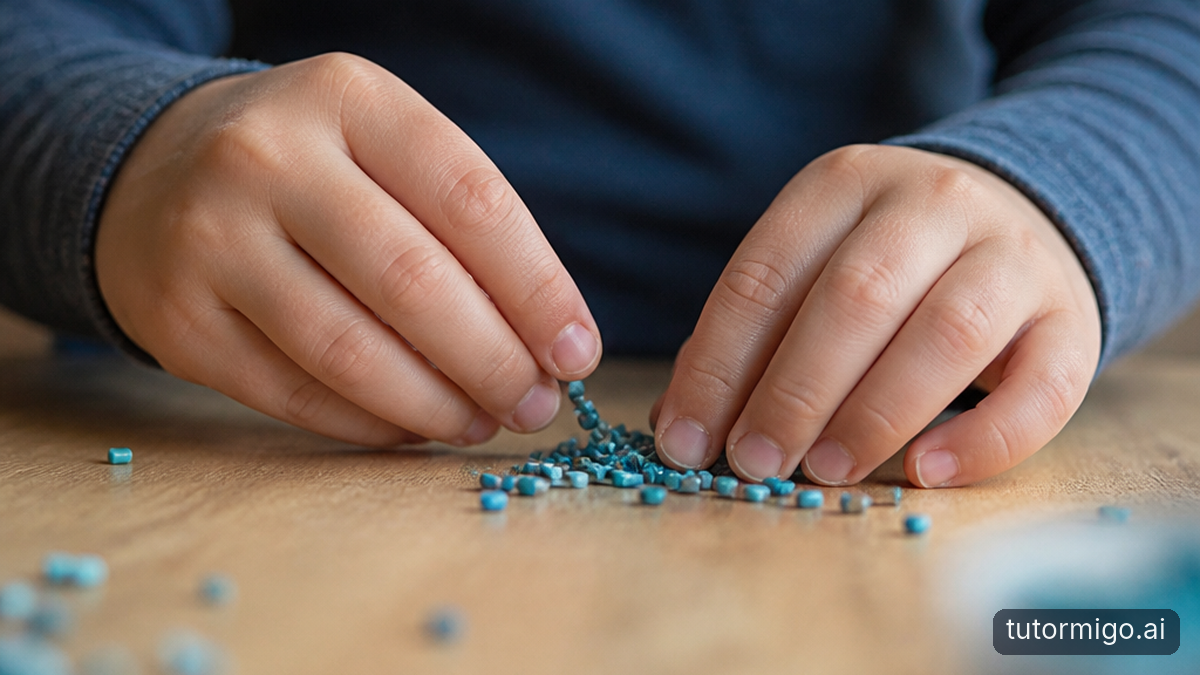
Difficulty alone is not a reason to stop. A child who pauses, tries a different approach, or asks a specific question may still be working productively. You can stay nearby without interrupting every silence. Watch whether they can still engage with one small suggestion, rather than judging effort by how cheerful they look.
Overwhelm often looks different: repeated guessing, a suddenly crumpled worksheet, tears, rigid shoulders, or “I can’t do anything.” These signals are not proof of laziness. They suggest that pushing the same task right now may add frustration without helping understanding. Quiet withdrawal can matter just as much as an obvious outburst.
Try a gentle check: “Would one hint help, or does your brain need a pause?” If your child cannot take in a short question, stop explaining. Offer water, a stretch, or a few quiet minutes away from the table. Avoid turning the break into another discussion about their performance.
Make the pause predictable: “Let’s have a snack, then decide whether to try one small part.” A break is not a reward for struggling or a punishment for stopping. It is a way to make another attempt possible when your child has more capacity.
Make the Challenge Smaller: Try One Sum or One Sentence
“Finish this page” contains several demands: understand the instructions, choose a method, hold the steps in mind, and keep going. When your child is stuck, reduce the task until you can see exactly what they are being asked to do. Covering the rest of a worksheet can make that smaller boundary visible.
For an addition problem, first ask your child to build each quantity with counters. If that is manageable, ask them to bring the groups together. Only then ask for the total. If making the groups is confusing, stay there instead of adding a counting demand on top. You are identifying a step to practice, not making the entire task effortless.
With reading, choose one sentence rather than a whole passage. If one unfamiliar word interrupts understanding, explain that word briefly and reread the sentence together. Then ask, “What happened here?” Your child does not need to tackle every difficulty at once.
Agree on a small finish line before starting: “We’ll work through this one together, then check how you feel.” Keep that promise. Quietly adding more questions after a successful attempt can make the next invitation feel less trustworthy.
Offer a Hint, Not the Answer: How Much Help to Give Before Stepping Back
Offer enough help to make a next move possible, then wait. Start with a question that directs attention: “Which part are you working on?” If that does not help, give a more specific cue: “Look at the first word.” Leave a quiet pause so your child has time to respond before you supply another hint.
Suppose your child cannot begin a sentence about a picture. Instead of dictating the sentence, ask, “Who can you see?” Then, “What are they doing?” If they can say an idea aloud but struggle to start writing, you might model the beginning of a different sentence and let them return to their own.
Step back when your child starts making purposeful moves, even if they are slow. Resist correcting every wobble immediately. You can ask, “Would you like me beside you or nearby?” Staying available does not require watching every pencil stroke or approving every answer.
If several hints lead only to copying your words, stop adding prompts. The step may still be too large, or your child may need a break. You can demonstrate one example, then invite them to try a similar step later. Help should support their thinking, not replace it.
Return to Difficult Topics Later Without Restarting the Pressure
A return goes more smoothly when you leave a simple trail. Before putting the work away, note what helped and where it became difficult: “Making the groups worked; counting them together was tricky.” Keep this factual and brief. You do not need a record of everything your child got wrong.
Choose a reasonable time to revisit it, taking hunger, tiredness, and the rest of the day into account. “After tomorrow’s snack, shall we try the counters again?” is clearer than “We’ll have to deal with this later.” Offer a small choice about timing where possible, without making the unfinished task loom over the evening.
Begin with a familiar success rather than a test of what they remember. Rebuild one group together, then invite your child to make another. If they need yesterday’s hint again, give it calmly. Needing a reminder does not erase the earlier attempt or mean the break was a mistake.
Keep the invitation low-pressure: “Let’s see whether this feels clearer today.” If the same sticking point persists across calm attempts, ask their teacher which underlying skill to practice. You do not have to solve a repeated learning difficulty through more persistence alone.
Notice Small Gains Without Comparing Your Child to Anyone Else
Progress is often easier to notice when you look for a change in the process, not just a correct answer. Your child might identify the confusing word, use counters without prompting, or ask for a useful hint instead of guessing. Those changes give you specific information about what is becoming more manageable.
Describe what you saw: “Yesterday I helped you make both groups. Today you made the first one yourself.” That is more informative than “You’re so clever,” and less pressuring than “See, you can do it when you try.” Leave classmates, siblings, and expectations about speed out of the conversation.
Invite your child’s view, too: “Did anything feel a little easier?” They may notice something you missed, such as understanding the instruction while still finding the calculation difficult. If they say nothing improved, do not insist on a positive verdict. You can acknowledge that it still felt hard while quietly noting a useful change.
A brief note can help you spot learning progress before grades improve. Record one concrete observation, not a daily score. Look across several attempts; a tired afternoon is not a fair summary of your child’s learning.
Choose One Sticking Point to Revisit Calmly Together
For your next attempt, choose one challenge you can name precisely. “Reading is difficult” is too broad to guide a calm session. “Working out what one sentence means” gives you something manageable to revisit. Ask your child which part they would be willing to try, and keep the materials simple.
Agree on a starting point, the help available, and a stopping point. You might say, “After snack, we’ll read one sentence. I can explain an unfamiliar word, and you can tell me what happened. Then we’ll stop and decide whether that was enough.” This makes the attempt predictable rather than open-ended.
Before you begin, remind yourself what you will watch for: purposeful effort, signs of overwhelm, and one small move your child can make themselves. If either of you becomes frustrated, pause without a lecture. End by naming what you learned about the task, even if the answer is still unfinished.
If you want support keeping track of these attempts, TutorMigo.ai’s Parent Dashboard offers visibility into your child’s learning progress. Whether you use a tool or a notebook, begin with one sticking point, one manageable attempt, and permission to return another day.
Frequently asked questions
Acknowledge the difficulty, then offer a smaller step or a break. If they can engage with one hint, try briefly; if distress is rising, pause.
There is no single right length. Allow time to settle, drink, eat, or move, then agree on a manageable return rather than insisting on an immediate restart.
Ask when the same difficulty persists across calm attempts or distress is frequent. Share the specific sticking point and which kinds of help you have tried.
Enjoyed this read?
Like, share, or comment below.



Comments
0Sign in required · respectful discussion · replies supported
Loading comments…