

Health Education: Turn Complex Information Into Clear Lessons
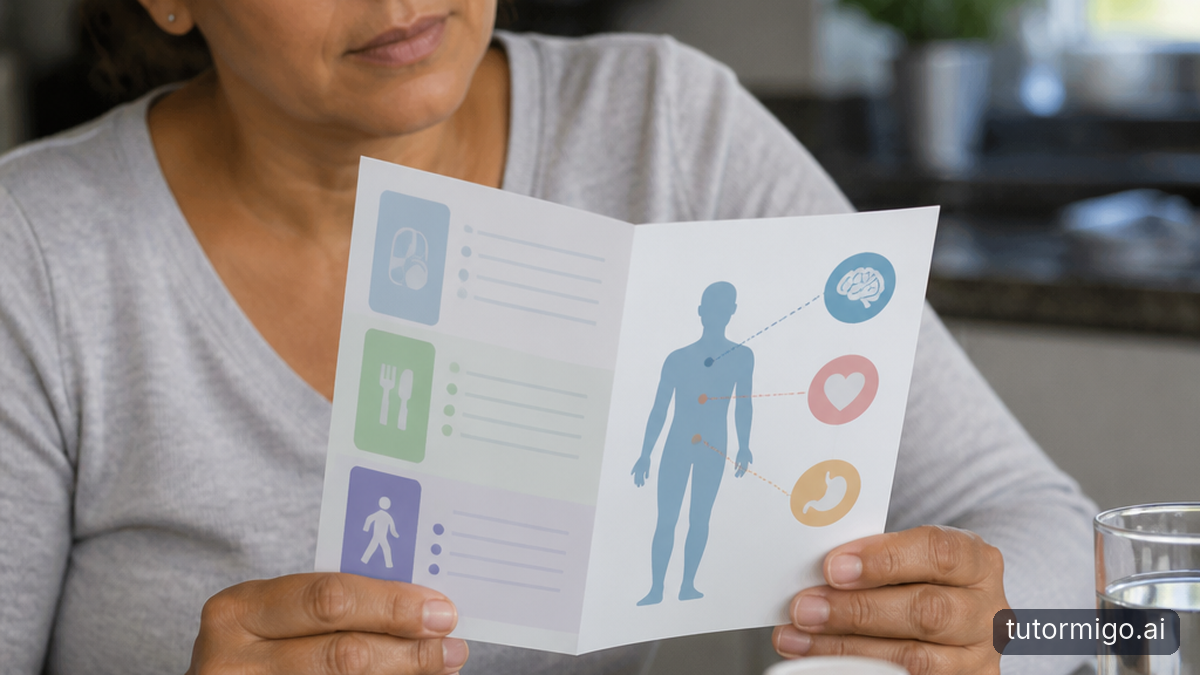
When healthcare information feels dense, the problem is often not a lack of effort. A patient may be trying to understand a new term, while a student is sorting through symptoms, body systems, or treatment concepts that seem to blur together. An AI Tutor can make the first pass more approachable by explaining a concept in plain language, then adjusting the explanation when you say what still feels unclear.
For example, you could ask for a simple explanation of how blood pressure is measured, followed by a comparison between systolic and diastolic readings. You might then ask for a short scenario, such as helping a family member prepare questions for a clinician. This kind of step-by-step conversation supports patient education without pretending to diagnose or replace professional advice.
The practical TutorMigo benefit is continuity. In the AI Tutor Workspace, session history can help you return to an earlier explanation instead of starting from a blank chat. A learner studying basic health science can build from vocabulary to applications, while a parent or lifelong learner can revisit a confusing explanation at a slower pace. Always confirm personal medical decisions with a qualified healthcare professional and trusted health sources.
Use Review Tools to Remember What Matters

Understanding healthcare information once is not the same as remembering it when you need it. Names of structures, warning signs, definitions, and care instructions can fade quickly, especially when you are learning several related concepts at once. Spaced-repetition flashcards give you a practical way to review the information that needs more attention rather than rereading an entire chapter.
Imagine turning a lesson on the digestive system into cards that ask for one term, one function, or one distinction at a time. AI-assisted card creation can help you get started, but you should check every card against your class materials or an authoritative health source. Keep cards precise: “What does this term mean?” is usually more useful than a long paragraph with several facts mixed together.
Interactive study tools can make the same topic easier to explore. A whiteboard may help you map how concepts connect, a math step editor can support dosage-related calculations in an appropriate educational setting, and a code sandbox can help learners practice health-data examples without treating the output as clinical guidance. The goal is active recall and clearer thinking, not automated medical decision-making.
Study tip: After each session, create a small set of cards for the three ideas you could not explain in your own words.Build Structured Preparation for Health-Related Study
Healthcare information is easier to learn when you know what to study next. A general chat can answer an isolated question, but a structured learning plan gives you a sequence: learn the vocabulary, practice applying it, review weak areas, and check your progress. That structure is useful for students preparing for an AP course unit or for learners building confidence with health and science concepts.
TutorMigo’s exam preparation area is designed around organized practice sets and progress tracking for supported exams, including AP. Instead of asking for random questions, you can work through a defined set, notice which concepts repeatedly cause trouble, and return to those areas. For example, after missing several questions about data interpretation, you might use the AI Tutor Workspace to request a plain-language explanation, then reinforce the idea with flashcards and another practice set.
This approach also helps you separate a knowledge gap from a wording problem. If you understand a concept in conversation but miss it in a question, practice reading carefully and identifying what the prompt actually asks. If the underlying idea remains unclear, go back to an explanation or diagram. Progress tracking turns that distinction into a concrete next step rather than a vague feeling that you need to “study more.”
Make Patient Education More Useful and Accessible
Good patient education is not simply a longer explanation. It is information presented at the right level, with room for questions and a clear reminder of what requires professional guidance. An AI Tutor can help you prepare before an appointment by translating unfamiliar terms into everyday language, generating questions to ask, or offering a short recap of material you are trying to understand.
Consider someone reading about a newly prescribed treatment. Rather than asking an AI system whether the treatment is right for them, they could ask it to define unfamiliar terms, identify general questions to discuss with a clinician, and rewrite a complex paragraph in plain language. The learner should then verify important details with the prescribing professional or a reliable medical source. This keeps AI in an educational role, where it can support comprehension without making a personal diagnosis.
Personalization also matters for accessibility. You can ask for a shorter explanation, a glossary, a comparison, or a sequence of small questions. Someone teaching a family member may need everyday examples, while a student may want more technical vocabulary and practice prompts. The benefit is not that every answer is automatically correct; it is that the conversation can be shaped around the learner’s current understanding and followed by careful verification.
See Progress Without Losing the Human Role
Healthcare learning often involves more than one person. A student may need a teacher to see which concepts require reteaching. A parent may want a general view of a child’s study progress without taking over every session. Dashboards can make that support more practical by showing patterns over time, such as unfinished work, repeated review needs, or areas where a learner is improving.
TutorMigo’s parent dashboard provides visibility into child progress, learning controls, and co-learning features. That can support a calm conversation such as, “Which health science topic felt hardest this week?” rather than a guess based only on a test score. The teacher dashboard supports class management, student monitoring, assignments, and reporting, helping educators connect individual practice with instruction.
Visibility should guide human support, not replace it. A dashboard cannot explain why a learner is anxious, distracted, or confused by a sensitive health topic. A teacher can adjust instruction, and a parent can encourage questions for a trusted professional when the subject involves personal care. The strongest TutorMigo benefits appear when AI handles repeatable learning support while adults provide context, judgment, encouragement, and appropriate boundaries.
Choose an AI Learning Tool With the Right Boundaries
When you compare TutorMigo with a general-purpose generative chatbot, focus on the learning workflow rather than asking which system can produce the cleverest single answer. A general chatbot may be useful for brainstorming questions or requesting a quick explanation. A dedicated learning platform can add continuity, review schedules, interactive tools, structured preparation, and progress visibility in one place.
Ask practical comparison questions. Can you return to a tutoring session and continue from the earlier context? Can you turn difficult material into scheduled flashcard review? Can you practice with a whiteboard or step editor instead of only reading text? Can a parent or teacher view learning progress when that support is appropriate? Can you follow a defined preparation path rather than assemble every activity yourself?
Also check the boundaries. For healthcare information, no learning tool should be treated as a personal clinician, emergency service, or final authority on symptoms and treatment. Use it to clarify language, organize questions, practice recall, and identify topics to discuss with qualified professionals. Start with one real goal: understand a handout, review a health science unit, or prepare for an AP study session. Then measure whether the tool helps you explain the material more clearly and act on the right next learning step.
What to do next: Choose one healthcare topic, ask for a plain-language explanation, verify the key facts, and create a short flashcard set. Review it later, note what remains unclear, and bring personal medical questions to a qualified professional.
Pros and cons
Pros
- Personalized explanations can meet learners at their current level.
- Session continuity supports follow-up questions and steady progress.
- Flashcards and interactive tools encourage active review.
- Parent and teacher dashboards can make learning support more informed.
Cons and limitations
- AI explanations still need verification against trusted sources.
- The platform is not a substitute for clinical advice or emergency care.
- Progress data provides context but cannot replace human judgment.
Frequently asked questions
TutorMigo can support learning by explaining terms, organizing questions, and helping you review educational material. It should not replace a qualified healthcare professional, diagnosis, emergency service, or trusted medical source.
You can ask an AI Tutor to simplify unfamiliar language, provide a glossary, compare concepts, or help prepare questions for a clinician. Verify important information and use professionals for personal healthcare decisions.
Useful benefits include session continuity, spaced-repetition flashcards, interactive study tools, structured supported exam preparation, progress tracking, and parent or teacher visibility where appropriate.
TutorMigo organizes learning around a personal tutoring workspace, review tools, study activities, preparation paths, and progress visibility. A general chatbot may still be useful for individual questions, so compare the workflow you need rather than assuming one tool fits every purpose.
Enjoyed this read?
Like, share, or comment below.


Comments
0Sign in required · respectful discussion · replies supported
Loading comments…