


Personalized learning with AI tutoring
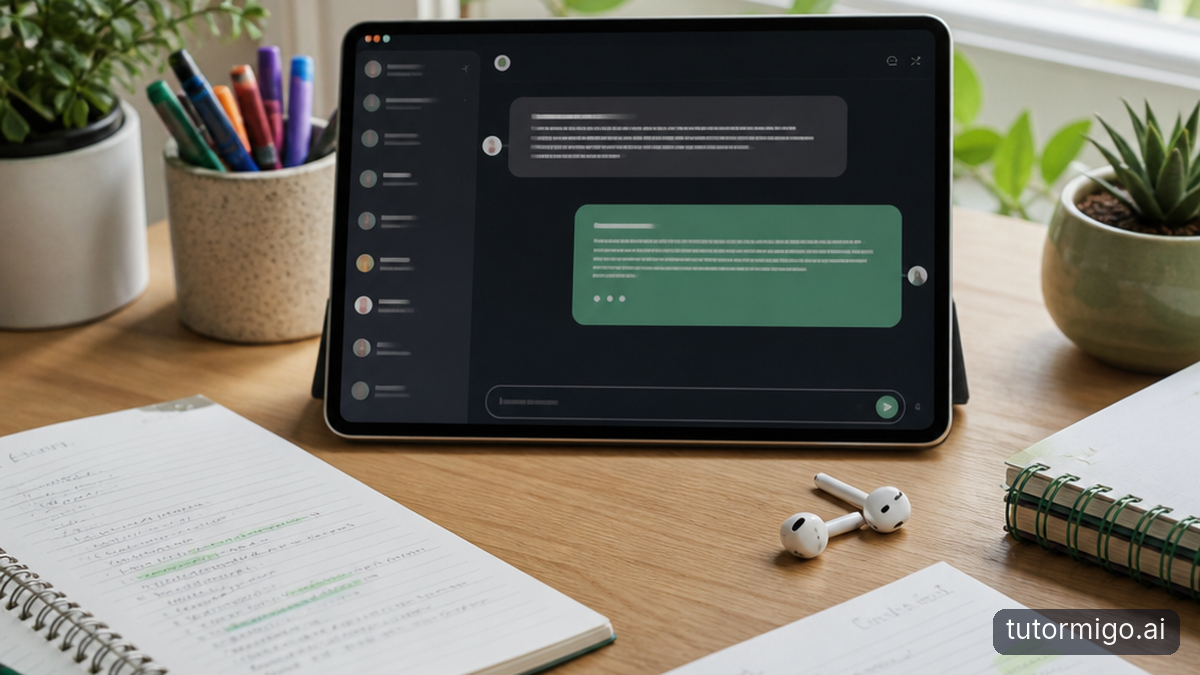
You reread an explanation, still feel stuck, and hesitate to ask the same question again. Artificial intelligence is changing education by making it easier to get another explanation, practice actively, and revisit difficult ideas. TutorMigo.ai shows how personalized tutoring and connected study tools can support that process without replacing your effort.
Personalized learning begins with identifying the actual obstacle. You might understand what a paragraph says but struggle to explain its main argument. Instead of asking for a summary, tell an AI Tutor what you have tried: “I can identify the topic, but I cannot tell which sentence expresses the author's main claim.” That gives the conversation a useful starting point.
In TutorMigo.ai, the personal tutor workspace combines tutoring chat, streaming responses, expert personas, and session history. You can revisit an earlier conversation rather than reconstruct every question from memory. History is useful context to consult; it should not be treated as a guarantee that every new conversation automatically remembers everything.
One of the practical TutorMigo.ai benefits is having a place to continue this learning process. Review your previous explanation, try a fresh example, and describe what remains confusing. Our guide to AI tutors and personalized learning explores why matching support to your current understanding matters more than simply getting a faster answer.
Interactive lessons turn explanations into understanding
An instant explanation can remove a frustrating delay, but reading an answer is not the same as understanding it. The useful change comes when you can question the explanation and then do something with it. Ask for a simpler example, explain the idea back in your own words, or request a hint before seeing the solution.
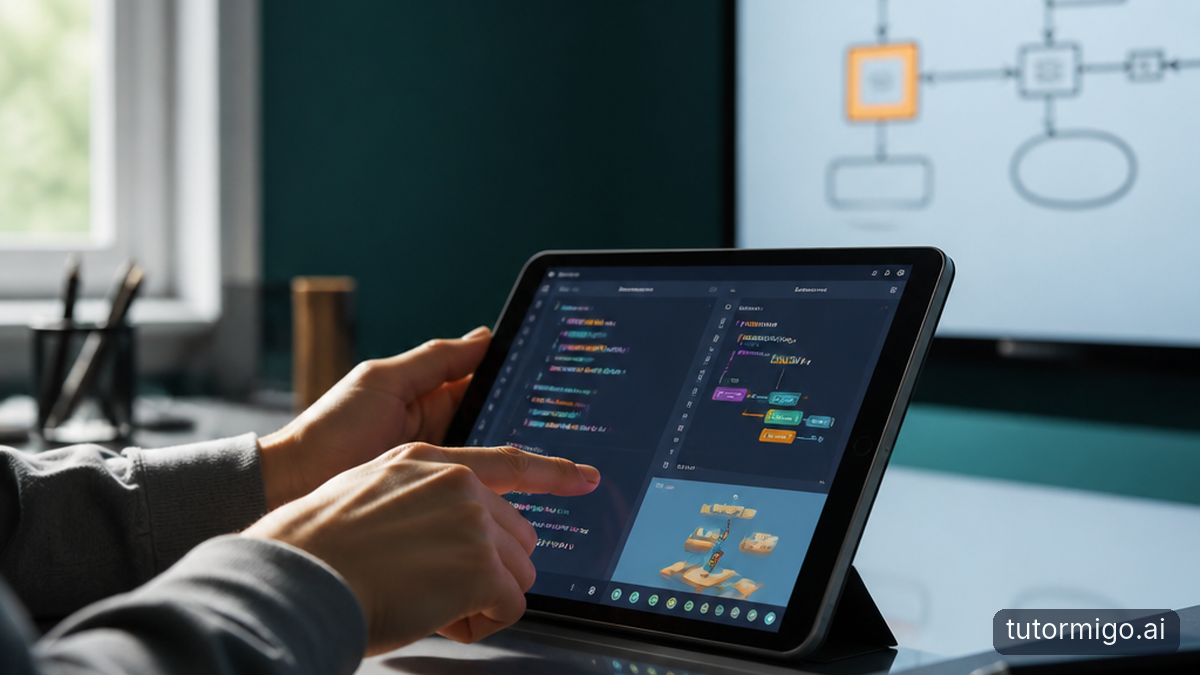
Imagine learning why a short program keeps repeating the wrong instruction. You could ask the tutor to explain the loop, then test your interpretation in a code sandbox. Change one part, predict the result, and compare your prediction with what happens. That cycle makes the explanation something you can investigate rather than something you merely accept.
TutorMigo.ai's Study Tools Hub includes a whiteboard, code sandbox, and math step editor. These offer different ways to work through a problem: sketch a relationship, experiment with code, or lay out mathematical reasoning step by step. Choose the tool that fits the task rather than using every tool in every session.
For engagement, the important ingredient is participation. Before requesting the next explanation, make a prediction or show your attempt. Teachers and learners can find more examples in this guide to interactive tools that make thinking visible. Keep a textbook or trusted reference nearby, because an immediate AI explanation can still contain an error.
Use AI quizzes and flashcards for purposeful practice
AI quizzes are most useful when they reveal what you can retrieve without help. In tutoring chat, you can request a short practice exchange: “Ask me one question about this concept, wait for my answer, then explain any mistake.” This is a way to use the conversation for practice, not a claim that every chat question is a validated assessment.
For example, after studying an argument, ask for a new passage and identify its claim before requesting feedback. If your answer misses the supporting evidence, ask a follow-up question focused on that distinction. Keep the practice narrow enough that you can tell what improved. A long stream of questions can feel productive while leaving the same misunderstanding untouched.
TutorMigo.ai also offers spaced-repetition flashcard decks, AI-assisted card creation, and review scheduling. Use flashcards for information you need to recall repeatedly, such as terminology or the meaning of a programming concept. Review generated cards before relying on them, and rewrite cards that are vague or contain several unrelated facts.
The strongest routine combines recall with application. Review a card, explain the answer without looking, then use the idea in a fresh problem. Spacing reviews across study sessions gives you repeated opportunities to retrieve the information instead of recognizing it only while the original lesson is still fresh.
Give exam preparation a structure you can follow
When you are preparing for an exam, “study more” is not a useful plan. You need a clear practice target and a way to check whether your work is helping. TutorMigo.ai provides structured preparation for SAT, ACT, AP, and IELTS through practice sets and progress tracking. Choose the preparation relevant to your goal rather than collecting unrelated exercises.
Suppose your practice shows that you understand a reading passage but regularly misinterpret questions about evidence. Make that question type your next focus. Complete a relevant practice set, examine the reasoning behind your mistakes, and use tutoring chat to explore an example you still do not understand. Then return to fresh practice rather than repeatedly reading the same solution.
Progress tracking gives you information to interpret, not a promise about your eventual result. A stronger practice session may reflect genuine improvement, an easier set, or familiarity with the material. Look for a pattern across sessions and check whether you can explain your choices independently.
Keep the routine manageable: choose a target, practice it, investigate errors, and revisit it later. This makes exam preparation more deliberate than jumping between whichever questions happen to catch your attention. It also gives you a specific answer when someone asks what you are working on next.
Make support more visible without taking over
Students are not the only people who need clarity about learning. Parents may want to help without turning every conversation into a check on performance. Teachers need enough visibility to decide where support is needed. TutorMigo.ai's Parent Dashboard offers visibility into a child's progress, learning controls, and co-learning features. Its Teacher Dashboard supports class management, student monitoring, knowledge base assignment, and reporting.
Use that visibility to start a conversation rather than deliver a verdict. A parent might ask, “Which explanation helped, and what would you like to try together?” A teacher might combine student monitoring with a short independent explanation before deciding whether to revisit a concept. Dashboard information is one source of evidence, not a complete picture of confidence, effort, or understanding.
This approach can also support engagement. When help responds to a specific difficulty, learning can feel less like being watched and more like having someone on your side. Agree on what useful support looks like, and leave room for the learner to attempt problems independently.
Accessibility also has a practical meaning here: another explanation may be available when you are ready to study, and previous sessions can be revisited. That can reduce friction, but it does not remove every barrier. Device access, connectivity, and the quality of the guidance still matter.
Compare the workflow, then take one practical next step
General-purpose generative chatbots can explain concepts, suggest practice questions, and help you explore ideas. The useful comparison is not whether they can discuss a subject. It is how easily your chosen tool supports the whole learning routine: tutoring, active practice, review, continuity, and appropriate visibility into progress.
When comparing tools, check what is actually included. Can you revisit tutoring sessions? Are spaced-repetition reviews scheduled? Is there a suitable place to work through code or mathematical steps? Does exam preparation include structured practice and progress tracking? If you need parent or teacher visibility, examine those options directly rather than assuming every chat interface provides them.
TutorMigo.ai benefits are clearest when these capabilities match a real need. A lifelong learner might value session history and flashcard reviews, while a teacher may care more about monitoring and reporting. Neither needs to use every feature. An AI Tutor should support your thinking, not become a shortcut around the thinking that makes learning stick.
Start with one topic you find difficult. Explain where you are stuck, attempt a question before asking for help, and save one useful idea for later review. At your next session, test whether you can use it without assistance. That small check is a better starting point than adopting an entirely new study routine at once.
Frequently asked questions
You can describe your current understanding, share an attempted answer, and request a different explanation or focused practice. The quality of that context helps make the exchange more relevant.
Yes. It includes spaced-repetition flashcards, interactive study tools, structured exam preparation with progress tracking, and parent and teacher dashboards.
Use them to uncover gaps and guide practice, not as definitive proof of mastery. Check important answers against trusted materials and try fresh problems independently.
Session history lets you revisit earlier tutoring conversations. It should not be assumed to guarantee automatic recall of every detail in every new conversation.
Explore TutorMigo
Enjoyed this read?
Like, share, or comment below.


Comments
0Sign in required · respectful discussion · replies supported
Loading comments…