


Six Signs Your Active Recall Session Won’t Stick
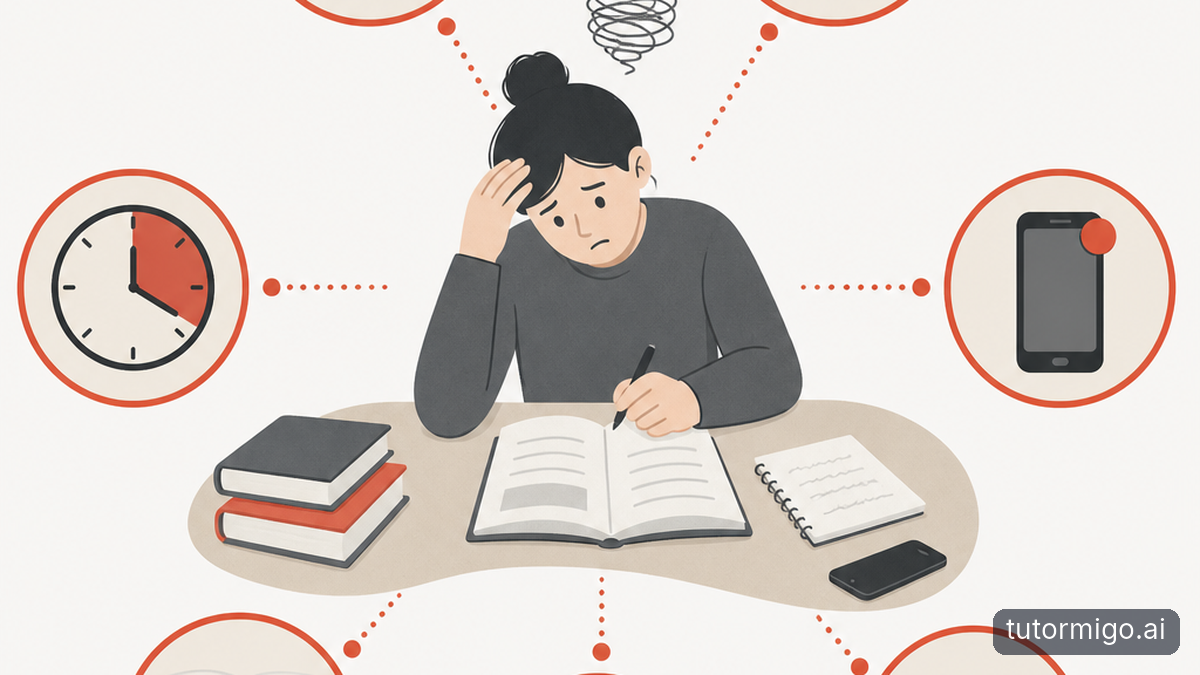
You finish a study session feeling capable, then open your notes a few days later and discover that the ideas have nearly vanished. Some sessions build lasting learning; others create a temporary feeling of understanding. The difference is often visible before you leave the desk.
Use the six signs below as a quick checklist. Each one identifies a specific gap, not a personal failure: you may need retrieval, spacing, blank-page practice, or a tougher test of understanding. Catching the gap early gives you a concrete next move. If you are comparing an AI Tutor at tutormigo.ai with other learning tools, look for support that helps you continue practicing rather than simply explaining the same material again.
Quick check: Ask, “What could I produce without looking?” If the answer is “not much,” your session probably needs one more active step.
Signs 1–2: You’re Relying on Recognition Instead of Recall
1. You understood it while reading but have not recalled it alone
When a biology definition looks familiar in your notes, that is recognition—not proof that you can retrieve it. Close the page and explain the concept aloud in your own words, or answer a question without the vocabulary list visible. If you get stuck, peek briefly, close the material again, and try once more.
2. Most of the session was re-reading or highlighting
Highlighting a paragraph about linear functions can make every sentence feel important, but it does not require you to solve anything. Replace part of that passive time with three questions, a short explanation, or a worked example completed from memory. Active recall with flashcards and study plans can turn review into a response-and-check routine.
Signs 3–6: Missing Spacing, Blank-Page Practice, and Challenging Retrieval
3. You studied it once with no revisit planned
A single strong session is still vulnerable to forgetting. Schedule a short review tomorrow, another later in the week, and a final check after that. The fix is repeated retrieval, not another long cram session.
4. You can follow the steps but not reproduce them
If a math solution makes sense line by line but your blank page stays empty, cover the example and rebuild it. Write the first step, explain why it works, then compare your attempt.
5. The material appeared in one long block
Three hours on one topic can feel productive while producing fragile memory. Split practice across shorter sessions and begin each one with a few questions from the previous session.
6. You have not tried a harder or differently worded version
Confidence can come from familiar wording. Test yourself with a new scenario, mixed problem, or question that asks you to apply the idea. If performance drops, that is useful evidence: vary the practice before moving on.
How TutorMigo Benefits Support Recall, Spaced Review, and Varied Practice
TutorMigo benefits become especially clear when you match the tool to the warning sign. In the AI Tutor Workspace, you can ask for a prompt, attempt an explanation, and continue a session instead of stopping after a polished answer. Session history also helps preserve continuity when you return to the same topic.
For sign three, spaced-repetition flashcards provide review scheduling and AI-assisted card creation, so revisiting a topic is easier to plan. For signs four through six, interactive study tools can support hands-on attempts, while Exam Preparation practice sets and progress tracking can expose whether you understand a concept in more than one format. This is a practical difference from using a general-purpose chatbot only to request another explanation: the goal is to retrieve, check, revisit, and apply.
If more than one sign describes your last session, do not treat the feeling of fluency as proof that the material has stuck. Add one recall attempt now, schedule a later review, and test the idea in a less familiar form.
Recognize a few of these signs in how you just studied? Don't wait to find out you forgot it. Run the material through tutormigo.ai now and catch the gap while it's still cheap to fix.
Frequently asked questions
Close your notes and write or explain everything you can remember. Then check the material, correct the gaps, and attempt the recall again without looking.
Plan a short retrieval review on a later day rather than waiting until the material feels unfamiliar. Additional reviews can then be spaced farther apart as recall improves.
Re-reading creates familiarity with the page, which can feel like understanding. Active recall is harder because it tests whether you can produce the idea without the prompt.
Yes. TutorMigo can support prompted recall in the AI Tutor Workspace, spaced review through flashcards, and varied practice through interactive tools and structured exam-preparation practice sets.
Related reading
Enjoyed this read?
Like, share, or comment below.


Comments
0Sign in required · respectful discussion · replies supported
Loading comments…