

Keep Gamification Focused on Learning, Not Points
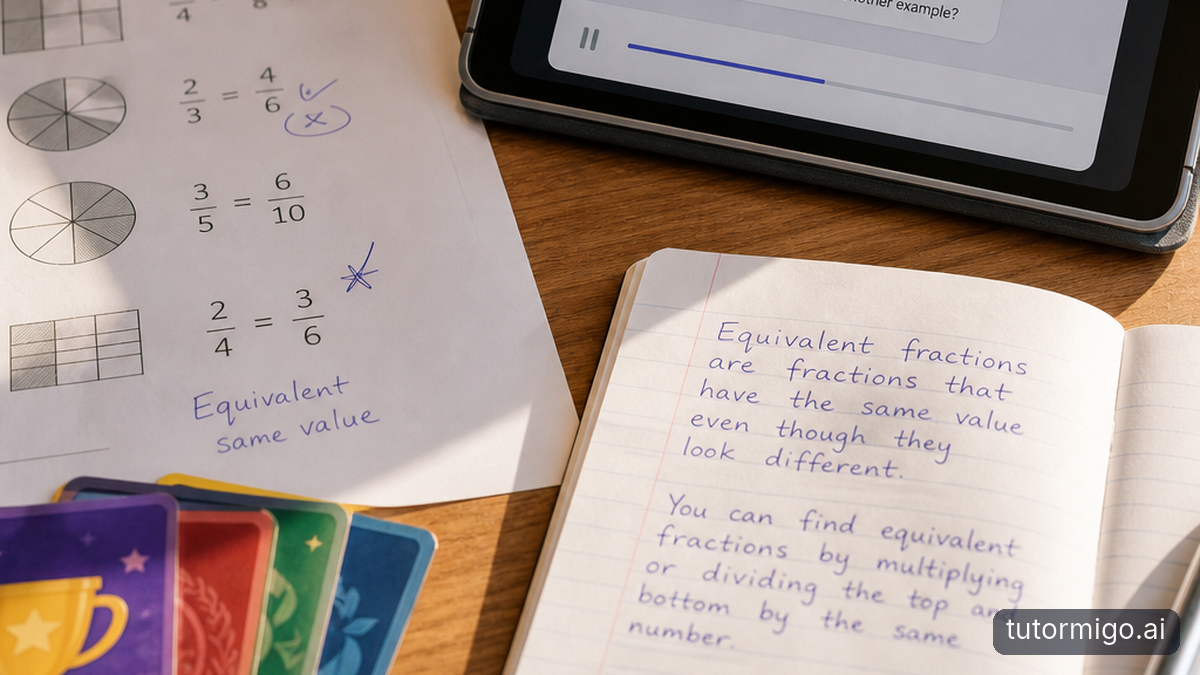
Gamification means borrowing elements from games—missions, progress markers, choices, and opportunities to retry—and applying them to a learning task. It does not require turning every assignment into a video game. A homework mission might be as simple as spotting a mistake, explaining why it happened, and solving a similar question independently.
AI can support that structure through responsive conversation: you try something, ask for feedback, and choose your next move. For example, instead of requesting a completed answer to a reading question, ask for a clue, make your own argument, and then request a challenge to your reasoning. The interaction becomes a puzzle you participate in rather than an answer you receive.
Start by deciding what success should demonstrate. If your goal is understanding fractions, earning a badge for opening the worksheet tells you very little. Explaining why two fractions are equivalent gives you much better evidence. Build the challenge around that explanation.
A useful test is to imagine removing the points and decorations. Would the activity still involve meaningful practice? If yes, the game elements are probably supporting the work. If the only remaining activity is clicking through questions, rethink what you are rewarding.
Turn a Long Assignment into Small Missions

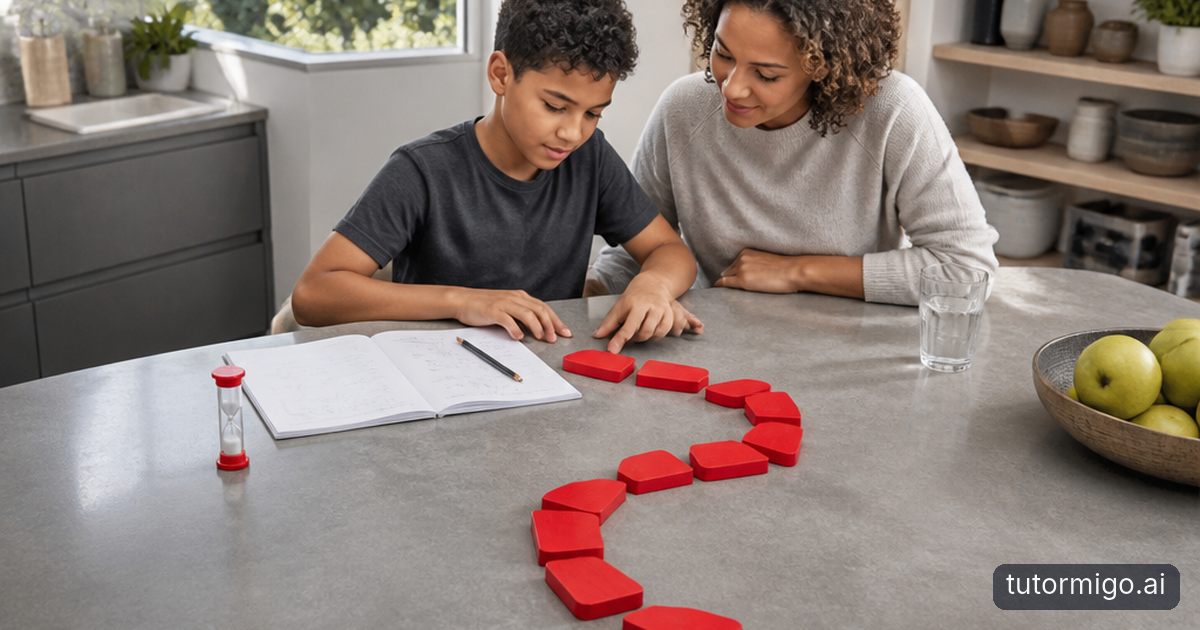
A large assignment can feel difficult before you have attempted a single question. Smaller missions create a visible starting point and a finish line you can reach. Keep the original learning goal, but divide the work into chunks with different purposes: explore an example, practice the skill, and check whether you can use it without help.
Imagine you have a page of fraction questions. Your first mission could be to identify which questions involve the same method. Next, solve a small group and explain one answer aloud. Finish by attempting a fresh question without looking at the example. Each stage has a job; you are not just slicing the page into arbitrary pieces.
You can ask an AI tool: “Help me divide this assignment into three short challenges. Keep every required question, and do not give me the answers.” Check its plan against your actual instructions, because it may overlook a requirement or misread what the assignment asks.
Add a little choice without creating an escape route. Choose whether to start with a written explanation or a sketch, for instance, while keeping the same target skill. That small amount of control can make homework feel less like something happening to you.
Use Feedback and Retries as the Game Loop
The most useful game-like loop is straightforward: attempt, get feedback, adjust, and try again. A wrong answer should open another route into the problem, not end the session. Ask for the smallest useful hint first so you still do the thinking required to make progress.
Suppose your paragraph includes a quotation but does not explain how it supports your claim. Rather than asking AI to rewrite the paragraph, ask: “Point out where my reasoning is missing. Ask me one question that helps me improve it.” Your next move is to add the explanation yourself. The reward is a stronger paragraph and a clearer understanding of what changed.
AI feedback can be mistaken, so treat it as something to inspect rather than an automatic verdict. Compare suggestions with your assignment rubric, textbook, or worked examples. If a correction seems questionable, ask for its reasoning and verify the underlying fact before accepting it.
Keep hints separate from solutions. A sensible sequence is a guiding question, a reminder of the relevant idea, and then a worked example on a different problem. For more ways to keep support from replacing your effort, explore these approaches to getting homework help when you’re stuck.
Reward Strategies You Want to Repeat
What you reward shapes how you approach homework. If every reward depends on finishing quickly, you may rush, guess, or avoid difficult questions. If you recognize useful strategies instead, you make room for the habits that support learning: checking work, explaining reasoning, asking a focused question, and correcting an error.
Try a progress trail with a few meaningful milestones. One marker could mean “I started without waiting for a reminder.” Another could mean “I found and fixed a mistake.” A final marker could mean “I explained the method without help.” You can track these on paper; the game does not need an elaborate digital system.
Keep rewards modest and predictable. Completing a focused session might lead to choosing the next activity or taking a planned break. Avoid making every question a negotiation for a bigger prize. The aim is to help you notice your growing ability, not make ordinary effort feel worthwhile only when it earns something external.
Also distinguish practice progress from mastery. Using a hint and then succeeding is worthwhile, but it is different from solving independently. Celebrate both honestly. A label such as “ready for another try” can be more useful than a badge declaring that you have mastered something after one assisted answer.
Keep the Fun Low-Pressure and Check What Sticks
Not every game mechanic belongs in homework. Public leaderboards can turn practice into comparison, while countdowns may add pressure to work that needs careful thought. Streaks can encourage consistency, but they can also make one missed evening feel like a failure. Choose mechanics that make it easier to return, not harder to stop.
If you enjoy a timer, use it to define a comfortable focus period rather than demand a certain number of correct answers. If a streak motivates you, include planned rest days and an easy restart. If competition makes you anxious, try a cooperative challenge: explain a tricky idea clearly enough that someone else can describe it back.
The real check comes after the excitement fades. At the next session, try a similar question without hints. Can you explain why your answer makes sense? Can you spot the same kind of mistake in a new example? Those checks reveal more than a high score does.
Notice the emotional result, too. A useful system should help you start, tolerate mistakes, and finish with a clearer understanding. If you spend more time managing rewards than doing the assignment, simplify it. If the game makes homework more stressful, remove that mechanic rather than pushing through it.
Try One Small Homework Experiment Next
You do not need to redesign your whole homework routine tonight. Pick one assignment you have been avoiding and name the specific obstacle. Is it difficult to start, hard to understand the instructions, or discouraging when you get something wrong? Choose a game element that addresses that obstacle instead of adding several at once.
For a starting problem, create a short opening mission: read the instructions, choose one question, and make an attempt. For confusion, use a clue-based challenge with hints available only after you describe what you have tried. For discouragement, track corrected mistakes as evidence of progress rather than recording only first-attempt success.
After the session, ask yourself three things: Did I begin more easily? Did I do the thinking myself? Can I now explain something I could not explain before? Keep the mechanic if it helped; change it if it mainly added noise. One workable routine is more valuable than an elaborate system you abandon.
If you are a parent helping with this experiment, TutorMigo.ai’s Parent Dashboard offers visibility into your child’s progress, learning controls, and co-learning features. It may be a useful next step if you want to stay involved while keeping the focus on your child’s effort and understanding.
Frequently asked questions
No. A small mission, a chance to retry, or a visible progress trail can add game-like structure without a video game.
Yes. Choice, clear goals, and noticing improvement can make practice more satisfying without offering a prize for every task.
Look beyond points. Check whether starting feels easier and whether you can solve a similar problem later without hints.
Enjoyed this read?
Like, share, or comment below.


Comments
0Sign in required · respectful discussion · replies supported
Loading comments…