


Academic Integrity: Using AI for Homework Ethically
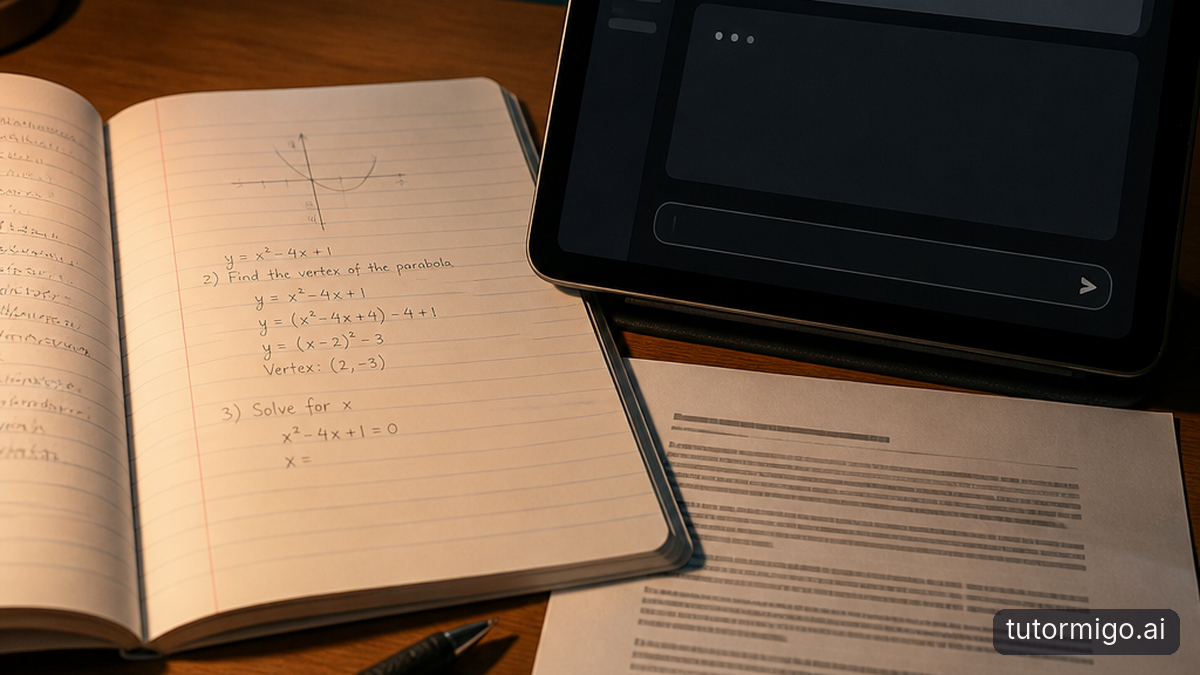
Ethical homework AI use preserves your authorship and follows assignment rules. Start with your own attempt, request explanations or feedback only when permitted, verify every claim, and disclose assistance as required. Your submitted work should demonstrate understanding you can explain independently without the tool’s help.
Your academic integrity policy sets the baseline; assignment instructions may impose narrower limits. Permission to brainstorm does not necessarily authorize outlining, rewriting, translation, or solving. For honor code compliance, ask a specific question: “May I use AI to identify weaknesses in my argument if I write every sentence myself?” Keep the response with your assignment notes.
The central distinction is learning scaffolding vs ghostwriting. Review questions can help you retrieve knowledge; generated prose submitted as your own can misrepresent authorship. Even feedback may be prohibited when an assignment assesses unaided revision. Follow the actual rule rather than assuming a helpful purpose makes assistance permissible.
For example, attempt a problem first, then request a hint about your mistaken assumption. Close the conversation and retry independently. If you still cannot explain the reasoning, the assignment is not ready to submit. Protecting intellectual development means preserving productive struggle, not merely producing a polished answer.
The Three Tiers of Academic AI Tools: Cheating, Gray Area, and Ethical Tutoring

AI tools differ ethically according to their use and assignment permissions. Ghostwriting replaces assessed work, paraphrasing can disguise borrowed authorship, and guided tutoring can support independent reasoning. No category guarantees compliance: check the rules, preserve your contribution, and disclose permitted assistance whenever your institution requires it.
Tier one: essay mills and answer solvers. Commissioning a finished response and submitting it as your own generally crosses the authorship line. A solver may still support permitted practice after you attempt a problem, but copying its output into assessed work is a different use.
Tier two: paraphrasers. Rewording someone else’s argument does not make the ideas yours or remove citation obligations. Rephrasing AI-generated prose can also remain prohibited assistance. Ask whether language-level help is allowed, particularly when the assignment evaluates your writing ability.
Tier three: Socratic interactive tutors. Questions, hints, and critique can keep you responsible for reasoning. However, a tutor becomes an answer supplier if you request finished submissions. An ethical study assistant is defined by permitted behavior, not branding.
General-purpose chatbots can also ask guided questions. Compare tools by their workflow, continuity, and study features—not by assuming one product category is automatically honest.
Direct Ghostwriting vs. Paraphrasing Bots vs. TutorMigo Ethical AI Tutoring
The comparison distinguishes common workflows, not guaranteed outcomes. Honor code compliance depends on your institution’s rules and what you actually ask a tool to do. Concept retention and long-term skill building depend on practice, feedback, and independent retrieval; no interface can guarantee either.
Direct ghostwriting removes the very task you are supposed to practice. Paraphrasing can preserve more involvement, but it may still substitute generated language for your own decisions. Guided tutoring offers a stronger learning opportunity when you explain your reasoning, receive limited feedback, and then work without assistance.
TutorMigo benefits relevant to this comparison include a personal tutoring workspace with session history and spaced-repetition flashcards with review scheduling. Those features support continuity and repeated practice; they do not certify original authorship or institutional approval. Compare an ethical AI tutoring platform by how its features support the rules you must follow.
A useful test is whether you can reproduce the reasoning later. After getting help, explain the concept aloud or solve a fresh practice question. If you can only repeat the displayed answer, change your workflow before relying on it for assessed work.
Ethical Study Workflows with TutorMigo.ai
Using AI as a Socratic Thinking Partner
Begin with your own attempt in TutorMigo.ai’s AI Tutor Workspace. Try: “Review my thesis logic and point out counterarguments. Ask questions; do not write replacement sentences.” Contrast that with “Write an intro paragraph,” which delegates authorship. A Socratic debate partner should challenge your reasoning rather than finish your submission.
For permitted practice, ask your AI Tutor: “Give me one hint, then wait for my explanation.” Use the whiteboard, code sandbox, or math step editor to work through ideas yourself. Treat generated explanations as claims to check, not authoritative references.
Afterward, create flashcards from verified concepts rather than copying homework answers. TutorMigo.ai supports AI-assisted card creation and spaced-repetition review scheduling. Close the original conversation during review so retrieval—not recognition—does the learning work.
Creating Verifiable Learning Logs to Support Independent Work
Keep dated notes recording the assignment rule, your initial attempt, prompts, feedback, and changes you made. TutorMigo.ai’s session history can help you revisit exchanges, but it is not an immutable audit trail or proof of authorship. Preserve drafts separately and follow your school’s evidence requirements.
Parent Dashboard visibility and Teacher Dashboard monitoring can support conversations about progress. Neither establishes permission for a particular assignment. Share only appropriate material: avoid uploading classmates’ work, private records, or restricted assessments. A learning log supports transparency; your ability to explain the work remains essential.
How to Use AI for Homework Ethically: Your Next Step
Before your next assignment, write down what is being assessed: your argument, your calculation process, your language choices, or your recall. Then check whether AI assistance would replace that skill. If the instructions are silent, ask the teacher rather than interpreting silence as permission.
Set a boundary before opening the tool. You might allow yourself conceptual explanations and feedback while ruling out generated paragraphs, completed solutions, or line-by-line rewrites. Work independently first, request the smallest useful intervention, and finish with an unaided attempt. Keep a brief record of what changed and why.
Parents and teachers can reinforce this routine by asking, “What did you understand afterward that you could not explain before?” That question values learning over polished output. It also makes room for honest mistakes: if assistance exceeded the rules, stop and seek guidance before submission rather than trying to conceal it.
Make this student pledge your next step: “I will follow assignment rules, disclose assistance, verify claims, and submit reasoning I understand.” Knowing how to use AI for homework ethically means accepting responsibility for both your process and your final work. Choose mastery over shortcuts, even when a finished answer is available.
Frequently Asked Questions About AI Ethics in School
Start with the assignment instructions when answering any AI ethics question. A school-wide policy may permit some uses while a particular task prohibits them. Keep written clarification when possible, especially if different courses apply different standards. Your goal is to demonstrate permitted learning, not to guess what will escape notice.
AI writing detectors should not decide your study strategy. Their results can include false positives and false negatives, so a score is not conclusive evidence of authorship. Process records and an explanation of your reasoning provide relevant context, but neither guarantees how an institution will resolve a concern.
Citation guidelines also vary. Acknowledging assistance is different from citing reliable evidence: an AI conversation may document your process, while factual claims still need appropriate sources. Do not cite a reference suggested by AI until you have checked that it exists and supports the claim.
The answers below offer practical defaults, not permission to override local rules. If you are uncertain, describe the exact assistance you want and ask before using it. That small step is usually more useful than debating whether an entire category of technology counts as cheating.
| Method | Honor Code Compliance | Concept Retention | Long-Term Skill Building |
|---|---|---|---|
| Direct ghostwriting | Submitting generated work as your own generally violates authorship rules. | Reading an answer alone provides limited retrieval practice. | Replaces practice in the assessed skill. |
| Paraphrasing bots | Permission varies; rewording does not resolve authorship or citation duties. | Surface rewriting may leave conceptual gaps. | Depends on whether you make and understand substantive decisions. |
| TutorMigo.ai guided tutoring | Conditional on assignment permission and your use; not automatically compliant. | Hints and scheduled flashcard review can support practice. | Independent attempts and revisited sessions can support continued learning. |
Frequently asked questions
Teachers cannot reliably determine AI brainstorming from prose alone. They may examine drafts, discuss your reasoning, or consider other evidence; AI writing detectors are not conclusive. Follow the assignment policy and disclose brainstorming when required instead of treating detectability as the measure of acceptable use.
Using an AI tutor may violate your honor code if the assistance is prohibited. Permission depends on the assignment and institutional policy, not the product name. Ask whether explanations, hints, feedback, or generated examples are allowed, and retain written clarification before using uncertain forms of help.
Students should follow their instructor’s AI disclosure and citation requirements. Depending on the required style, record the tool, interaction date, relevant prompts, and how the output influenced your work. Verify factual claims using appropriate sources; citing an AI tool does not make prohibited assistance permissible.
Socratic tutoring supports ethical homework when it preserves student reasoning and follows assignment rules. Ask for questions, limited hints, and feedback rather than completed answers. Attempt the task independently afterward, check explanations against reliable materials, and disclose assistance whenever required; no tutoring format guarantees compliance.
Related reading
Enjoyed this read?
Like, share, or comment below.



Comments
0Sign in required · respectful discussion · replies supported
Loading comments…