


Child learning: Memorization and understanding work together
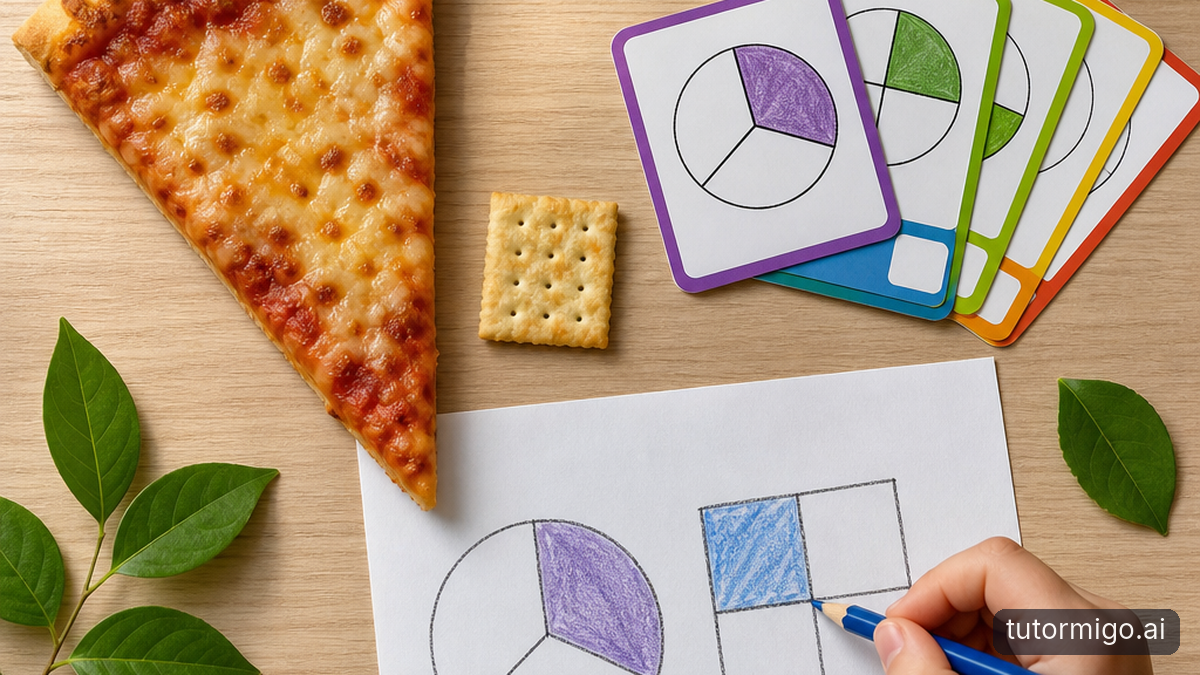
Memorization is not the enemy. Remembering common facts, vocabulary, and procedures gives your child something to think with. The concern is not that they remember an answer; it is that remembering may be the only route they have. A correct response alone cannot tell you how they reached it.
Imagine your child says that one-half is bigger than one-quarter. They might remember a picture, repeat a rule, or understand that dividing the same whole into fewer equal pieces makes each piece larger. Those routes can produce the same answer, but they offer different starting points when the question changes.
Now show a quarter of a large pizza beside half of a small cracker. Ask whether the half must still be the larger amount. A child who understands will begin considering the size of the whole, even if they need help putting that thought into words. That adjustment matters more than polished vocabulary.
Avoid treating hesitation as proof of shallow understanding. Explaining aloud also requires language, confidence, and attention. Your child may show an idea more clearly with a drawing, objects, or a demonstration. Look for a pattern across several relaxed conversations, not a verdict from one difficult moment after a tiring day.
Try three small changes to a familiar question

Start with something your child has already answered successfully. Instead of asking them to do more of the same, change how you invite a response. Keep the tone curious: “I want to see how you're thinking about this.” That feels different from announcing that you are checking whether they really understand.
First, ask for a reason. If your child identifies a story character as generous, ask which action supports that description. “Because she is nice” leaves the reasoning unclear. Pointing to the moment she shares something she needs gives you evidence that your child connects the label to the character's behavior.
Second, change one detail. What if the character only shared because someone promised a reward? Would “generous” still fit? There need not be one perfect interpretation. You are listening for whether your child notices that the new detail could change the reasoning, rather than repeating the original answer unchanged.
Third, invite a different representation: “Can you draw it, act it out, or make up another example?” A child who struggles to define fairness might demonstrate it by distributing game pieces. Across these checks, notice what help they need. A small prompt that unlocks an explanation tells you something different from an explanation they can only repeat after you.
Use AI to ask the next question, not give the answer
AI can be useful when you know your child needs another question but cannot think of one. You can ask it to suggest a simpler example, change one feature of a problem, or offer a plausible mistake to discuss. Its value here is generating opportunities to think, not certifying that understanding has happened.
Give it a narrow instruction: “Help me discuss why a shadow changes during the day. Ask one question at a time. Wait for the child's response. Give a small hint before explaining, and don't treat a correct answer alone as proof of understanding.” Review the suggestions before sharing them with your child.
If your child says, “The Sun moves,” a useful follow-up might ask what happens to a flashlight's shadow when the light changes position. You can then connect that model to Earth's rotation, while acknowledging that the flashlight demonstration is only a model. A less useful response would simply deliver a polished paragraph for your child to repeat.
Keep control of the pace. Let your child predict before seeing an explanation, and pause the conversation when they need to handle objects or draw. If AI keeps revealing answers, stop and rephrase the request. More output is not necessarily more help; sometimes one well-chosen question is enough.
Check whether the understanding survives without AI
A smooth conversation can create a misleading impression. Your child may follow an explanation, recognize familiar wording, or agree with a suggestion without being able to use the idea independently. The clearest check comes after the support is removed: can they make sense of a fresh example in their own way?
After discussing shadows, put the screen away and use a flashlight with a toy. Ask your child to predict where the shadow will fall before moving the light. Then let them test the prediction and explain any surprise. Being able to revise an initial guess can reveal more than confidently repeating the earlier explanation.
Return to the idea another day with a small variation. You might ask why a tree's shadow falls in a different place in the afternoon. Avoid demanding identical wording. Look for a useful connection between the light's position, the object, and the shadow, even if the explanation is still incomplete.
AI feedback also needs checking. It can make factual mistakes, accept weak reasoning, or produce examples that do not test the intended idea. Compare questionable claims with a reliable reference or your child's assigned materials. Treat an AI-generated score or enthusiastic “Exactly!” as a conversational response, not an authoritative assessment of your child.
Set boundaries that protect thinking and privacy
Before involving your child directly, check the service's age requirements, parental permission rules, and privacy settings. Requirements vary, and a general-purpose chatbot is not automatically suitable for children. You can keep the interaction adult-led by requesting discussion prompts yourself and then having the conversation away from the screen.
Share the minimum information needed. “Suggest questions about plant growth for a child who can describe leaves and roots” is usually more useful than uploading a named worksheet, school report, or detailed profile. Avoid including your child's full name, school, location, health information, or other identifying details in prompts.
Agree on the tool's job before starting. For example: “We'll ask for a hint after you've shown what you've tried, and you'll explain the next step yourself.” This is not about making help hard to access. It keeps an answer generator from quietly taking over the reasoning you wanted your child to practice.
Watch your child's response, too. If they begin asking AI whether every thought is correct, pause and invite their own judgment first. If they become frustrated, return to a familiar example together. The goal is greater independence and clearer thinking, not a longer chat, constant approval, or an impressive-looking answer that your child cannot explain.
What to do next: start with one idea
Choose one idea your child has encountered recently, preferably something they feel comfortable discussing. You do not need a full review session. Ask them to explain it, offer a slightly changed example, and notice what happens. Keep your attention on the reasoning rather than counting correct answers or measuring how quickly they respond.
If the explanation breaks down, identify the smallest missing connection. A child who remembers that plants need light may not yet connect light with making food. Instead of repeating the original fact more loudly or often, explore that connection with an appropriate explanation, a picture, and a question about a plant kept in darkness.
Use AI only if it solves a specific problem for you: finding another example, suggesting a gentle follow-up, or checking whether your question gives away the answer. Then step away from it. You can make a brief note of what your child explained independently and what still required help, without turning the exchange into a test.
End by naming something concrete you noticed: “You changed your explanation when we changed the example.” That recognizes thinking rather than performance. Revisit the idea later, and look for growing flexibility over time. If difficulty persists across familiar tasks, share specific examples with your child's teacher rather than relying on a chatbot's judgment.
Frequently asked questions
No. Memory and understanding can support each other. Look beyond recall: can your child explain a reason, recognize when a familiar rule applies, or adapt when one detail changes?
Not reliably on its own. It can suggest follow-up questions and examples, but its feedback can be mistaken. Your child's independent explanations and actions provide more useful evidence than an AI-generated rating.
Offer another way to respond, such as drawing, demonstrating, or using objects. Difficulty speaking about an idea does not automatically mean your child lacks understanding.
Set a clear purpose rather than a blanket rule. Encourage an initial attempt, request hints when useful, and ask your child to explain or apply the idea afterward without AI.
Enjoyed this read?
Like, share, or comment below.



Comments
0Sign in required · respectful discussion · replies supported
Loading comments…