


“I’ll Start in a Minute”: How Kids’ Homework Procrastination Becomes an Evening Struggle

“I’ll start in a minute” sounds harmless until you’ve heard it six times and bedtime is getting closer. Easing kids homework procrastination starts with making the beginning easier: agree on a familiar cue, choose a tiny first action, and leave room for short breaks and calm resets.
You already know your child puts homework off. The useful question is what makes starting difficult today. They might be tired, unsure about the instructions, reluctant to stop playing, or worried that the assignment will take forever. The same delay can have different causes, so another reminder may not solve the problem.
Picture a familiar evening: you ask about homework while preparing dinner, your child says “soon,” and you ask again a few minutes later. Eventually, both of you are upset before the notebook is open. The task now carries the weight of the argument, too.
Bring up the pattern at a neutral moment instead. Try, “Starting homework has felt rough lately. What’s the hardest part about getting going?” Listen before suggesting a fix. You’re looking for one obstacle you can make smaller together, not a promise that your child will never delay again.
Agree on a Gentle Start Cue, Like Clearing the Snack Plate

A start cue connects homework to something that already happens. It might be clearing the snack plate, putting away outdoor shoes after a walk, or finishing the usual after-school chat. Unlike repeated reminders, the cue gives your child a recognizable moment to begin without you having to announce it over and over.
Choose it together when nobody is rushing. You could ask, “Would opening your homework after snack work better, or after you’ve had some time outside?” Offer choices that fit your household. A child who arrives home hungry and overwhelmed may need food and a breather before any cue will be useful.
Make the agreement specific: “When your snack plate goes in the sink, bring your notebook to the table.” That is clearer than “Do homework early.” Put the materials nearby so the cue doesn’t lead straight into a search for a pencil or a missing folder.
For the first few days, a quiet prompt may still help: “The plate’s cleared. What was our next step?” Aim for a shared reminder, not a test they can fail. If you need help making space around the cue, these ideas for a calmer homework routine for parents can help you think through the evening.
Make the First Step Tiny: Open the Notebook and Read One Question
“Finish your homework” describes the destination, not the first move. When an assignment feels large or confusing, help your child choose an action small enough to do without planning the whole evening. Opening the notebook and reading one question is a real start, even before an answer appears.
For a writing assignment, the first step might be reading the prompt aloud and saying one idea. For a worksheet, it might be finding the page and pointing to a question that looks familiar. If your child says, “I don’t know how,” ask, “Which part feels unclear?” You may discover that one unfamiliar instruction is blocking everything else.
Keep the small step honest. Don’t promise “just one question” and immediately insist on the entire page. After the first action, pause and ask, “Does the next bit feel manageable, or do we need to work out what it means?” Starting creates an opportunity to continue; it shouldn’t feel like a trick.
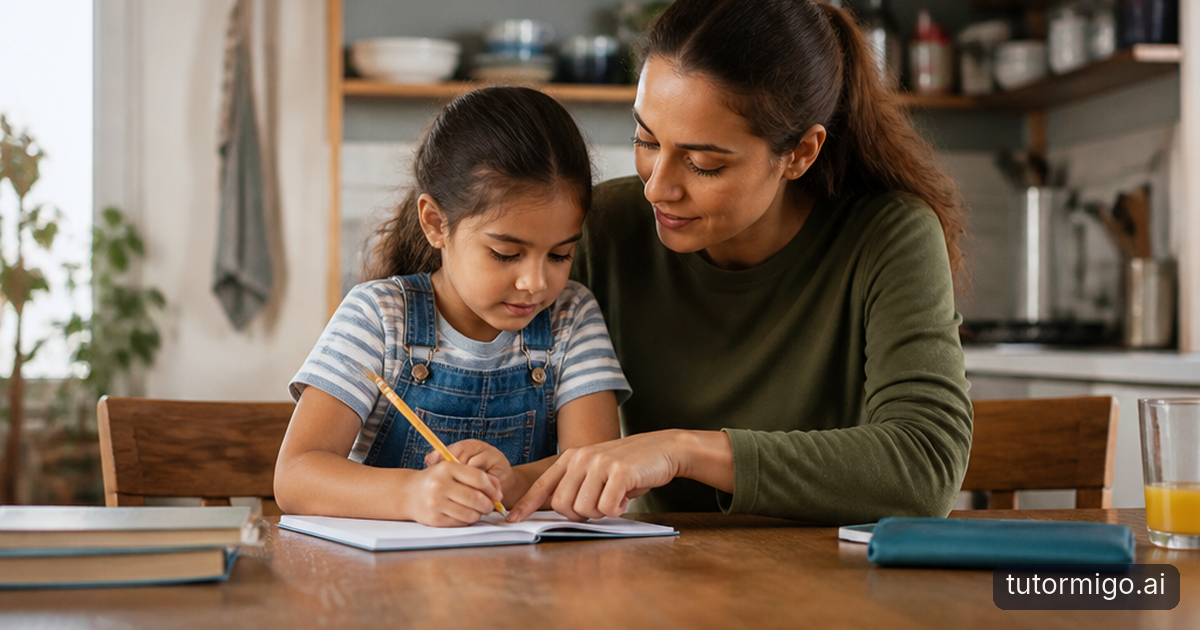
You can sit nearby while your child begins without supplying the answers. Say, “Read the directions to me, and tell me what you think they’re asking.” For more ways to stay supportive while leaving the work with your child, explore helping without taking over homework.
Use Short Work Periods and Breaks Without Watching the Clock Too Closely
A short work period makes homework feel less open-ended. Instead of asking your child to sit until everything is finished, agree on a manageable stretch followed by a brief break. You might suggest trying ten minutes, then checking how it felt. Treat that as an experiment, not a rule every child should meet.
Some children like a quiet timer because it answers “How much longer?” Others watch the countdown and become distracted. For them, a natural stopping point may work better: read one short passage, attempt a few questions, or finish planning a paragraph. The purpose is a manageable commitment, not perfect timing.
Agree on the break before starting. For example: “After this stretch, get some water and stretch your legs. Then we’ll come back and look at what’s left.” Choose something easy to stop. Beginning a game that your child finds difficult to leave can make returning harder than starting was.
This is practical time management for kids: noticing effort, choosing a stopping point, and practicing a return. If your child is concentrating comfortably when the timer sounds, offer a choice: “Would you like your break now, or after this question?” The clock supports the work; it doesn’t need to interrupt it.
When the Plan Slips, Offer a Calm Reset Instead of Another Reminder
Even a well-chosen routine will slip. Your child may wander off after snack, forget the agreement, or return from a break reluctantly. That doesn’t mean the plan has failed. What matters is whether you can help them restart without turning the missed cue into a verdict about their attitude.
Start with a neutral observation: “We planned to open the notebook after snack, and it’s still in your bag.” Then offer the next small action: “Would you like to bring it over yourself, or shall we walk over together?” Keep your voice ordinary. Avoid adding a history of every other evening that went wrong.
If your child is upset, acknowledge that before problem-solving: “You wanted more time to play. Stopping is hard.” You can recognize the feeling while keeping the boundary: “Homework still needs some attention. Let’s read the first instruction, then decide what help you need.” Calm doesn’t mean abandoning the task.
If you’re wondering how to stop homework battles, focus on shortening the argument rather than winning it. When you feel yourself escalating, pause before speaking again. If the same difficulty keeps returning, note what happens and ask the teacher whether the instructions, workload, or underlying skill needs a closer look. More pressure won’t clarify confusing work.
Choose One Routine to Try Tomorrow and Adjust Together After a Week
You don’t need to introduce every idea tomorrow. Choose the point where your evening most often gets stuck. If homework never seems to begin, try the snack-plate cue. If your child reaches the table but freezes, practice one tiny first step. If staying with the task is hardest, experiment with a short work period and a predictable break.
Make one simple agreement together: “Tomorrow, after snack, you’ll bring your notebook over and read the first question. I’ll be nearby if the directions are confusing.” Ask your child what would make that easier. Their answer might be a quieter seat, a ready pencil, or a few minutes to talk before starting.
After a week, check in without scoring anyone. Ask, “Was getting started any easier? What still got in the way?” Notice specific changes, such as fewer reminders or a calmer return after a break. If the cue kept being missed, change it. If the work period felt too long, shorten it. Keep what helped and adjust one thing together.
If you’d also like a way to stay informed about learning progress, TutorMigo.ai’s Parent Dashboard offers parent visibility and co-learning features. Whatever support you choose, keep the home routine simple: one doable beginning, a calm response to setbacks, and another chance tomorrow.
Frequently asked questions
Give one neutral prompt and return to the smallest agreed action: “Snack is finished. Let’s bring your notebook over.” If the cue is repeatedly missed, discuss it at a calm moment. Your child may need a different cue, more recovery time after school, or materials that are easier to find.
Start with a stretch your child believes is manageable, such as ten minutes, and adjust based on what happens. A natural stopping point can work better than a timer. The goal is enough focus to make progress without making the task feel endless.
Ask your child to read the first instruction and explain what they think it means. Difficulty describing the task, repeated distress around the same kind of work, or being unable to begin even with support may warrant a conversation with the teacher. Treat these as clues to investigate, not proof of unwillingness.
Discuss whether starting became easier, which reminders helped, and what still caused friction. Ask for your child’s view before offering yours. Keep the useful parts and change one obstacle, rather than replacing the whole routine after a difficult evening.
Related reading
Enjoyed this read?
Like, share, or comment below.


Comments
0Sign in required · respectful discussion · replies supported
Loading comments…