


When “I’m Bad at Numbers” Turns Homework Into a Standoff

The worksheet comes out, your child pushes it away, and you hear, “I’m bad at numbers.” You offer help; they get upset. Math anxiety in kids can turn homework into a standoff. Start by lowering the pressure, finding one manageable step, and making it safe to be unsure.
You might recognize the rest: you explain the question again, your child stares at the page, and both of you become frustrated. It is tempting to say, “You knew this yesterday,” or insist on finishing before anyone leaves the table. But what looks like stubbornness may be a child trying to escape an uncomfortable feeling.
Your first goal is not to make your child love math tonight. It is to make the next encounter feel less threatening. That means noticing distress before adding explanations, separating their worth from their answers, and choosing work they can approach without feeling trapped.
A small success might be drawing a picture, identifying what a question asks, or admitting, “I don’t understand this part.” Those moments matter even before an answer appears. When you treat them as useful progress, homework becomes a place to learn rather than a nightly test of ability.
How to Recognize Math Anxiety in Kids—and Tell It Apart From Skill Gaps

Math anxiety can show up as tears, irritability, a stomachache, repeated bathroom trips, or suddenly needing a drink when the worksheet appears. Some children rush and guess; others freeze before reading. Notice when the reaction begins: before a particular task, during correction, or whenever someone watches them work.
A skill gap is different: your child may not yet understand a concept or remember a method. For example, they might consistently struggle to split objects into equal groups, even when relaxed. Anxiety is more about the distress surrounding the task. A child might explain an idea during a game but go blank when it appears on homework.
These are clues, not a home diagnostic test. Anxiety and missing skills can coexist, and neither means your child is incapable. On a calm day, invite them to show one familiar idea with objects or a drawing. Ask, “Which part makes sense, and where does it get confusing?” Avoid turning this into another quiz.
Keep brief notes about patterns rather than scores. “Understood with counters; froze when asked to answer aloud” gives a teacher more useful information than “bad at math.” Repeated difficulties deserve support, not a label.
What to Say When Your Child Panics, Freezes, or Refuses to Try
When your child panics, pause the math explanation. Say, “This feels really hard right now. We can take a break, and I’ll stay with you.” Offer a drink, a stretch, or a quiet moment. You do not need to persuade them that the question is easy; you need to help them feel safe enough to return.
When they say, “I’m bad at numbers,” try, “You’re stuck on this question. That isn’t the same as being bad at math.” Then offer a small choice: “Would you rather draw it or use counters?” Two concrete options are usually more helpful than asking an overwhelmed child what they want to do.
Avoid “Just try harder,” “Everyone else can do this,” and “I was terrible at math too.” Even reassurance such as “You’re so smart” can leave a child feeling they must prove it. Describe something observable instead: “You noticed the first approach wasn’t working and tried a picture.”
If they still cannot begin, agree to pause and revisit the task rather than forcing an answer. For more language you can use, explore responding when your child says they’re bad at math. Keep your message steady: difficulty is information, not a verdict.
Use Short, Untimed Practice to Build Confidence One Small Success at a Time
Choose a short practice window—perhaps five minutes—but do not make speed the task. Agree on a stopping point, keep the clock out of your child’s face, and skip races or countdowns. The purpose is a calm encounter with something learnable, not as many correct answers as possible.
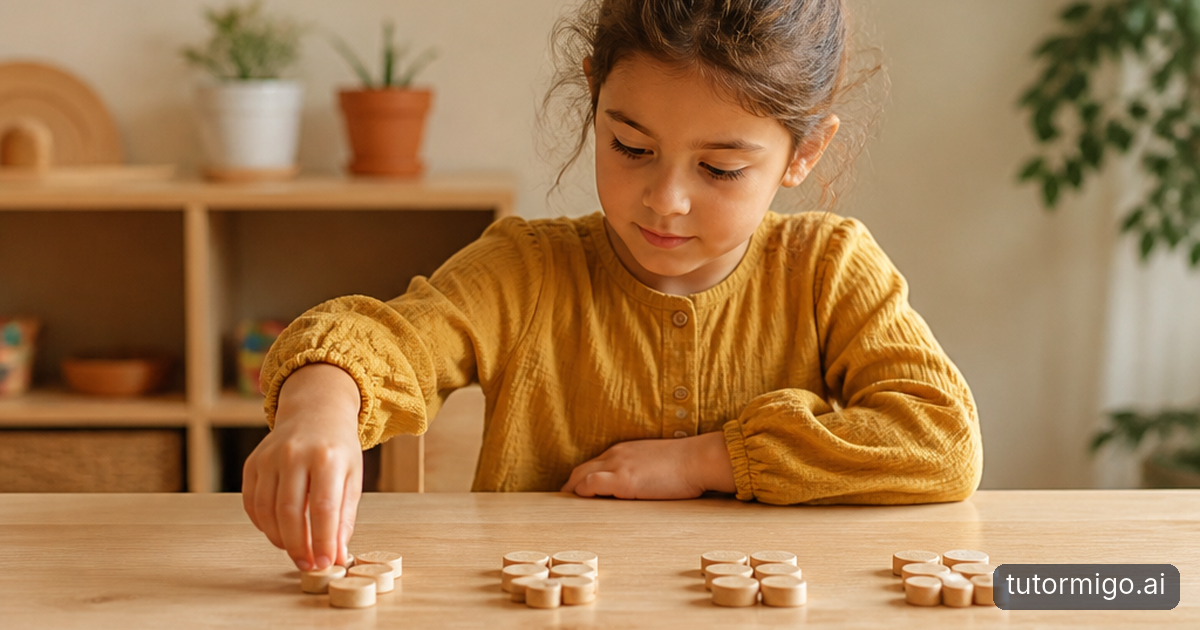
Start with a question your child can probably approach. If adding across ten causes distress, try with counters. Invite them to make a group of ten first, then describe what remains. If that is too much, step back to making ten with objects before returning to the original question.
Give thinking time without filling every silence. Ask, “What could you try first?” rather than delivering several instructions at once. If they make a mistake, say, “Let’s see where the plan changed,” and inspect one step together. You can model uncertainty: “I’ll draw this so I can keep track.”
End by naming a specific success: “You used counters to check your idea.” Overcoming fear of math usually takes repeated, manageable experiences, not one breakthrough evening. Next time, revisit something familiar before adding a small variation. Increase difficulty gradually rather than turning one success into a longer worksheet.
Make Numbers Feel Less Threatening Through Cooking, Shopping, and Games
Everyday number activities can help you build math confidence at home without recreating a lesson. The key is shared participation, not surprise testing. Invite your child to help solve a real problem, and let them decline occasionally. A relaxed conversation about quantities is more useful than turning every snack into homework.
While cooking, ask your child to count out the spoons you need or help measure an ingredient. Say, “We need another scoop to fill this cup. Let’s check together.” If fractions are already familiar, compare measuring cups by pouring water between them. Keep the activity connected to what they understand, rather than introducing several new ideas.
At the shop, you might ask whether the basket has enough apples for everyone at home. Let your child point, count, or group them. You can share your own thinking aloud: “I’m putting these into pairs so they’re easier to count.” There is no need to demand a mental answer in front of other shoppers.
Games offer another low-pressure opening. Count spaces together, compare card values, or sort dominoes by their totals. Skip speed-based scoring if it causes tension. Stop while the experience still feels friendly; enjoyment is not a reward that must wait until every answer is correct.
When to Involve Your Child’s Teacher—and What to Ask
You do not have to wait until homework becomes unbearable to contact the teacher. Reach out when avoidance keeps recurring, distress interferes with starting or finishing, or the same concept remains confusing despite calm practice. Contact them sooner if your child is losing sleep, regularly feeling unwell around math, or becoming reluctant to attend school.
Describe what you see without diagnosing it: “My child cries when the math sheet comes out, but can explain some of the ideas using objects. We’re spending a long time getting started.” Mention what helps, what increases distress, and whether the pattern is new. Ask whether the teacher notices something similar in class.
Useful questions include: “Which underlying skill should we focus on?” “Can you show me the method used in class?” and “What should we do when the assignment becomes overwhelming?” Ask whether fewer representative questions, a worked example, or extra thinking time would be appropriate. Agree on changes rather than silently replacing the assignment.
Set a time to check back on whether the plan is helping. If distress is intense, persistent, or affecting daily life, discuss additional support with the school counselor or your child’s healthcare professional. Teacher collaboration and emotional support can happen alongside targeted help with missing skills.
Your Next Homework Session: Start Calm, Try One Small Step, and Notice Progress
For the next session, resist the urge to overhaul everything. Choose a reasonably settled moment, clear a small space, and put paper or counters nearby. Begin with, “We’ll look at one question together, and we can pause if it gets too much.” You are setting a predictable boundary, not promising that the work will feel easy.
Ask your child to point to a question that looks approachable. Read it together, then choose one starting action: circle useful information, draw the situation, or arrange some objects. If they freeze, return to reassurance and offer a smaller step. Avoid adding extra questions simply because the first one went well.
Before stopping, ask, “What helped a little today?” Name one thing you noticed: “You told me where you got confused instead of pushing the page away.” If necessary, send the teacher a brief note about unfinished work and the difficulty you observed. Progress includes asking for help and recovering after frustration.
Repeat that manageable routine before increasing the challenge. If you want another space to work through a small problem together, TutorMigo.ai offers an interactive whiteboard. Whatever tools you use, the immediate goal stays the same: a calmer start, one achievable step, and a child who feels supported.
Frequently asked questions
No. Avoidance can also reflect confusion, tiredness, or frustration. Look for patterns and discuss repeated difficulties with the teacher.
Keep sessions short, but avoid timing answers when speed adds pressure. Focus on understanding and a manageable stopping point.
Offer one smaller starting action. If distress continues, stop the struggle and tell the teacher what happened so you can agree on support.
Enjoyed this read?
Like, share, or comment below.


Comments
0Sign in required · respectful discussion · replies supported
Loading comments…