


Make the common core method the puzzle, not your child
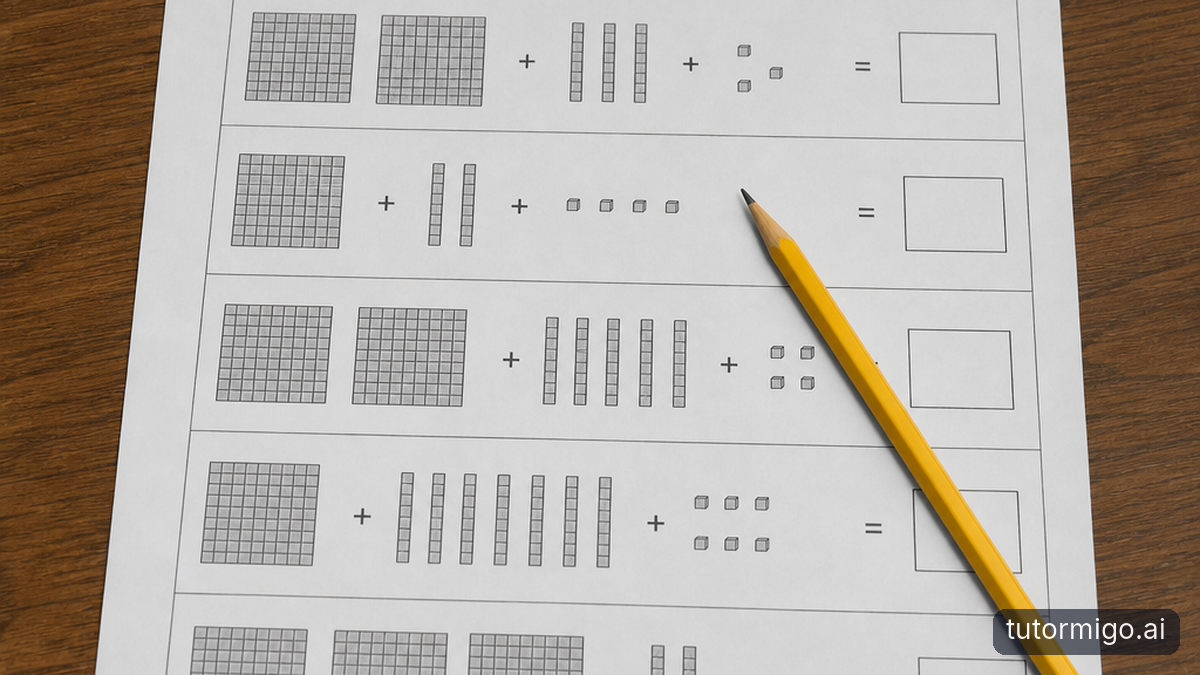
Your child brings home a Common Core math method you barely recognize. You explain your way; they insist their teacher wants something different. Mode 07’s co-learning approach puts a neutral educational mediator between those competing explanations, so you can investigate the method together instead of turning homework into an evening argument.
The most useful change is in your role. You do not need to become the teacher or prove that your childhood method works. Your job is to help your child understand the task, explain what they already know, and decide which question needs answering next. A parent dashboard can support that involvement, but the conversation at the table matters just as much.
Start with, “Show me what your teacher asked you to try.” Look at the directions and any worked example before suggesting a shortcut. A request to use a number line may be checking whether your child understands distance between numbers, not simply whether they can produce an answer.
If that mismatch feels familiar, this explanation of why Common Core homework sparks arguments offers useful context. For tonight, keep your aim smaller: understand one unfamiliar step together. You can be confident that mathematics makes sense while still saying, “I haven’t seen it explained this way before.” That honesty makes room for your child to be uncertain, too.
Use Mode 07 as a mediator, not a referee
Think of Mode 07 as a shared place to examine an explanation, rather than an authority that declares either you or your child wrong. The useful question is not “Whose method wins?” It is “How does this method show what the numbers mean?” That keeps attention on the work instead of on who knows more.
Suppose the homework asks your child to solve by making a ten. You might ask for an explanation of why splitting into and helps. The mathematical steps are , followed by . The important idea is that the total stays the same when one addend is broken into useful parts.
Before seeking another explanation, invite your child to point out where they became unsure. Then frame a narrow request: “Explain why moving two from the second group helps complete the next ten. Ask us a question before giving the final answer.” This makes the exchange about reasoning rather than answer collection.
You still need to check the explanation against the actual assignment. A neutral mediator is not automatically a correct one, and a clear alternative may not meet the teacher’s directions. If the explanation introduces a different strategy, return to the worked classroom example. Your child should not have to reconcile several unfamiliar methods in one sitting.
Give everyone a small, clear job
Co-learning works best when your child remains the person doing the mathematics. Let them hold the pencil, move the counters, or draw the model. Your job is to read directions aloud when needed, ask one question at a time, and help keep the explanation manageable. The mediator’s role is to offer another way into the sticking point, not to complete the page.
For subtraction, imagine the task is . If the assignment uses an open number line, your child might count from to , then to , and finally to . Ask, “What does each jump represent?” The jumps total . Let your child explain why that distance answers the subtraction question.
If they cannot explain it yet, use objects or a simple sketch before asking again. You might say, “Let’s show the starting amount and the ending amount first.” Avoid giving three hints in quick succession; that can turn a shared investigation into another stream of instructions your child must process.
Set a boundary for yourself, too: do not rewrite the work to make it look neater or more advanced. A rough drawing your child understands is more useful than a polished solution they cannot explain. Before moving on, ask them to describe one step in their own words.
Build a routine that ends before the argument starts
A calmer evening needs a stopping rule, not just a better explanation. Before opening the homework, agree on a short working period and a modest goal. You might spend fifteen minutes understanding one example and trying one similar problem. That is a clearer target than “We are staying here until this whole page is done.”
Begin with a quick check-in: “Are you ready to work, or do you need water and a short break first?” Then look over the page together. Choose a problem that represents the unfamiliar method rather than immediately tackling the hardest one. Leave enough time for your child to try independently after discussing the example.
Agree that either of you can call a pause when voices rise or the same explanation starts repeating. Put the pencil down and step away briefly. When you return, ask whether the difficulty is the directions, the representation, or the calculation. Each calls for different help; repeating everything more loudly solves none of them.
If the method remains unclear, write a factual note for the teacher: “We could find the answer, but we were unsure how to show the jumps on the number line.” That is more useful than completing the work for your child. A successful routine ends with a clearer understanding of the difficulty, even when the assignment is not finished.
Use your parent dashboard to notice, not police
A parent dashboard is most helpful when progress visibility leads to a better question, not a nightly interrogation. Look for what your child can now explain and where they still need support. A completed activity does not necessarily mean a method is understood, while an unfinished task may contain a genuine breakthrough.
Pair whatever progress information is available with a brief conversation and a sample of your child’s work. Ask, “Which part could you do without help today?” or “Where did you need the example?” If your child can draw a model but cannot connect it to the calculation, you have identified a specific next step rather than a general problem with math.
Use available learning controls to support the boundaries you have agreed on together. Explain those boundaries in plain language: “We are using this time to understand the method, then you will try one yourself.” Do not assume a dashboard measures confidence or reveals why a child struggled. Those details still require listening.
For a struggling learner, compare today’s work with their own earlier work, not with a sibling’s speed. Perhaps last week you drew every number-line jump, and today your child chose the stopping points independently. Name that progress precisely. “You knew where to break the jump” gives your child something useful to repeat; “Finally, you got it” can make earlier effort feel like failure.
Try one calmer conversation tonight
For your next homework session, choose just one unfamiliar Common Core problem. Ask your child to show you the directions, identify what makes sense, and point to the first confusing step. Say openly that you are learning the classroom method together. You are not giving up your responsibility to help; you are replacing a contest of explanations with a shared question.
Keep the support small enough to test. After discussing the sticking point, let your child attempt a similar problem without you narrating every move. If they get stuck again, return to the exact step rather than restarting the entire lesson. End by asking, “What would you tell yourself to remember next time?” Write down their wording if that helps.
If the same difficulty persists across several sessions, bring a work sample and your observations to the teacher. Explain what your child can do independently, what required a prompt, and which representation caused confusion. That gives the teacher a clearer starting point than a report that homework was difficult. You do not need to diagnose the problem yourself.
If you want a place to support this routine, TutorMigo.ai’s Parent Dashboard offers parent visibility into progress, learning controls, and co-learning features. Whatever support you choose, keep the goal the same: your child leaves the table understanding a little more, and neither of you has to win an argument to get there.
Frequently asked questions
First help them understand the method the assignment requests. Once that makes sense, comparing approaches can be useful. Introducing your shortcut too early may add another explanation before your child understands the first.
Return to the assignment directions and classroom example. Ask for an explanation using that representation. If the mismatch remains, note the confusing step and ask the teacher rather than insisting your child use a different method.
Use available progress information to guide questions about independent understanding and support needs. Pair it with your child’s explanation and actual work; completion alone cannot tell you whether a method makes sense.
Pause when frustration prevents either of you from listening or trying a new step. Follow your agreed working period, record what remains unclear, and contact the teacher if the difficulty keeps recurring.
Related reading
Enjoyed this read?
Like, share, or comment below.



Comments
0Sign in required · respectful discussion · replies supported
Loading comments…