


Why retrieval practice reveals what rereading hides
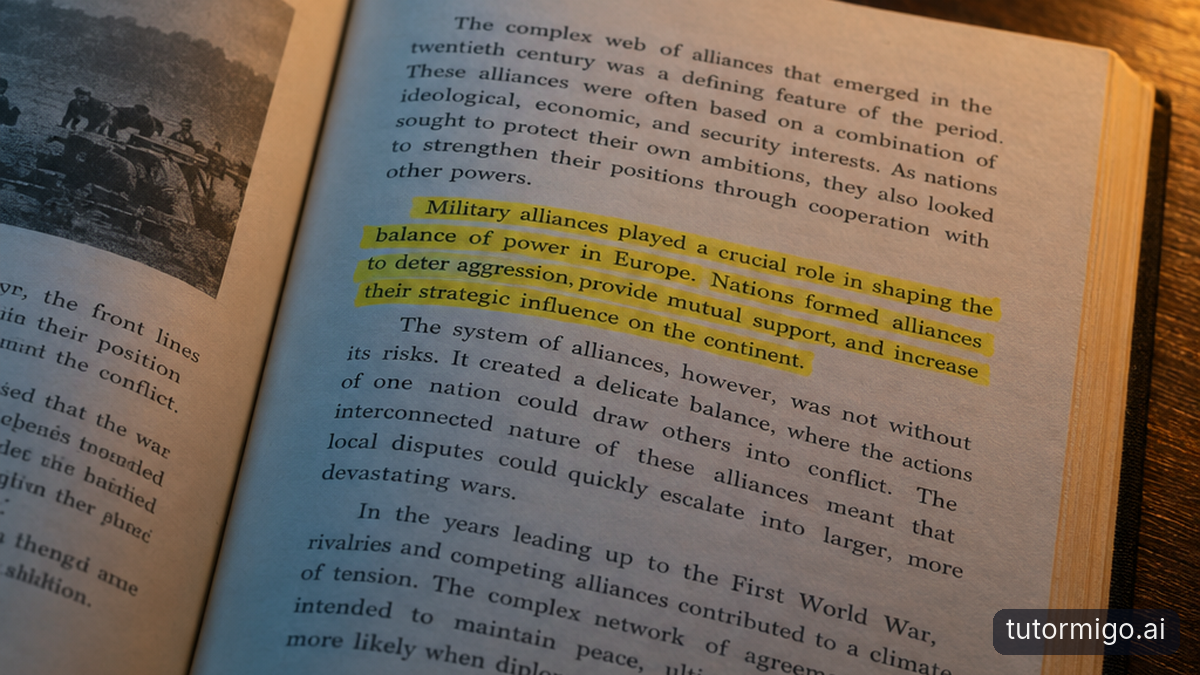
First, a small correction to our cheeky title: rereading is not useless. Reading introduces you to information, and returning to a confusing paragraph can help you understand it. The problem starts when rereading becomes your whole study plan. Seeing an answer repeatedly is different from producing it when the page is gone. [VERIFY]
Imagine your textbook says that alliances helped turn a conflict between countries into a wider war. On your third pass, the sentence feels obvious. You recognise the words and remember where they sit on the page. But could you explain the idea without that sentence in front of you? Recognition and recall are different tasks. [VERIFY]
That comfortable feeling can create a familiarity illusion: you mistake something that looks known for something you can independently remember. Highlighting can add to the confusion if your main goal becomes finding important-looking sentences rather than explaining them. A colourful page shows what you selected, not necessarily what you learned. [VERIFY]
Think of rereading as watching someone lift weights. You can notice their technique and understand what they are doing. But watching does not give your own muscles the same workout. Retrieval is picking up the weight yourself. The mental effort is the point, not evidence that you are bad at studying.
Keep your highlighter if it helps you notice key ideas. Just give it a second job: every highlighted idea should become something you try to explain with the book closed.
The testing effect: practise pulling information out
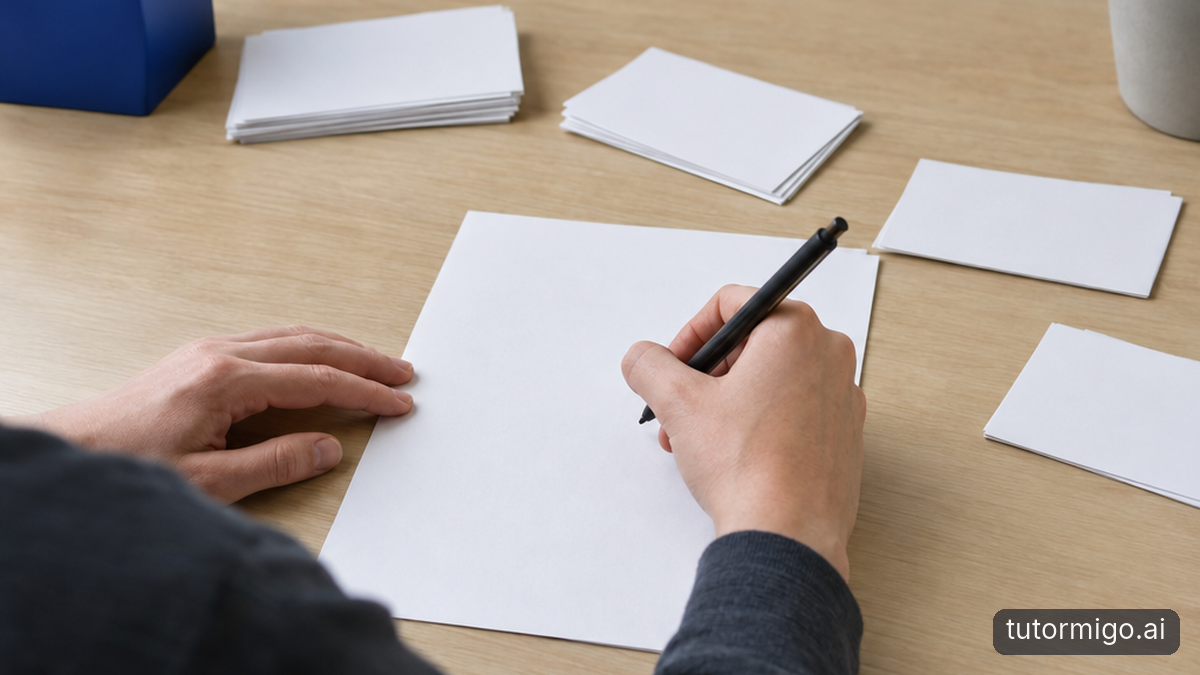
Retrieval practice means trying to bring information to mind without seeing the answer. You might answer a question, explain a process aloud, or list what you remember on blank paper. The testing effect describes the learning benefit of that act of retrieval, rather than treating a test only as a way to measure learning. [VERIFY]
The key idea is simple: pulling information out of memory can strengthen later recall more than putting the same information in again through repeated reading. That does not mean every quiz beats every reading session. You still need to encounter and understand the material, and the task and timing matter. [VERIFY]
In retrieval-practice research, including work by Roediger and Karpicke (2006), students who practised recalling material showed better retention on later tests than students who spent more time restudying it under the conditions examined. The research also highlights why feeling fluent during study is not the same as remembering later. [VERIFY]
No dramatic percentage is needed. The useful takeaway is that an activity can feel harder now while supporting stronger memory later. Your study session does not have to feel perfectly smooth to be worthwhile. [VERIFY]
Yesterday's spacing article explored spreading study across time; today, add retrieval to those spaced sessions rather than simply rereading on each visit. [VERIFY] For another practical angle, see how to use the testing effect in practice. Start small: after reading a short section, look away and explain its main point before continuing.
Two ways to study the causes of World War I
Suppose tonight's homework covers the causes of World War I. Your class notes discuss militarism, alliances, imperialism and nationalism, along with the assassination of Archduke Franz Ferdinand as the immediate trigger. These are common classroom categories, but they are connected explanations, not a complete account of a complicated historical event. [VERIFY]
Option one: reread until it looks familiar
You read the causes twice, highlight the key terms and scan them once more. Each term looks familiar by the end. But the page keeps supplying both the labels and their explanations. You have not yet checked whether you can name the causes or explain their connections without that help.
Option two: close the book and build an answer
Read the section once with attention. Then close it and write: “What were the main causes of World War I, and how did they contribute?” List the causes you remember. Add one sentence explaining each. For alliances, you might write that commitments between countries helped draw more countries into the conflict. [VERIFY]
Now reopen your notes. Perhaps you remembered militarism and nationalism but missed imperialism. Add the missing idea in another colour, and correct any explanation that was muddled. Then close the notes again and explain the missed idea without copying it. You are not aiming for a beautiful page. You are finding out what needs another attempt.
For an extra challenge, ask why the assassination alone does not explain all the tensions behind the war. Use your assigned material to check your response. An AI Tutor can help pose follow-up questions, but keep your textbook or class notes as the reference for what your teacher expects.
Wrong answers can help, but check them properly
Here is the reassuring part: getting a practice question wrong does not make the attempt wasted. Trying to answer, discovering a gap and then studying accurate feedback can support learning. The correction matters. Repeating an incorrect answer without checking it is not the goal. [VERIFY]
Suppose you leave imperialism off your list. Instead of deciding that you know nothing, name the specific gap: “I remembered three causes, but I need to work on imperialism.” Read the relevant explanation, connect it to the question, then try again with the answer hidden. A mistake has given your next few minutes a clear purpose.
Mistake one: quizzing only the easy questions
It feels good to answer questions you already know. Include some of those, but do not let them fill the whole session. Mix straightforward recall with questions that ask how or why. If naming “alliances” is easy, try explaining how an alliance system could widen a conflict. Use the lesson's level of detail, not a trick question.
Mistake two: checking the answer too fast
Give yourself a genuine attempt before peeking. Write a partial answer or explain the part you do remember. If you are completely stuck, take a small hint, then hide it and try again. There is no prize for staring miserably at a wall. Useful struggle means making an effort, getting feedback and adjusting, not staying confused indefinitely. [VERIFY]
For more traps worth spotting, explore these common study mistakes and practical alternatives.
Your next step 👉 Make remembering the main activity
Try this now: close this tab and write three ideas from the article. Do not scroll back first. A phrase or short sentence for each idea is enough. If closing the tab feels risky, remember how to reopen it, then give your memory the first turn.
When you return, compare your three ideas with the article. What did you remember clearly? What was fuzzy? Correct one gap, hide the article again and explain that point in your own words. This tiny routine gives you a practical model for tonight's homework: attempt, check, correct and attempt again.
Key Takeaways
Recognising a sentence is not the same as recalling its meaning. [VERIFY]
Retrieval practice means answering before looking, not copying an answer.
A wrong attempt followed by accurate feedback can still help learning. [VERIFY]
Include challenging questions and allow a real attempt before checking.
If you are exploring TutorMigo benefits, start with a specific study task rather than a long conversation. TutorMigo.ai is an adaptive AI Tutor you can ask for a practice quiz on any topic, with step-by-step guidance when you need help. Quiz difficulty and answers should still be checked against your homework materials.
Your next step 👉 Visit TutorMigo.ai and ask: “Give me a 5-question quiz on tonight's homework topic. Ask one question at a time, wait for my answer, then help me correct any mistakes.” Naming the topic takes seconds and gives you a clear starting point for retrieval practice.
Tonight: Turn Any Chapter into a 10-Question Self-Quiz.
Which topic looks familiar in your notes but becomes tricky when you close the book?
| Study task | Rereading approach | Retrieval-practice approach |
|---|---|---|
| Review a history topic | Read the causes and explanations again. | Close the book and list the causes from memory. |
| Check understanding | Notice whether the explanation looks familiar. | Explain how and why, then compare with your notes. |
| Respond to a gap | Reread the relevant paragraph. | Attempt an answer, study the correction, then retry without looking. |
| Use TutorMigo.ai tutoring chat | Ask for an explanation of a confusing idea. | Ask for a question, attempt it first, then request guidance. |
Frequently asked questions
No. Read to understand new material and revisit confusing passages. Then close the material and try to explain or recall it. The problem is relying on rereading alone to judge whether you know something. [VERIFY]
It can, when you follow the attempt with accurate feedback and correct your misunderstanding. Check the answer, work out what was missing, then try again without looking. [VERIFY]
Ask for a 5-question quiz on tonight's homework topic, with one question at a time. Request that it wait for your attempt before offering step-by-step guidance, and check factual answers against your class materials.
Enjoyed this read?
Like, share, or comment below.



Comments
0Sign in required · respectful discussion · replies supported
Loading comments…