


Short Practice for Remembering Lessons at Home
Your child understood the lesson at school, but now the same question brings a blank stare. You do not need to reteach everything or sacrifice the evening. Pick one small idea, ask them to recall it, check it together and return to it briefly another day.
In class, your child has clues: the teacher’s explanation, a worked example and classmates’ questions. At home, those prompts may be missing. Finding an answer familiar is different from bringing it to mind independently. A pause or mistake does not automatically mean they failed to understand the lesson.
Start with curiosity rather than a test. Ask, “What do you remember doing first?” or “Which part felt clear at school?” If they remember the method but forget a term, practise the term. If they recall the answer but cannot explain it, focus on the reasoning.
For example, your child might recognise a completed fractions question yet struggle with a fresh one. Look at one classroom example together, then close the book and ask them to describe the first step. That small attempt gives you a useful starting point without turning the evening into another lesson.
Choose One Small Target: Three Flashcards or One Maths Solution
Choose something specific from the lesson your child has just studied, not an entire topic. “Practise fractions” is too broad for a short session. “Explain why these fractions need the same denominator” gives you a clear task and a sensible stopping point. Use their exercise book or teacher’s instructions to keep the target aligned with school.
For knowledge that needs recalling, select three flashcards. Each should ask one clear question, such as naming a process, defining a term or giving an example. Avoid cards that squeeze a whole page into the answer. Your child should be able to check whether they remembered the important point without debating a long paragraph.
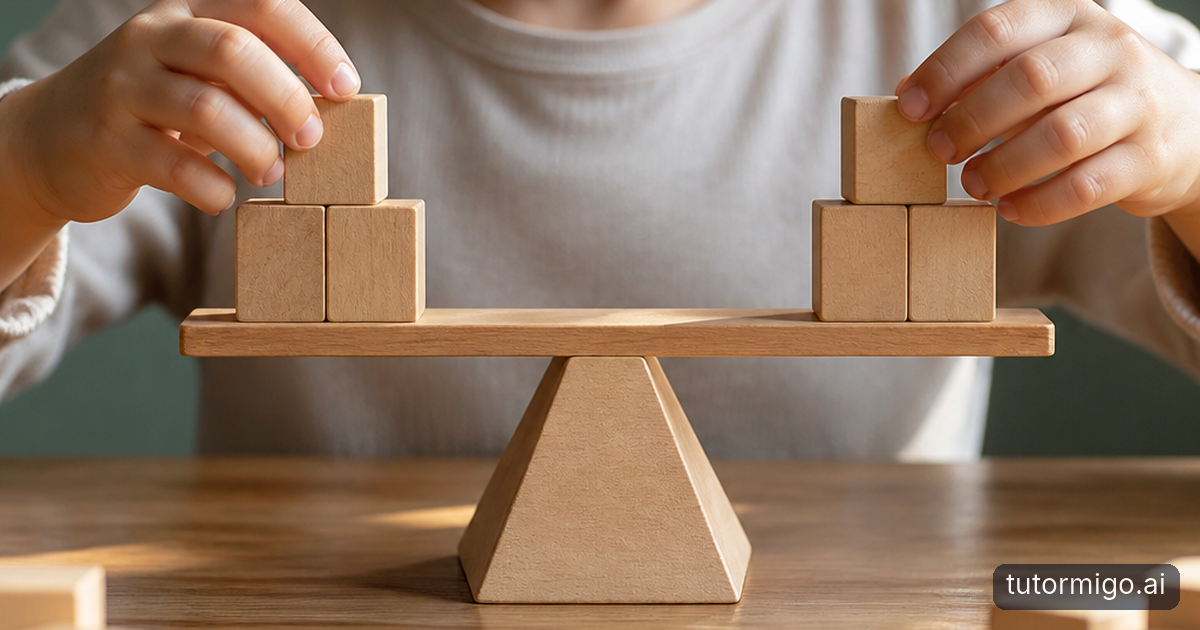
For maths, choose one solution they have already encountered. Ask them to explain what each step does and why it is needed. With , for instance, the target might be explaining why subtracting four from both sides keeps the equation balanced, rather than completing several similar questions.
Let your child help choose between two suitable targets. That keeps the choice manageable while giving them some ownership. Save other gaps for another day instead of expanding the session as you notice them.
Keep Practice to 5–10 Minutes: Ask Your Child to Recall, Explain and Check
Agree on a five- to ten-minute window before you begin. Include checking time within that limit; do not make checking an extra task after the timer ends. A predictable finish helps your child see that brief practice really will stay brief, especially when they are tired after school.
Begin with recall. Keep the answer out of sight and ask one question. Give them a few quiet moments to think before offering help. With three flashcards, let them attempt each answer aloud, then turn the card over. Separate “I remembered it” from “I recognised it once I saw it.”
Next, ask for an explanation: “How did you know?” or “Why does that step work?” One sentence may be enough. Then check against the class notes, worked example or card answer. If something is wrong, identify the specific difference rather than asking them to start the whole topic again.
Finish with one corrected attempt if there is time. For example, your child can explain the missed maths step once without looking. Our guide to when a five-minute study session counts offers another way to think about keeping these small efforts worthwhile.
Space Out Short Reviews Instead of Repeating Everything in One Evening
A short review becomes more useful when you return to it after a gap. Repeating an answer immediately can make it feel easy because it is still fresh. Trying again on another day gives your child practice bringing it back to mind. The aim is manageable remembering, not a perfect performance every evening.
As a starting pattern, revisit today’s target tomorrow, then a few days later, then the following week. Treat that as a flexible plan, not a rule. If recall is comfortable and accurate, leave a longer gap. If your child struggles but understands after checking, bring the next review closer.
Suppose you review three science flashcards on Monday. On Tuesday, check the same three without rereading first. If two are secure and one is shaky, revisit the shaky card on Thursday and leave the others until the following week. You do not need to repeat the whole deck.
Keep a small record of the target, the difficulty and the next review date. A note such as “definition remembered; example needed prompting” is more useful than “done.” For more on choosing this approach, see our guide to spaced-repetition flashcards for parents.
Know When to Stop, Take a Break or Ask the Teacher for Clarification
Stop when the agreed time is up, even if the work is not flawless. You can also stop earlier when your child recalls the target accurately and explains it clearly. Extra questions are not a reward for finishing efficiently. Keeping your promise about the endpoint makes the next short session easier to begin.
Watch for the difference between productive effort and overload. A thoughtful pause, a partial answer or one correction can be useful practice. Tears, repeated guessing, rising frustration or obvious exhaustion suggest that continuing is unlikely to help. Put the task aside and choose a calmer moment rather than pushing through.
Seek clarification when the underlying idea remains unclear after checking the classroom example, or when your explanation seems to conflict with the teacher’s method. Do not use repeated flashcard practice to memorise a procedure neither of you understands. Write down the exact sticking point while it is fresh.
A useful message might be: “We can follow the first step in this example, but we do not understand why the denominator changes. Which class example should we revisit?” That gives the teacher something concrete to respond to. Until then, practise a different, clearly understood target or leave the review there.
Use TutorMigo.ai as Optional Support to Pick Up Where You Left Off
You can run this routine with paper cards and a notebook. If you prefer digital support, TutorMigo.ai offers an AI Tutor Workspace with personalised tutoring chat and session history. You can revisit an earlier conversation, identify the point you reached and ask about one remaining difficulty instead of reopening the whole topic.
Give the AI Tutor a narrow request, such as: “We are reviewing this classroom solution. Ask my child to explain the first step, then help us check the reasoning.” Include the relevant example yourself. Session history provides a record to revisit; it does not replace checking that the explanation matches the method taught at school.
Spaced-repetition flashcards offer another option, with AI-assisted card creation and review scheduling. You might create three cards from the lesson, check their wording against the notes and use the scheduled reviews to support your routine. Keep the session small even when more material is available.
If you are weighing TutorMigo benefits, focus on whether these features make your existing routine easier. An AI Tutor should support your child’s thinking, not supply an answer before they try. Keep teacher clarification as your next step whenever the school method or underlying concept remains uncertain.
Plan Your Next Brief Session: What to Revisit, When and for How Long
Before putting everything away, spend a moment planning the next review. Decide what your child will revisit, when it will happen and how long you will spend. Make the plan specific enough that neither of you has to negotiate the task from scratch during a busy evening.
For example: “Tomorrow after our snack, we will review these three cards for five minutes. We will answer before turning them over, check anything uncertain and stop when the timer finishes.” For maths, the plan could be to explain one previously corrected solution two days later, with the worked example available for checking.
Leave the chosen cards or bookmark ready. Add a brief note about any sticking point, such as “explain why we subtract from both sides.” If today’s session ended in confusion, make the next action a question for the teacher rather than another attempt at the same unresolved problem.
Ask your child whether the timing felt manageable, then adjust if necessary. A shorter session at a calmer time is preferable to an ambitious plan you both dread. Your next step is simple: choose one target, agree on a brief slot and give the evening a clear finish.
Frequently asked questions
No. Choose one small target that needs revisiting. Rotate targets across the week rather than adding every subject to one evening.
Finish early and schedule a later review. You do not need to add more cards just to fill the time.
No. Ask your child to try first, then check. After correcting an error, invite one brief attempt without looking if time allows.
Related reading
Enjoyed this read?
Like, share, or comment below.


Comments
0Sign in required · respectful discussion · replies supported
Loading comments…