

Socratic Parenting: Pause Before Solving It for Your Child

“What should I do?” Your child looks at you, and the answer is already forming. You want them to think independently, but stepping in feels faster and kinder. The socratic method for kids offers another option: ask a supportive question, leave room for thinking, and guide directly when needed.
Perhaps your child has promised to play with a friend but now wants to stay home. You could say, “You made a promise, so go.” That might settle today’s problem, but it leaves little room to consider commitments, feelings, or possible compromises.
Before answering, take one breath. Try: “What’s making this hard to decide?” You might discover that your child is tired, worried about an argument, or simply reluctant to stop another activity. Those are different problems, and understanding the problem matters more than producing a quick solution.
You do not have to turn every request into a learning opportunity. Start with one low-pressure decision where you can tolerate an answer different from yours. Your job is to help your child notice what matters and choose a workable next step—not steer them toward your preferred answer through questions. If you cannot genuinely allow a choice, state the boundary instead of disguising an instruction as a discussion.
What the Socratic Method for Kids Means in Everyday Parenting
In everyday parenting, the Socratic method means using thoughtful questions to help your child examine an idea, explain their reasoning, and consider alternatives. “Socratic parenting” is a practical label for that approach, not a requirement to turn family life into a philosophy lesson.
Imagine your child says, “My friend didn’t sit with me, so they don’t like me anymore.” Rather than replying, “Of course they like you,” you might first acknowledge the feeling: “That sounds lonely.” Then ask, “What else might explain where they sat?” You are helping your child separate something they observed from the meaning they gave it.
A useful follow-up is, “What could help you find out?” Your child might decide to invite the friend to sit together tomorrow. The point is not to prove that their first interpretation was wrong. It is to make room for more than one explanation before acting.
That is what encouraging critical thinking looks like in ordinary conversation: noticing information, considering possibilities, and choosing what to do next. For more background, explore why guided questions can support reasoning. At home, keep the principle simple: be curious about your child’s thinking rather than testing whether it matches yours.
When Questions Help—and When Your Child Needs Direct Guidance
Questions help most when your child feels reasonably calm, understands the situation, and has some genuine control over the outcome. Choosing how to repair a minor disagreement or how to divide an afternoon between two activities gives them something meaningful to reason through.
They help less when your child lacks essential information. If they have never packed for a rainy outing, “What do you think you need?” may be more frustrating than useful. Offer a starting point: “We’ll be outside, and rain is expected. A waterproof layer keeps you dry. What else would help?” Teaching and questioning can work together.
Safety calls for clear instructions. Near moving traffic, say, “Stop and hold my hand,” rather than asking your child to assess the danger. If someone is hurting or threatening them, focus on protection and getting appropriate help, not on making them solve the situation independently.
Strong distress also changes the task. A child crying over a friendship problem may need comfort, water, and a quiet moment before discussing options. Ask, “Would you like me to listen, help you think, or explain what to do?” You remain responsible for boundaries and care. Independence grows through supported practice, not through being left alone with a problem beyond their current abilities.
Everyday Dilemmas: Open-Ended Questions and Follow-Ups That Help Kids Reason
Start with the decision your child actually faces, rather than a broad “What do you think?” A focused, open-ended question gives them somewhere to begin. Ask one, listen to the answer, and choose a follow-up based on what they say.
Two friends want different games. Ask, “What could you suggest that gives both friends a say?” If your child proposes taking turns, follow with, “How would you decide who starts?” If they insist everyone should play their game, try, “How might the others respond?” You are inviting perspective-taking without demanding that your child always give in.
A small purchase competes with a savings goal. Ask, “What matters to you about buying this now?” Then, if needed: “How would buying it affect the thing you’re saving for?” Avoid questions such as “Wouldn’t saving be smarter?” That is advice wearing a question mark. Within agreed spending boundaries, let your child weigh immediate enjoyment against waiting.
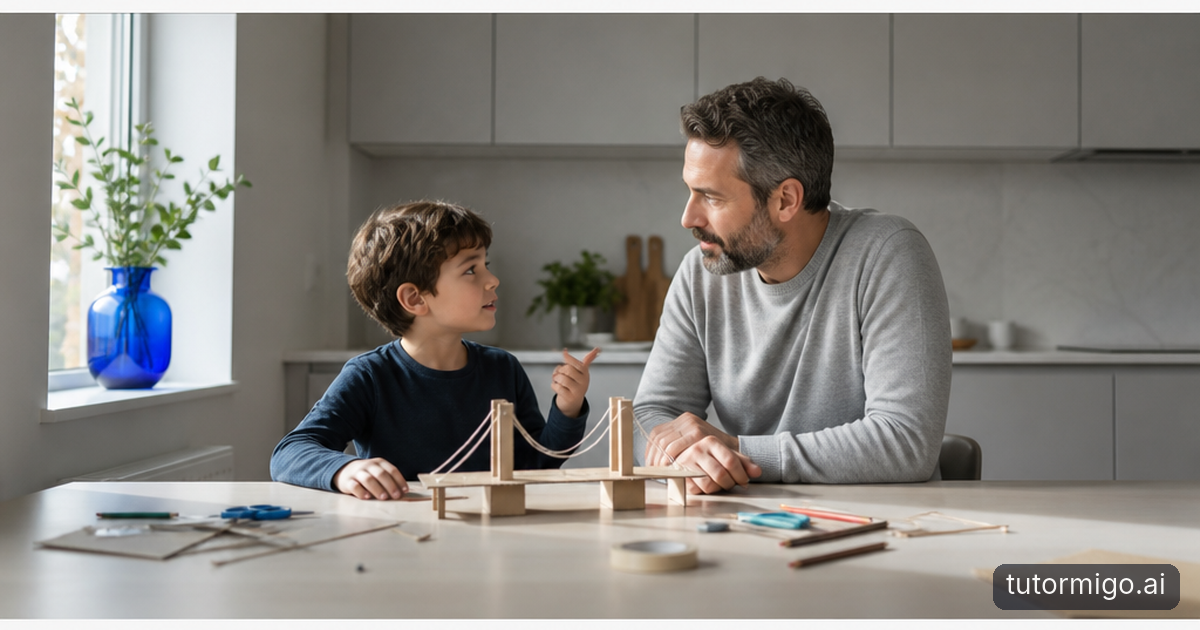
A project is not working. Ask, “What have you noticed about where it goes wrong?” If the cardboard tower keeps falling, follow their observation: “What could you change to test that idea?” Let them try before offering your design. Across these situations, a useful pattern is to understand the problem, consider an option, and anticipate what might happen. You rarely need to ask about every part aloud.
How to Respond to “I Don’t Know” Without Taking Over
“I don’t know” can mean several things: your child needs time, the question feels too large, they lack information, or they are worried about giving a wrong answer. Treat it as information, not resistance. A calm “That’s okay; we can start smaller” keeps the conversation open.
If the question was “How will you sort this out with your friend?” narrow it to something concrete: “Which part is bothering you most?” Naming one part of the problem may be easier than producing a complete solution. Once they identify it, ask whether they want to think of possibilities together.
You can offer a small amount of structure without deciding for them: “You could talk today or wait until tomorrow. What might be helpful about each? Is there another option?” Make clear that your examples are starting points, not the only acceptable choices. For a child struggling to explain, drawing the situation may be easier than talking.
If they still do not know, stop pushing. Say, “Let’s leave it for a bit and come back after lunch.” Some decisions need information or rest rather than another question. When there is a real deadline, explain it plainly and offer the help needed to make a manageable choice.
Give Your Child Thinking Time Without Turning Questions Into an Interrogation
A good question needs room for an answer. After you ask, stay quiet for several seconds instead of immediately rephrasing it. Keep your expression relaxed. You can say, “Take your time; I’m thinking too,” so the silence feels like shared space rather than a test.
Avoid stacking questions: “What happened? Why did you do that? What were you thinking? What will you do now?” Even reasonable questions can feel accusatory when delivered in a rush. Ask one, then reflect back what you heard: “You wanted a turn, and you thought asking again wouldn’t work.” Check whether you understood before moving on.
Watch for signs that the conversation has become too much: shorter answers, looking away, repeated shrugging, or asking to stop. These do not automatically mean your child refuses to think. Try, “Have I asked too many questions?” A pause or a straightforward suggestion may be more helpful now.
Among the most useful socratic parenting tips is this: replace some questions with observations. “You sound torn between keeping your promise and having quiet time” can help your child understand their own dilemma. You do not need a chain of clever prompts. One sincere question, patient listening, and an accurate reflection may be enough.
Try One Conversation, Then Reflect: Did Your Child Make Their Own Decision?
Choose one ordinary, reversible decision to practice with this week: which activity to do first, how to share materials, or what to suggest to a friend. Avoid starting with a safety issue, a rushed departure, or a conflict that already has everyone upset.
When your child asks for an answer, pause and acknowledge the difficulty. Then ask one useful question, such as, “What options do you see?” Allow thinking time. If they get stuck, offer a little information or help them narrow the problem. Before ending, ask, “What do you want to try?” Let them carry out their choice within the boundaries you have already explained.
Afterward, reflect privately: Did my child name an option or simply agree with mine? Did I allow a decision I would not have made? Did I provide necessary information without taking control? Their choice does not have to work perfectly for the conversation to count as useful practice.
If the outcome disappoints them, return with curiosity: “What happened, and what might you try next time?” Notice your own progress, too. Perhaps you interrupted less or waited longer. The goal is not to eliminate advice. It is to make a little more room for your child’s reasoning before yours fills the space.
Frequently asked questions
No. Give straightforward answers to factual questions and clear guidance when safety, distress, or missing knowledge makes it necessary. Use questions when your child has a meaningful decision to explore.
If the choice is safe and within your stated boundaries, allow it. Discuss what happened afterward without saying “I told you so.” If a choice is not allowed, explain the boundary directly.
Ask yourself whether you would accept more than one answer. If your questions keep pushing toward a predetermined conclusion, state your view honestly and give your child room to respond.
Enjoyed this read?
Like, share, or comment below.



Comments
0Sign in required · respectful discussion · replies supported
Loading comments…